The mahogany table inside the Kremlin is long enough to host a small wedding, but its primary function is to enforce distance. It is an instrument of theater. On one side sits a man who has spent a quarter of a century turning isolation into a form of geopolitical leverage. On the other side, usually, is a vacant chair, or a visitor kept at a deliberate, calculated remove.
When Vladimir Putin announced that there was simply "no point" in meeting with Ukrainian President Volodymyr Zelenskyy, the statement was carried across the world’s news tickers as a standard diplomatic development. It was filed under the routine business of an ongoing war. But political pronouncements are rarely just about the words spoken. They are about the human calculations happening beneath the surface, the psychological walls built to mirror the physical ones, and the terrifying realization that dialogue is no longer viewed as a tool for peace, but as a concession.
To understand why a door slams shut in Moscow, you have to look at what happens when the cameras turn off and the grand architecture of diplomacy is stripped down to its rawest, most visceral components.
The Mirage of the Summit
Imagine a room where two people hold the fates of millions in their hands, yet they speak entirely different languages of power. This is not a metaphor; it is the fundamental friction of the post-Soviet landscape.
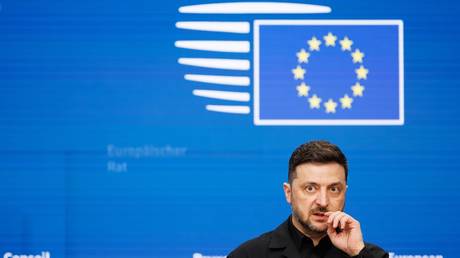
Zelenskyy’s entire political brand, from his days as a performer to his wartime transformation, has been built on the idea of radical presence. He is the man in the olive-drab fleece, recording videos on a smartphone in the dark streets of Kyiv while artillery rumbles in the distance. His power comes from proximity. He positions himself as the ultimate proxy for his people, accessible, battered, and intensely human. For years, his diplomatic strategy relied on a simple premise: If I can just get into the room with him, we can find a way out. It was a belief in the power of direct, face-to-face negotiation, a conviction that even the most complex geopolitical knots can be untangled by human agency.
Putin operates on an entirely different plane of reality. For the Russian president, presence is a vulnerability. Power is maintained through mystique, historical destiny, and an absolute refusal to recognize the legitimacy of the person across the aisle. To sit down with Zelenskyy as an equal would be to validate the very thing Putin’s foreign policy denies: the independent sovereignty of Ukraine and the legitimacy of its leadership.
When Moscow declares a meeting pointless, it is not a logistical assessment. It is a deliberate act of erasure.
Consider what happens next when a superpower decides that communication has a negative utility. The machinery of state television takes the cue. The narrative hardens. The adversary is no longer a government to be bargained with, but an existential anomaly to be corrected. The empty table becomes a monument to an intractable position.
The Weight of the Unspoken
Living through the ripples of these decisions feels less like watching history unfold and more like waiting for a storm to break. Anyone who has spent time analyzing the region or speaking with the people whose daily lives are dictated by these statements knows the specific, suffocating anxiety that accompanies a breakdown in communication. It is the sound of a trapdoor locking.
When diplomatic channels are open, even if the progress is agonizingly slow, there is a psychological safety valve. There is a sense that somewhere, in a neutral capital like Geneva or Warsaw, diplomats are arguing over semicolons instead of soldiers dying over square meters of dirt. The moment one side declares negotiation futile, that safety valve is welded shut. The conflict ceases to be a problem to be solved and becomes a condition to be endured.
The rejection of a meeting is also a calculated message to the West. It is an assertion of stamina. The underlying logic is brutal in its simplicity: We can outlast your political cycles. We can outlast your public sympathy. We can outlast your budgets. By refusing to engage, Moscow signals that it views time not as an enemy, but as an ally.
This strategy relies on a deep understanding of Western fatigue. The news cycle moves on. Citizens in London, Paris, and Washington grow weary of inflation, domestic polarization, and the abstract nature of a distant war. A stalemate on the battlefield accompanied by a total freeze in diplomacy is designed to breed a sense of hopelessness. And hopelessness is a powerful weapon.
The Cost of the Closed Door
But the real problem lies elsewhere, far from the grand halls of the Kremlin or the fortified bunkers of Kyiv. The true cost of the closed door is paid in the currency of human certainty.
When leaders stop talking, the space where diplomacy used to live is filled by rumor, miscalculation, and the cold logic of military momentum. Without a forum for communication, every troop movement is interpreted as the prelude to a grand offensive, and every minor tactical retreat is viewed as a sign of imminent collapse. The margin for error shrinks to nothing.
We have seen this pattern before in the darkest chapters of the twentieth century. When communication is treated as a prize to be won rather than a basic necessity of crisis management, the path to accidental escalation widens. It is an incredibly dangerous game of chicken played with nuclear-backed stakes.
The tragedy of the "no point" doctrine is that it treats peace not as a process, but as an end state that must be achieved before talking can even begin. It requires one side to effectively surrender before the first handshake can occur. It turns diplomacy on its head.
The long mahogany table remains empty. The dust settles on the unused chairs. Across the border, the sirens wail again, a mechanical scream that fills the silence left behind when men of power decide that words have lost their value. The world watches the empty room, realizing too late that the most terrifying thing in international politics is not a heated argument, but the quiet of a room where everyone has given up on talking.