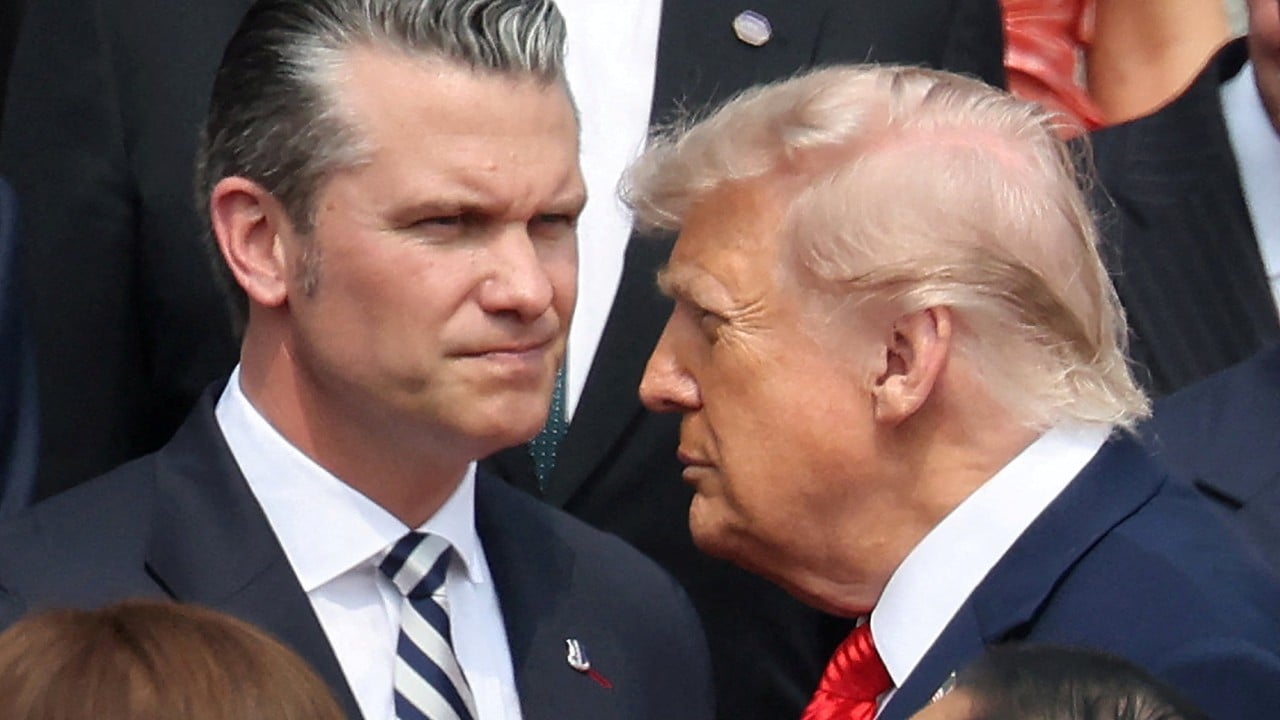
When unconfirmed reports suggest that both the civilian head of the Pentagon and the operational commander of the Indo-Pacific theater may travel to Beijing, standard media coverage treats the development as a routine diplomatic thaw. That interpretation misses the structural mechanics of modern military statecraft. A joint or coordinated appearance in China by Defense Secretary Pete Hegseth and U.S. Indo-Pacific Command chief Admiral Samuel Paparo would represent a high-stakes calibration of crisis stability, signaling that Washington and Beijing are attempting to build an operational floor beneath an intensifying strategic rivalry.
The Signal-to-Noise Problem in Track-Two Diplomacy
Public speculation surrounding this potential visit originates largely from veteran China observers, such as National Committee on U.S.-China Relations President Stephen Orlins, rather than formal Pentagon announcements. Neither Washington nor Beijing has confirmed travel dates, itineraries, or official agendas. In strategic intelligence analysis, distinguishing between an established diplomatic itinerary and a trial balloon is the first step in preventing miscalculation.
Track-two interlocutors frequently serve as unofficial conduits to test domestic and international reactions before governments commit political capital. When an unofficial source floats the prospect of high-level defense travel, two distinct mechanisms operate simultaneously:
- Domestic Audience Conditioning: Both governments prepare hardline domestic constituencies for the optics of engagement with a primary strategic competitor without incurring the political cost of a canceled summit if negotiations stall.
- Reciprocity Testing: Washington gauges whether Beijing is willing to grant access to substantive decision-makers within the Central Military Commission rather than purely ceremonial counterparts.
Treating an unconfirmed projection as a guaranteed breakthrough conflates diplomatic signaling with operational reality. Until formal logistics are published, the reported trip remains a low-probability, high-impact contingency designed to test the boundaries of bilateral risk management.
The Dual-Key Command Structure of American Deterrence
To understand why pairing Hegseth and Paparo carries distinct operational weight, one must examine the division of labor within the U.S. national security apparatus. Under the Goldwater-Nichols Department of Defense Reorganization Act of 1986, the chain of command runs from the President to the Secretary of Defense, and directly from the Secretary to the Combatant Commanders. The Joint Chiefs of Staff serve in an advisory capacity, leaving operational execution entirely in the hands of the regional commander.
Sending Hegseth alone addresses political intent; including Paparo addresses tactical execution. This pairing creates a dual-key mechanism for deterrence:
- The Policy Layer (Hegseth): As the civilian leader of the defense establishment—frequently framed in populist and nationalist discourse as a "war secretary"—Hegseth represents the political will of the administration. His presence communicates the overarching strategic thresholds of the White House, resource allocation priorities, and the political boundaries of American tolerance for regional coercion.
- The Operational Layer (Paparo): As the head of U.S. Indo-Pacific Command, Admiral Paparo controls the actual kinetic assets, force posture, naval deployments, and rules of engagement across the theater. His private and public assessments have consistently highlighted the accelerating timeline of People's Liberation Army modernization, advanced electronic warfare capabilities, and hypersonic weapon systems.
When the policymaker who sets the budget sits beside the warfighter who manages the daily friction of maritime and aerial intercepts, Beijing cannot exploit the perceived seam between Washington's political rhetoric and its military readiness. The Chinese defense establishment is forced to confront a unified command structure.
The Mechanics of Escalation Control and Crisis Hotlines
Surface-level commentary often reduces military-to-military dialogue to vague aspirations for "strengthening ties". In practice, defense diplomacy between nuclear-armed adversaries functions as an engineering problem aimed at reducing friction in contested domains. When two militaries operate in close proximity across the Taiwan Strait, the South China Sea, and the East China Sea, the primary threat to stability is not always deliberate aggression, but inadvertent escalation driven by compressed decision cycles.
Any substantive agenda involving Hegseth and Paparo would focus on three specific operational variables:
- Theater-Level Crisis Communications: Historically, high-level hotlines between Washington and Beijing have failed during acute crises because Chinese military culture centralizes decision-making authority, leaving theater commanders reluctant to answer calls without explicit approval from the Central Military Commission. Establishing direct, reliable protocols between INDOPACOM and the PLA's Eastern and Southern Theater Commands is essential to prevent localized collisions from spiraling into theater-wide conflict.
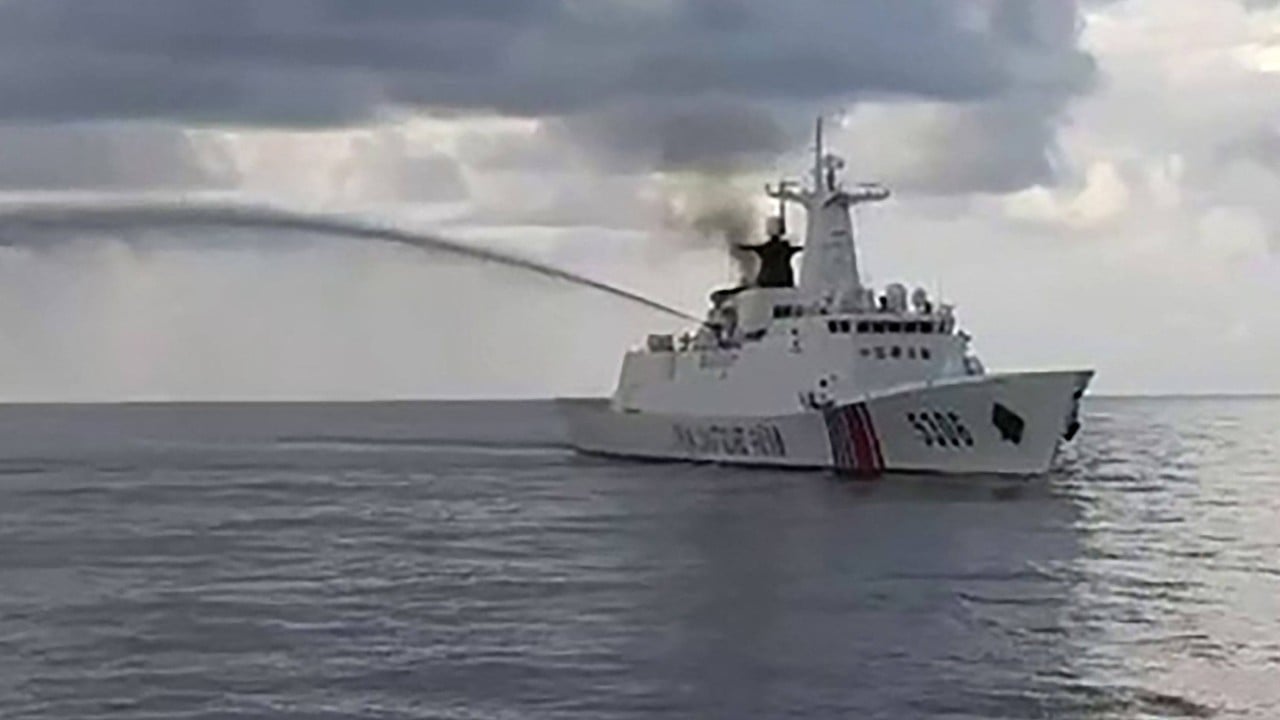
- Rules of Engagement and Intercept Protocols: Unsafe aerial intercepts and aggressive maritime maneuvering increase the probability of mechanical failure or human error. Codifying strict behavioral guardrails—building upon frameworks like the Code for Unplanned Encounters at Sea—requires direct buy-in from the operational commanders whose units execute those patrols daily.
- Advance Notification of Major Exercises: Large-scale amphibious drills, missile tests, and joint carrier operations create acute intelligence ambiguities. When one side cannot distinguish between a routine exercise and a mobilization for a kinetic strike, the incentive to preempt rises dramatically. Transparent notification mechanisms lower the baseline of strategic paranoia.
These mechanisms do not resolve underlying territorial disputes or ideological incompatibilities. Instead, they function as circuit breakers designed to isolate tactical accidents from strategic war plans.
The Structural Limits of Defense Diplomacy
A rigorous assessment requires acknowledging the severe constraints inherent in any U.S.-China military dialogue. Viewing a potential Beijing visit as a definitive step toward regional peace ignores the structural asymmetries that govern both nations' strategic doctrines.
First, there is a fundamental divergence in how each side views the utility of crisis management. American military doctrine treats crisis communication channels as vital safety valves that allow both powers to compete intensely without stumbling into accidental war. Conversely, Chinese strategic thought has historically viewed ambiguity and perceived risk as forms of deterrence. From Beijing's perspective, eliminating all risk of accidental escalation lowers the psychological cost for the United States to conduct freedom-of-navigation operations and intelligence-gathering flights near the Chinese coast. Therefore, Beijing frequently treats military communication channels not as permanent infrastructure, but as diplomatic leverage to be severed whenever Washington takes actions it deems provocative, such as approving arms sales to Taiwan.
Second, institutional asymmetry complicates counterpart matching. In the U.S. system, the Secretary of Defense is a cabinet-level civilian with direct operational authority. In the Chinese system, the Minister of National Defense often holds less institutional power than the Vice Chairmen of the Central Military Commission, who command the actual troops and report directly to the General Secretary. If Hegseth and Paparo travel to Beijing only to meet with protocol equivalents who lack operational command over the PLA's theater forces, the diplomatic optics will mask an operational void.
Third, domestic political constraints limit the concessions either side can offer. Following volatile domestic election cycles and ongoing debates over defense spending and alliance burdens, the administration in Washington faces intense scrutiny from hawks who view any trip to Beijing as a sign of weakness. Simultaneously, Beijing faces internal economic pressures and nationalist expectations that prevent it from softening its posture on core sovereignty claims.
The Strategic Reality of Competitive Coexistence
The prospect of Pete Hegseth and Admiral Samuel Paparo visiting Beijing illustrates the central paradox of twenty-first-century great power competition: the exact same military capabilities that require robust deterrence also necessitate direct communication. As weapons systems become faster, more autonomous, and more lethal, the window for human intervention during a crisis shrinks from days to minutes.
If this visit materializes, analysts and policymakers should ignore the diplomatic pleasantries and evaluate the outcome strictly through operational metrics. Success will not be measured by joint statements or ceremonial handshakes, but by whether INDOPACOM secures verifiable, theater-level communication protocols with PLA commanders that survive the next geopolitical shock. Without binding, operational circuit breakers at the theater level, high-level visits remain temporary pauses in an accelerating trajectory toward confrontation.
For deeper context on the initial reports regarding this potential diplomatic trip, see the SCMP report on Hegseth and Paparo's possible Beijing visit. This video covers the immediate regional reactions and diplomatic context surrounding the unconfirmed travel plans.