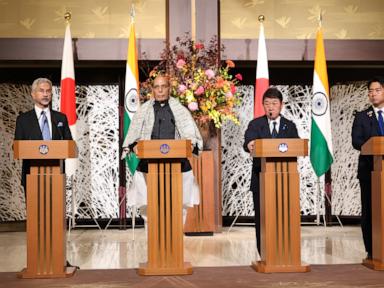
Bilateral defense agreements between Tokyo and New Delhi are frequently mischaracterized as symbolic diplomatic posturing, yet the structural integration of Japanese capital-intensive engineering and Indian defense manufacturing capacity represents a deliberate reconfiguration of Indo-Pacific supply chain resilience. Rather than functioning as a traditional buyer-seller arms relationship, the Japan-India defense framework operates as an asymmetric capability arbitrage designed to offset manufacturing bottlenecks in Japan and technological deficits in India.
Standard geopolitical coverage reduces these summits to vague pledges of "enhanced cooperation" and "shared values." This analytical failure obscures the underlying operational mechanics. When Tokyo and New Delhi formalize defense industrial ties, they are executing a multi-variable optimization problem constrained by constitutional limits, domestic procurement monopolies, and divergent industrial bases. Understanding this alignment requires stripping away diplomatic rhetoric and examining the exact structural mechanisms driving capital, intellectual property, and operational doctrine between the two nations.
The Structural Asymmetry Driving Bilateral Integration
To understand why Tokyo and New Delhi are accelerating defense industrial ties, one must first map their complementary structural deficits. Neither nation possesses a self-sufficient, globally competitive defense industrial base capable of meeting its immediate deterrence requirements independently.
Japan possesses world-class dual-use technologies, precision manufacturing, and advanced materials science, particularly in propulsion, naval architecture, and sensor arrays. However, Japan’s defense sector suffers from severe economies-of-scale constraints. For decades, post-war export restrictions confined Japanese defense contractors—such as Mitsubishi Heavy Industries, Kawasaki Heavy Industries, and NEC—to a single domestic customer: the Japan Self-Defense Forces (JSDF). Low production runs inflated unit costs to unsustainable levels, starving firms of the capital expenditure required for iterative research and development.
India presents the exact inverse profile. As one of the world’s largest defense importers, India offers massive procurement volume and a deep pool of software engineering talent. Yet India’s domestic defense industrial base, long dominated by state-owned Defence Public Sector Undertakings (DPSUs) and the Defence Research and Development Organisation (DRDO), struggles with chronic execution delays, metallurgy bottlenecks, and high failure rates in complex systems integration. India’s Atmanirbhar Bharat (Self-Reliant India) policy explicitly restricts outright off-the-shelf foreign acquisitions, mandating local production, intellectual property transfer, and indigenous content thresholds.
The intersection of these two profiles creates an immediate economic logic:
- Amortization of Fixed R&D Costs: Japanese defense primes gain access to high-volume procurement pipelines, allowing them to amortize exorbitant research and development overhead across larger production batches.
- Bypassing the Development Valley of Death: Indian defense manufacturers acquire mature, high-reliability subsystems and precision manufacturing processes without spending two decades replicating foundational materials science.
- Supply Chain Decoupling: Both nations reduce single-point-of-failure dependencies on legacy suppliers—specifically Russia for India’s legacy platforms and vulnerable maritime chokepoints for Japan’s raw material imports.
The Four Operational Mechanisms of Cooperation
Bilateral defense agreements do not execute themselves; they rely on specific institutional and financial mechanisms to translate ministerial handshakes into hardware on the tarmac or hulls in the water. Over the past decade, Tokyo and New Delhi have constructed four distinct operational channels to facilitate this transfer.
1. The Acquisition and Cross-Servicing Agreement (ACSA)
Signed to establish a framework for reciprocal provision of supplies and services, the ACSA transforms bilateral military exercises from scripted diplomatic events into functional logistics networks. In operational terms, the ACSA allows the JSDF and the Indian Armed Forces to exchange fuel, rations, spare parts, and transportation during joint exercises, peacekeeping operations, and humanitarian assistance missions.
The strategic value of the ACSA lies in geographic reach. India’s Andaman and Nicobar Command sits directly astride the western entrance to the Strait of Malacca, through which the vast majority of Japan’s energy imports and commercial exports transit. Conversely, Japanese naval bases at Yokosuka, Sasebo, and Okinawa provide Indian naval vessels with forward logistics nodes in the Western Pacific. Without the ACSA, every joint deployment requires bespoke, time-consuming diplomatic clearances and cash-and-carry accounting. The agreement standardizes billing, customs exemptions, and liability, reducing operational friction to near zero.
2. Defense Equipment and Technology Transfer Frameworks
Under the Agreement Concerning the Transfer of Defense Equipment and Technology, Tokyo and New Delhi established a legal mechanism to bypass Japan’s historical export prohibitions. However, operationalizing this agreement exposed severe regulatory friction.
Unlike Western defense exporters accustomed to Foreign Military Sales (FMS) or Direct Commercial Sales (DCS) protocols, Japan’s Acquisition, Technology & Logistics Agency (ATLA) operates under strict end-user monitoring rules designed to prevent third-party transfers. When Tokyo attempted to sell the ShinMaywa US-2 amphibious search-and-rescue aircraft to the Indian Navy, negotiations stalled for years over pricing, assembly localization, and intellectual property protections.
That failure forced a strategic pivot. Instead of attempting massive, turnkey platform sales that trigger political scrutiny and pricing deadlocks, both nations shifted focus toward component-level co-development and dual-use technology transfer. Current initiatives prioritize unmanned ground vehicles (UGVs), robotics, and stealth materials—specifically the joint development of Unified Complex Radio Antenna (UNICORN) systems for Indian naval vessels. By focusing on modular subsystems rather than complete platforms, negotiators avoid the regulatory bottlenecks of export controls while still upgrading Indian combat capability.
3. The 2+2 Ministerial Dialogue Architecture
Defense industrial cooperation fails when divorced from foreign policy alignment. The institutionalization of the Foreign and Defense Ministerial Meeting (the 2+2 dialogue) synchronizes diplomatic signaling with procurement budgets.
In bureaucratic systems, defense ministries focus on threat assessments and hardware specifications, while foreign ministries manage regional alliances and trade treaties. Without an integrated decision-making body, defense procurement projects routinely stall due to diplomatic hesitations or misaligned funding cycles. The 2+2 format forces both bureaucracies to align their timelines, ensuring that joint exercises—such as Dharma Guardian (army), Veer Guardian (air force), and JIMEX (maritime)—directly test the interoperability of the hardware being co-developed.
4. Dual-Use Industrial Corridors and Private Sector Integration
State-to-state defense contracts move too slowly to keep pace with rapid advancements in autonomous systems, cyber defense, and space domain awareness. Recognizing this, both governments have expanded cooperation into the commercial dual-use sector through the India-Japan Digital Partnership and dedicated industrial corridors.
Japanese conglomerates are increasingly utilizing Indian engineering centers for software development, artificial intelligence integration, and semiconductor packaging. Concurrently, Japanese Official Development Assistance (ODA) and private capital are financing infrastructure upgrades in India’s northeastern states and the Andaman and Nicobar Islands. While categorized as civilian infrastructure—roads, bridges, and fiber-optic cables—these assets directly enhance the Indian military’s logistical mobilization capacity along contested borders and maritime chokepoints.
Execution Bottlenecks and Structural Friction
A rigorous assessment requires accounting for the friction points that routinely derail bilateral defense initiatives. Optimistic press releases obscure four severe structural constraints that limit the speed and scale of Japan-India defense integration.
- Asymmetric Procurement Bureaucracies: India’s Defense Acquisition Procedure (DAP) is a Byzantine, multi-stage regulatory apparatus designed to prevent corruption through exhaustive trial evaluations and L1 (lowest bidder) price selection. Japanese defense contractors, accustomed to negotiated cost-plus contracts with ATLA where quality and lifecycle reliability supersede initial unit price, find India’s L1 tendering system commercially unviable. Japanese firms routinely refuse to bid on Indian tenders because the compliance costs and risk of arbitrary disqualification outweigh potential profit margins.
- Intellectual Property Risk Aversion: Japanese corporate culture treats proprietary manufacturing processes as existential assets. Indian defense policy, conversely, demands aggressive Transfer of Technology (ToT) to build domestic capability. Japanese executives remain deeply skeptical of transferring core metallurgical, propulsion, or sensor intellectual property to Indian state-owned entities, fearing both commercial leakage and the inability of Indian partners to maintain strict quality control tolerances.
- Divergent Threat Geographies: While both nations share acute concerns regarding maritime coercion in the Indo-Pacific, their immediate operational theaters impose different hardware requirements. Japan’s defense posture is overwhelmingly maritime and aerospace-centric, optimized for high-intensity, short-duration conflict in the East China Sea and Western Pacific. India must simultaneously fund a massive, manpower-intensive continental army deployed along high-altitude Himalayan borders while modernizing its blue-water navy. Budgetary competition between India’s Army, Air Force, and Navy frequently starves bilateral maritime projects of capital.
- Legacy Platform Integration: India’s military inventory remains heavily reliant on Russian-origin platforms—including Su-30MKI fighters, T-90 main battle tanks, and Kilo-class submarines. Integrating Japanese sensor suites, communication protocols, or electronic warfare pods onto Russian hardware presents severe technical and security challenges. Neither Tokyo nor Washington will authorize the transfer of sensitive cryptographic or radar technologies if those systems must be interfaced with Russian fire-control architectures, creating an insurmountable integration firewall across large segments of the Indian armed forces.
The Geopolitical Calculus of Deterrence by Denial
The strategic objective underlying every Japan-India defense agreement is the operationalization of deterrence by denial across the Indo-Pacific. Rather than relying on punitive retaliation—which requires overwhelming offensive superiority and carries extreme escalation risks—deterrence by denial seeks to make territorial or maritime aggression prohibitively costly and operationally unachievable.
By linking Japan’s maritime surveillance capabilities in the Western Pacific with India’s domain awareness in the Indian Ocean, the two nations create a continuous intelligence, surveillance, and reconnaissance (ISR) network. Data sharing agreements allow naval command centers in Yokosuka and Gurugram (India’s Information Fusion Centre – Indian Ocean Region) to track subsurface and surface vessel movements across thousands of nautical miles.
This networked awareness alters the strategic calculus of any regional adversary. A naval task force transiting from the South China Sea into the Indian Ocean can no longer exploit coverage gaps between national jurisdictions. Through coordinated P-8 maritime patrol aircraft operations—both nations operate variants of the Boeing P-8 platform, ensuring native interoperability—Tokyo and New Delhi maintain persistent acoustic and radar tracking over critical maritime chokepoints.
Strategic Imperatives for Defense Planners and Contractors
For defense executives, policy architects, and institutional investors evaluating the trajectory of Japan-India defense cooperation, capital allocation and strategic planning must abandon legacy assumptions about large-scale platform sales.
1. Target Tier-2 and Tier-3 Subsystem Joint Ventures
Prime contractors should bypass multi-billion-dollar turnkey platform tenders, which remain vulnerable to political shifts and L1 pricing deadlocks. Capital should instead be directed toward joint ventures producing high-margin, modular subsystems: naval propulsion components, composite armor, unmanned underwater vehicles (UUVs), and ruggedized electro-optical sensors. These components face lower regulatory hurdles in Tokyo and qualify for fast-track procurement under India’s Make-II defense acquisition category.
2. Exploit Space and Cyber Domain Integration
Kinetic hardware transfers require years of physical tooling and supply chain certification. Space domain awareness (SDA), satellite communications, and defensive cyber operations require minimal physical logistics and align directly with India’s software engineering dominance and Japan’s orbital launch and satellite bus manufacturing capabilities. Bilateral contracts in orbital debris tracking and resilient low-Earth orbit (LEO) tactical communications will yield faster operational deployment and higher return on invested capital than traditional ordnance manufacturing.
3. Establish Dedicated Compliance and Localization Vehicles
Japanese defense firms entering the Indian market must cease attempting to manage Indian procurement through Tokyo-based export divisions. Success requires establishing dedicated Indian subsidiary entities structured specifically to navigate India’s Defense Acquisition Procedure, partnered with private-sector Indian conglomerates—such as Tata Advanced Systems, Larsen & Toubro, or Bharat Forge—rather than state-owned enterprises. Private Indian primes possess the balance sheet agility, quality control standards, and intellectual property governance required to satisfy Japanese corporate risk committees, turning bilateral diplomatic frameworks into profitable, scalable industrial execution.