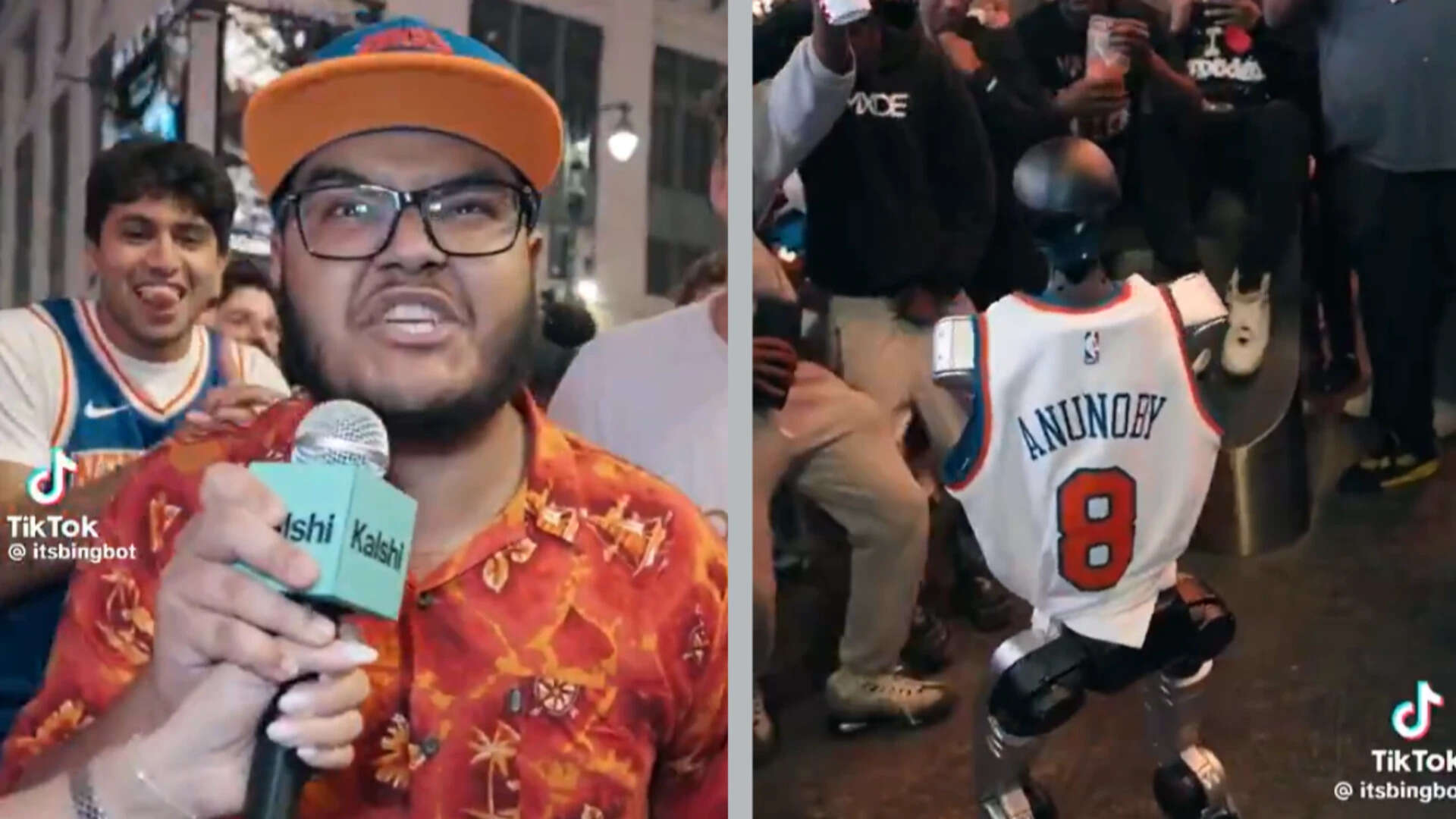
The mechanics of viral content are frequently misattributed to chaotic algorithmic variance or indefinable cultural resonance. This analysis rejects that premise. By examining the structural components of the viral phrase "My mayor Muslim, my bagel’s Jewish," generated by a Bangladeshi New York Knicks fan, we can isolate a highly repeatable operational framework: cultural arbitrage. Virality in modern digital ecosystems is achieved when an asset successfully leverages existing high-equity cultural nodes, exploits structural vulnerabilities in platform algorithms, and minimizes friction for audience distribution.
The Tri-Particle Node Framework
The success of this specific content asset relies on the intersection of three distinct cultural nodes, each possessing established audience equity. The creator did not manufacture relevance; they acted as a clearinghouse for existing sentiment.
       [Node 1: Civic Identity]
          (Hyper-local, New York)
                    |
                    |
[Node 2: Ethno-Religious Fusion] ---- [Node 3: Sports Fandom]
   (Subversion of friction)            (High-affinity emotion)
Node 1: Hyper-Local Civic Identity
The asset anchors itself in New York City iconography. By referencing localized staples (the mayoralty, the foundational food culture), the content accesses a self-replicating distribution network: New Yorkers sharing content that validates their localized experience. This forms the baseline geographic distribution tier.
Node 2: Subversive Ethno-Religious Fusion
The juxtaposition of Islamic and Jewish cultural markers utilizes a mechanism of cognitive dissonance reduction. In a macro-political environment characterized by friction between these groups, presenting them as harmonized components of a singular identity creates a psychological relief valve. The audience shares the asset because it signals a sophisticated, pluralistic worldview without requiring deep political engagement.
Node 3: High-Affinity Sports Fandom
The New York Knicks serve as the emotional multiplier. Sports fandom offers a pre-aggregated, highly active digital subculture. By tying civic and religious identity to a professional sports franchise during a period of high competitive relevance, the content captures the emotional momentum of an existing fan base.
The Economics of Attention: The Content Distribution Funnel
To quantify how a localized observation scales into a macro-trend, we must analyze the distribution pipeline through three distinct phases of velocity.
Phase 1: The Initial Injection (Low Friction, High Affinity)
The content originates within a high-density, low-scale environment—specifically, localized sports social media. The cost of acquisition for the first thousand views is near zero because the asset aligns perfectly with the pre-existing incentives of the audience (Knicks fans celebrating a victory). The primary driver here is peer-to-peer validation.
Phase 2: Algorithmic Amplification (The Velocity Threshold)
Platform engines track engagement density—the ratio of interactions (shares, comments, saves) to total impressions within a compressed timeframe. The tri-particle node structure ensures that multiple distinct algorithmic clusters are triggered simultaneously.
- The sports cluster engages via high comment volume.
- The civic cluster engages via high save and share rates.
- The cultural cluster generates external press aggregation.
When these clusters overlap, the platform algorithm flags the asset as universally relevant, moving it from niche feeds to broad-market discovery pages.
Phase 3: Institutional Co-Optation (The Scale Cap)
The final stage occurs when legacy media structures, corporate brands, or public figures mirror the content. This transition strips the asset of its organic utility but maximizes raw reach. At this peak, the phrase functions as a shorthand cultural meme, used by third parties to borrow the original creator's authenticity premium.
Structural Bottlenecks and Devaluation Risks
While the upside of cultural arbitrage is massive distribution, the model contains inherent structural failure points that limit long-term monetization and brand equity.
The Monetization Asymmetry
The fundamental flaw of virality driven by cultural arbitrage is the mismatch between attention volume and capture mechanisms. The creator owns the intellectual property of the phrase, but cannot easily restrict its usage. Because the barrier to replication is zero, competing entities (merchandise bootleggers, digital aggregators) capture the financial upside faster than the creator can scale an operational infrastructure.
The Shelf-Life Decay Function
The utility of the asset decays at an accelerating rate. The equation governing this depreciation is tied directly to the news cycle of the underlying nodes.
$$V = \frac{E \cdot A}{(T_c)^2}$$
Where:
- $V$ represents algorithmic velocity.
- $E$ represents the emotional equity of the sports franchise's current win-loss streak.
- $A$ represents the immediate relevance of the civic themes.
- $T_c$ represents the time elapsed since the peak cultural moment.
As the sports season concludes or political dynamics shift, the asset’s relevance approaches zero, rendering any late-stage monetization efforts (such as delayed merchandise launches) capital-destructive.
Operational Blueprint for Modern Media Capitalization
To convert fleeting algorithmic velocity into sustainable enterprise value, creators and media strategist must execute a hard pivot from distribution to institutionalization immediately upon clearing Phase 2 of the distribution funnel.
The first step requires the immediate deployment of a defensive intellectual property moat. Trademark filings for the core phrases must occur within forty-eight hours of algorithmic breakout. This prevents legacy brands from co-opting the asset without licensing compensation.
The second step demands a shift from the phrase to the persona. The viral phrase must be treated as a customer acquisition cost paid in attention. The traffic generated by that phrase must be funneled into owned-and-operated channels—such as long-form analysis platforms, subscription newsletters, or specialized media networks—where the audience can be conditioned to value the creator’s analytical framework rather than the specific meme that drew them in.
The final strategic play requires transforming the organic moment into a structured partnership model. Instead of relying on direct consumer sales (e.g., selling independent t-shirts), the creator must leverage their temporary attention monopoly to secure institutional placement. In this specific case, that translates to establishing formal content creation agreements with the sports franchise or municipal tourism entities. This shifts the financial risk of production and distribution onto capitalized organizations while securing a guaranteed baseline revenue stream for the creator before the inevitable decay cycle completes.