The post-1945 international system operated on an implicit exchange: the United States provided global security guarantees and open market access in exchange for institutional compliance and alliance alignment. Washington has terminated that exchange. Through unilateral military interventions in Venezuela and Iran, punitive tariff regimes against treaty partners, and selective accommodation toward Beijing, the current administration has replaced rules-based multilateralism with transactional bilateralism. The immediate consequence is not an orderly transition to a new global governance model, but an acute trust deficit that forces middle powers to hedge, rearm, and construct redundant geopolitical blocs.
The Mechanics of Alliance Erosion
To understand why traditional coalitions are stalling, examine the Security-Autonomy Tradeoff. Under classical hegemonic stability theory, smaller states surrender foreign policy independence when a dominant power credibly absorbs their defense costs. Once the hegemon introduces volatility into its security commitments, the rational response for dependent states is immediate rearmament and diplomatic diversification.
Three structural failures demonstrate this mechanism in practice:
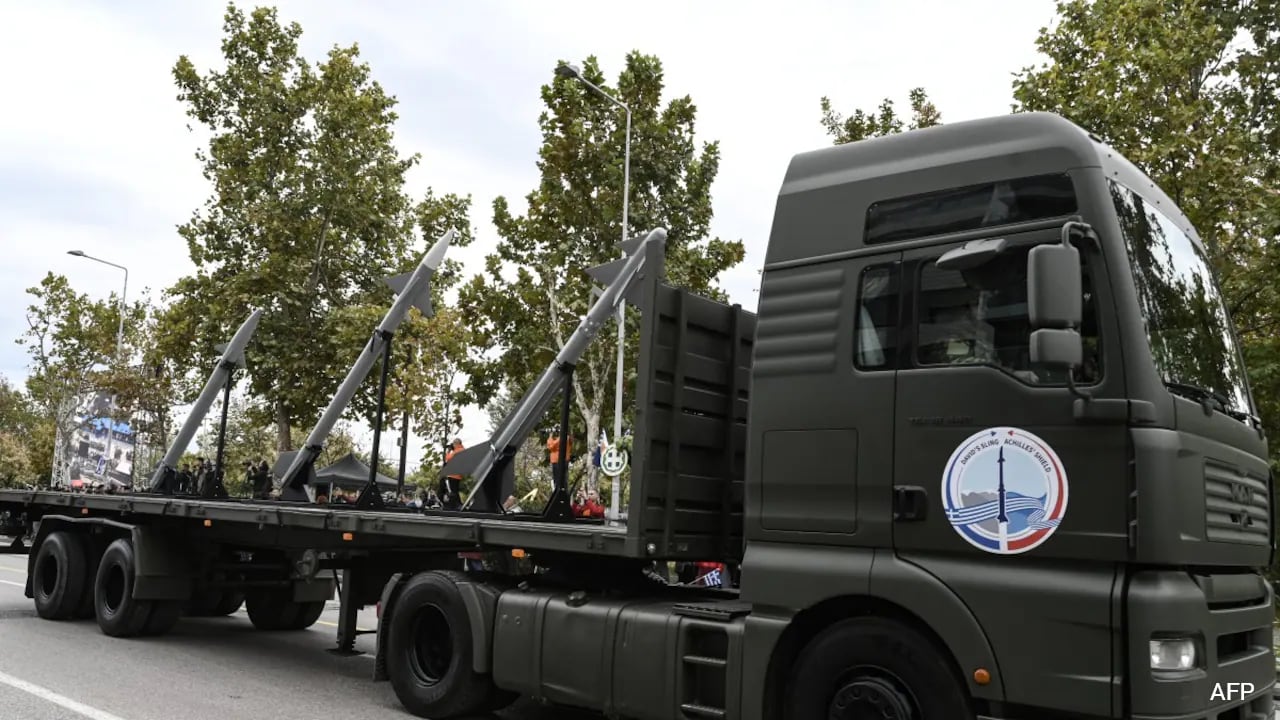
- The Unraveling of Collective Deterrence in Europe: Washington's shifting posture on the Ukraine conflict and its explicit directive for allies to self-fund their security have degraded confidence in NATO's nuclear and conventional umbrella. European capitals are no longer debating burden-sharing; they are scrambling to establish sovereign defense industrial bases. This creates a secondary friction point. For decades, American command suppressed intra-European historical rivalries. As Germany accelerates military procurement to become the continent's primary conventional force, friction with France over defense leadership and procurement standards intensifies.
- The Fracture of the G7 Consensus: Economic coercion aimed at close partners has turned a unified Western bloc into a collection of competing negotiators. When Washington threatens punitive tariffs against neighbors or pressures allied governments over sovereign territory—such as disputes involving Greenland—it destroys the institutional cohesion of the G7. Ottawa's exploration of deeper institutional association with the European Union illustrates how economic friction directly drives diplomatic realignment.
- Normative Collapse at the United Nations: Unilateral military actions conducted without Security Council authorization or allied consultation—specifically the intervention in Venezuela and strikes on Iranian nuclear infrastructure—strip Washington of its ability to invoke the UN Charter against rivals. When the primary architect of international law treats legal constraints as optional, mid-sized states conclude that hard power is the sole reliable currency.
The Three Pillars of Indo-Pacific Recalibration
Nowhere is the gap between alliance rhetoric and strategic execution wider than in the Indo-Pacific. For years, American grand strategy relied on networked deterrence to contain Chinese expansion. Today, transactional signaling from Washington has introduced severe ambiguity into regional security calculations.
1. Great-Power Accommodation Signals
Public discussions of a "G2" framework alongside symbolic shifts—such as downplaying the "Indo" framing within regional military command structures—send a clear message to Asian capitals. Washington prioritizes bilateral deal-making with Beijing over multilateral containment. When the dominant ally signals willingness to strike grand bargains with the primary regional threat, frontline states must assume their core security interests could be traded away in a tariff or trade negotiation.
2. Institutional Drift in the Quad
While bureaucratic channels at the State Department maintain diplomatic continuity, high-level momentum for the Quadrilateral Security Dialogue has stalled. Delays in hosting leader-level summits reflect a deeper hesitation among partners. India, Australia, and Japan cannot commit fully to a containment architecture if the anchor state's commitment fluctuates with electoral cycles and bilateral trade talks.
3. Unilateral Rearmament and Escalation Spirals
Facing an uncertain American security guarantee, Tokyo has accelerated its own defense buildup. In security studies, this triggers a classic Security Dilemma: defensive preparations by one state are interpreted as offensive threats by its neighbor. Beijing has responded with heightened diplomatic and maritime pressure against Japanese leadership. Simultaneously, Taipei faces acute vulnerability, forced to calculate whether American deterrence remains credible or if defense support has become strictly conditional on commercial concessions.
The Cost Function of Transactional Diplomacy
Proponents of unilateral disruption argue that unpredictable leverage extracts better trade terms and forces allies to pay their fair share. From an operational standpoint, this approach ignores the hidden Transaction Costs of Distrust.
In a rules-based system, compliance is largely voluntary and self-enforcing because participants expect predictable long-term returns. In a purely transactional system, every diplomatic interaction requires bilateral enforcement, constant renegotiation, and costly hedging.
- Loss of Coalition Multipliers: When the United States acts alone in theaters like West Asia or Latin America, it absorbs 100 percent of the financial, military, and reputational costs. Allies withhold intelligence, basing rights, and diplomatic cover when they are excluded from decision-making.
- Accelerated De-Risking by Partners: Targeted tariffs do not merely rebalance bilateral trade deficits; they incentivize allies to build supply chains and financial clearing mechanisms that exclude the United States. Once built, this parallel infrastructure permanently reduces Washington's sanctions leverage.
- Strategic Space for Non-Western Blocs: Every rupture within the G7 or NATO lowers the barrier to entry for alternative groupings. Moscow and Beijing actively exploit Western disunity to revive forums like the Shanghai Cooperation Organization and push for trilateral dialogues such as the Russia-India-China format. Non-Western powers do not need to offer a superior ideological model; they only need to position themselves as predictable partners in contrast to American volatility.
Strategic Hedging Operationalized
Because no single hegemon can currently enforce global rules and no alternative coalition possesses the capacity to replace the Bretton Woods institutions, the international system has entered an era of Asymmetric Multipolarity. States cannot rely on permanent alliances; they must manage portfolios of overlapping, issue-specific partnerships.
Limitations of the Hedging Model
Strategic autonomy is expensive and carries severe operational constraints. First, middle powers lack the fiscal capacity to simultaneously fund domestic welfare, green transitions, and full-spectrum military deterrence. Second, multi-alignment works in peacetime trade negotiations, but it collapses during kinetic crises when great powers demand binary choices over basing, intelligence sharing, and sanctions enforcement. Third, regional blocs like the European Union struggle with collective action problems; without an external hegemon to enforce discipline, internal vetoes often paralyze rapid crisis response.
The Strategic Play for Middle Powers and Multinationals
Do not wait for a restoration of the pre-2025 international consensus; institutional trust, once broken at the sovereign level, takes decades to rebuild. Governments and global enterprises operating across these fault lines must execute three immediate structural adjustments:
- Modularize Supply Chains and Defense Procurement: Replace single-source dependencies with regionalized redundancy. Enterprises must structure manufacturing and capital flows inside distinct trade zones—North America, the European Union, and ASEAN—to insulate operations from sudden bilateral tariff shocks. Governments must standardize defense procurement around interoperable regional frameworks rather than relying exclusively on single-supplier platforms.
- Shift from Standing Alliances to Minilateral Coalitions: Abandon reliance on broad, consensus-driven institutions that are vulnerable to great-power vetoes or erratic leadership. Concentrate diplomatic capital on small, interest-aligned groupings—such as bilateral technology pacts, maritime security corridors, and targeted resource-sharing agreements—where mutual incentives are concrete and immediate.
- Price Geopolitical Volatility into Capital Allocation: Treat regulatory, tariff, and sanctions risk as permanent baseline costs rather than temporary political anomalies. Sovereign wealth funds, infrastructure planners, and corporate boards must stress-test all cross-border investments against scenarios of sudden market closure, unilateral sanctions, and fractured security guarantees before deploying capital.