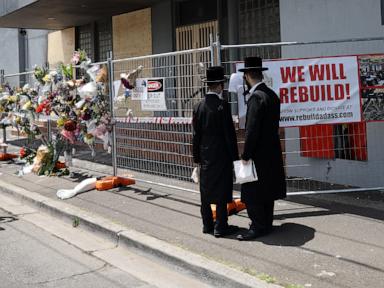
The arrest of a third suspect in the December 2024 arson attack on Melbourne’s Adass Israel Synagogue exposes a structural shift in state-sponsored gray-zone operations. Transnational sabotage is no longer the exclusive domain of highly trained, in-country intelligence operatives. Instead, foreign adversaries—specifically the Islamic Revolutionary Guard Corps (IRGC)—increasingly employ a decentralized, multi-tiered outsourcing model that leverages local criminal elements to execute low-tech, high-impact kinetic strikes.
This operational framework provides state actors with plausible deniability while shifting the immediate legal and physical risks onto disposable local assets. For intelligence agencies and domestic law enforcement, mapping this model requires a departure from traditional counter-espionage protocols. Security teams must analyze the mechanism through the structural layers that connect sovereign intent to local execution.
The Three Tiers of the Decentralized Sabotage Model
The operational pipeline that culminated in the Melbourne synagogue arson relies on a distinct separation of labor, designed to break the chain of attribution. By analyzing the structural roles of the actors involved, we can isolate three distinct operational tiers.
Tier 1: The Sovereign Director (Strategic Intent)
At the apex sits the state intelligence apparatus—in this instance, the IRGC. This tier establishes the strategic objective, allocates the financial capital, and selects the target profile based on geopolitical calculations. The primary objective at this level is political signaling and societal disruption rather than total military destruction.
Tier 2: The Network Intermediary (Operational Control)
The operational core consists of a complex web of proxies, often operating out of regional hubs or dark-web marketplaces. These intermediaries act as a firewall between the sovereign director and the local executors. They manage the capital flows via decentralized financial networks or hawala systems, translate strategic intent into tactical tasks, and recruit local assets. This layer ensures that if the field operatives are captured, they possess no direct knowledge of the sovereign director.
Tier 3: The Local Executor (Tactical Execution)
The lowest tier comprises local criminal actors who perform the physical act of sabotage. In the Melbourne case, this involved three individuals: Giovanni Laulu (21), Younes Ali Younes (20), and an unnamed 20-year-old accomplice already held in custody on unrelated offenses. These assets are typically chosen for their lack of ideological alignment with the state sponsor. They are motivated by financial incentives or the settlement of local criminal debts, making them highly disposable and legally isolated from the broader network.
The Strategic Cost Function of Kinetic Outsourcing
State adversaries utilize this outsourced model because it optimizes the strategic cost function of foreign interference. Traditional espionage operations incur massive political and structural expenses if compromised. The outsourced sabotage framework minimizes these risks across three specific vectors.
- Avenal of Attribution: By hiring local criminals with existing records for non-political offenses, the state sponsor introduces immediate ambiguity. Initial law enforcement responses naturally categorize the incident as localized hate crime or street-level arson, buying time for the intermediary networks to dissolve or relocate.
- Capital Efficiency: Deploying a dedicated intelligence officer to infiltrate a country, acquire materials, and execute an attack costs hundreds of thousands of dollars in operational security and logistical overhead. Recruiting localized criminal assets requires minimal capital outlay, often limited to small crypto transfers or cash payouts, yielding a high return on disruption per dollar spent.
- Information Isolation: Australian Federal Police investigators confirmed that a key line of inquiry is determining whether the three local executors even knew who ordered the attack. This structural ignorance is a deliberate design feature. Because the local executors are blind to the identity of the principals, their capture does not automatically compromise the Tier 2 or Tier 1 actors.
Attribution Friction and Diplomatic Escalation
While the architecture of proxy warfare creates significant operational insulation, it does not provide permanent immunity. The transition from localized criminal investigation to international attribution relies on the coordination of state and federal counter-terrorism squads alongside domestic spy agencies like the Australian Security Intelligence Organisation (ASIO).
Once technological forensics, financial tracking, and communications intelligence breach the firewall between Tier 3 and Tier 2, the diplomatic consequences follow a structured escalation ladder. In response to the Melbourne synagogue fire and a synchronized attack on a Sydney kosher establishment, the Australian government enacted a definitive policy response:
- Expulsion of Diplomatic Cover: The immediate removal of Iran’s ambassador and three additional diplomats. This action serves to degrade the legal intelligence-gathering capabilities of the state sponsor within the target nation.
- Legislative and Judicial Inquiry: Establishing public inquiries to codify the rise of state-sponsored threats and domestic extremism, shifting the issue from a law enforcement problem to a national security priority.
- International Intelligence Integration: Relying on global partnerships to track the transnational financial nodes used by Tier 2 intermediaries, closing the banking gaps that allow foreign capital to fund domestic sabotage.
The primary limitation of this defensive framework is its reactive nature. Because the local criminal assets are drawn from a broad pool of non-ideological offenders, predictive profiling is highly difficult. Security apparatuses must therefore pivot from trying to predict the specific asset to hardening the physical security of high-value cultural and commercial infrastructure, while simultaneously imposing severe financial and diplomatic costs on the intermediary networks that facilitate the transactions.


