The Weight on the Line
The phone on a diplomat’s desk does not ring with a pleasant chime. It vibrates with a low, heavy thud that seems to shake the floorboards of embassies from Washington to New Delhi. When those phones began buzzing frantically during the latest escalation in West Asia, the air in the briefing rooms grew instantly cold. Millions of lives hung on the next moves of a few fractured governments. The world watched the public statements, the grandstanding, and the threats.
But geopolitics is rarely decided in front of a microphone. It happens in the quiet spaces between the shouting.
Consider a hypothetical desk in New Delhi. On it sits a secure line connecting to Washington, another to Riyadh, another to Tehran, and yet another to Tel Aviv. Very few nations hold the keys to all of those rooms simultaneously. Most countries are forced to pick a side of the fence and stay there, throwing rhetorical stones. India, however, has quietly spent decades building a different kind of architecture. It is an architecture of radical pragmatism.
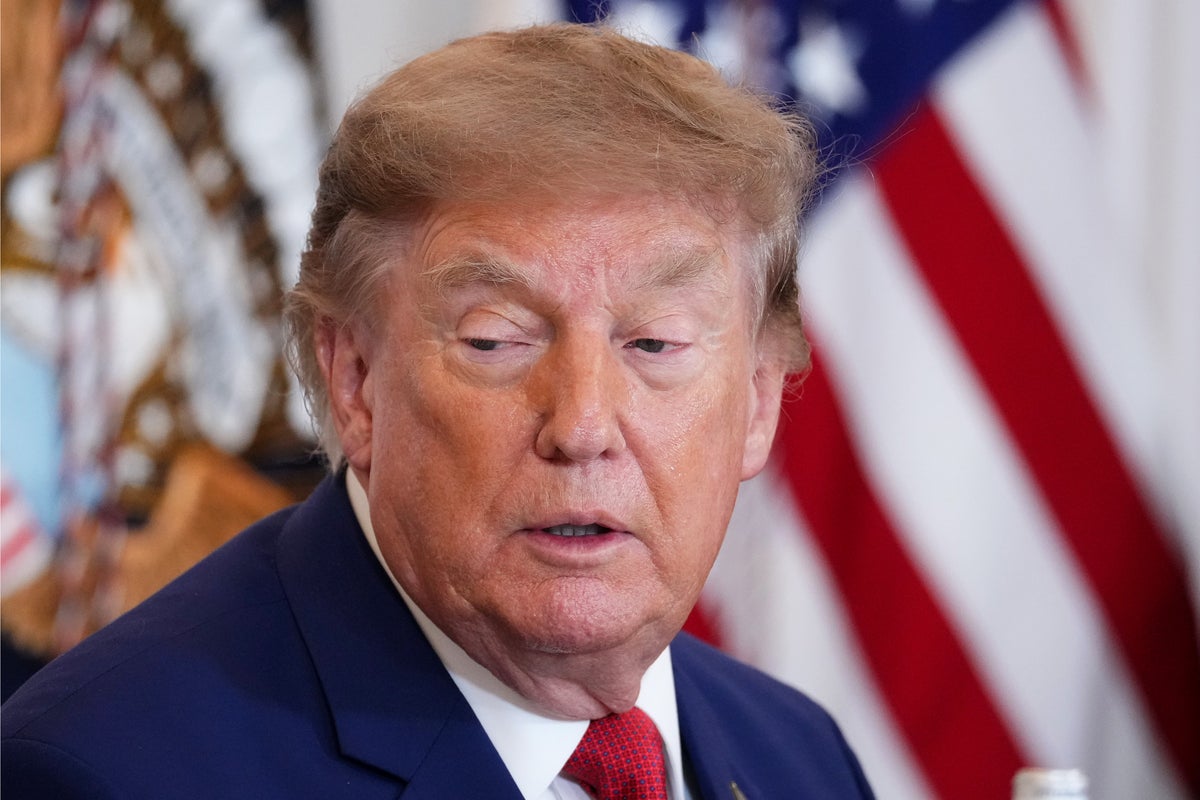
When Donald Trump publicly labeled India a "trusted ally" playing a "big role" in managing the West Asia crisis, he was not just tossing out standard diplomatic flattery. He was acknowledging a stark, functional reality. In a region fractured by centuries of deep-seated animosity, India has emerged as the rare actor capable of speaking to everyone without immediately alienating the others.
This is not a story about passive neutrality. It is about the immense, exhausting labor of active balancing.
The Art of the Multi-Vector Handshake
To understand why this matters, we have to look past the official press releases and look at the geometry of global power. For decades, Western foreign policy in West Asia operated on a system of rigid alliances. You were either with the West, or you were against it. But that binary framework has repeatedly fractured under the weight of reality.
Enter New Delhi’s strategy. They call it multi-alignment.
It sounds like academic jargon. Let us strip that away. Imagine walking into a room full of people who genuinely despise each other, maintaining a warm, functioning business relationship with every single person in that room, and leaving without anyone drawing a weapon. That is India’s daily diplomatic schedule.
Look at the ledger. India is part of the I2U2 Group, a mini-lateral partnership that binds it closely with the United States, the United Arab Emirates, and Israel. To the casual observer, this looks like a firm commitment to one specific bloc. Yet, at the exact same time, New Delhi maintains a deep, strategically vital relationship with Iran, anchored by the development of the Chabahar Port.
How do you look at Tel Aviv and Tehran simultaneously and convince both that you are a reliable partner?
You do it by removing ideology from the equation. India does not approach West Asia as a preacher looking to convert regimes or a judge looking to pass moral sentences. It approaches the region as an economic and security partner that requires stability above all else. This blunt honesty is exactly what makes them a trusted ally to Washington while remaining a welcome guest in capitals that view Washington with absolute hostility.
The Invisible Stakes of Energy and People
Foreign policy can feel abstract. We talk about spheres of influence and strategic depth as if we are playing a grand game of chess on a wooden board. But for India, the West Asia crisis is not a game. The stakes are intensely human, measured in the daily survival of millions of its citizens.
Step outside the diplomatic corridors and look at the numbers that actually drive these decisions. Nearly nine million Indian expatriates live and work in the Gulf region. They are construction workers in Dubai, nurses in Riyadh, IT specialists in Doha, and engineers in Kuwait. They send home tens of billions of dollars in remittances every year, sustaining entire economies in states like Kerala and Punjab.
If West Asia truly ignites, those nine million people are in the direct line of fire.
During previous regional conflicts, the Indian government had to execute some of the largest civilian airlifts in human history to bring its people home safely. No leader in New Delhi wants to repeat that logistical nightmare. When Indian diplomats work behind the scenes to de-escalate tensions, they are not just hunting for a headline. They are protecting their own blood and flesh.
Then there is the matter of keeping the lights on. India imports over eighty percent of its crude oil. A massive portion of that energy flows directly through the narrow, tense maritime chokepoints of the Middle East, such as the Strait of Hormuz. A single miscalculation by regional powers, a single stray drone striking a tanker, sends shockwaves through Indian markets.
When global oil prices spike, the cost of vegetables in a local market in Mumbai skyrockets. The connection is direct. The geopolitical is intensely personal.
The Washington Validation
When the White House explicitly highlights India’s "big role," it signals a massive shift in how the West views global policing. The United States has realized that its own footprint in West Asia is heavy, controversial, and often polarizing. Washington cannot play the mediator in spaces where its very presence sparks protests.
It needs a bridge. India is that bridge.
Consider what happens next when a crisis erupts. Washington needs to convey a message to an adversary in the region, but direct communication is politically impossible or loaded with baggage. A trusted mutual acquaintance becomes invaluable. India’s credibility rests on the fact that it does not carry the historical baggage of Western interventionism in the region. It has never invaded, it has never sanctioned, and it has never attempted regime change.
This clean record creates a rare commodity in modern politics: trust.
This trust allows India to champion projects like the India-Middle East-Europe Economic Corridor, an ambitious transit route designed to link South Asia to Europe via the Arabian Gulf. It is a vision of connectivity that bypasses traditional conflict zones and locks nations into mutual financial prosperity. But a corridor cannot built through a war zone. Economic dreams require geopolitical stillness.
The Vulnerability of the Tightrope
It is easy to paint this strategy as a masterclass in flawless execution. But let us be honest: walking a tightrope over a burning chasm is terrifying. The strategy is fragile. It requires constant, exhausting maintenance, and the margins for error are razor-thin.
What happens when the contradictions become too loud to ignore? What happens when an escalation forces a choice that cannot be deferred or massaged with clever language?
Every time India votes on a United Nations resolution regarding West Asia, its diplomats must weigh every syllable. A word too far to one side alienates Israel, a crucial defense and technology partner. A word too far to the other side angers the Arab world, endangering those nine million workers and millions of barrels of oil. It is a diplomatic obstacle course where the ground moves beneath your feet.
The world is watching to see if this pragmatic approach can truly hold the line. Critics argue that multi-alignment is just a fancy term for fence-sitting, an attempt to reap the benefits of global partnerships without taking on the moral responsibilities of a superpower. But in a region where moral grandstanding has led to decades of ruin, perhaps a cold, transactional focus on stability is exactly what the world needs.
The true test of India's role does not lie in the grand statements made by foreign leaders in Washington or New Delhi. It is found in the quiet, unheadlined phone calls that happen when the world holds its breath, waiting to see if the missile will fly or the tanker will pass safely through the night.
The phones continue to vibrate. The diplomats continue to speak in low, deliberate tones. The tightrope remains stretched taut across the globe, and the walk is far from over.