The coffee in Ottawa gets cold quickly in November. It sits on mahogany tables inside offices where the carpet is thick enough to swallow the sound of approaching footsteps, creating a strange kind of silence. In rooms like that, history is rarely shouted. It is murmured over binders marked confidential, punctuated by the soft click of a fountain pen or the heavy exhale of a negotiator who has realized the math no longer works.
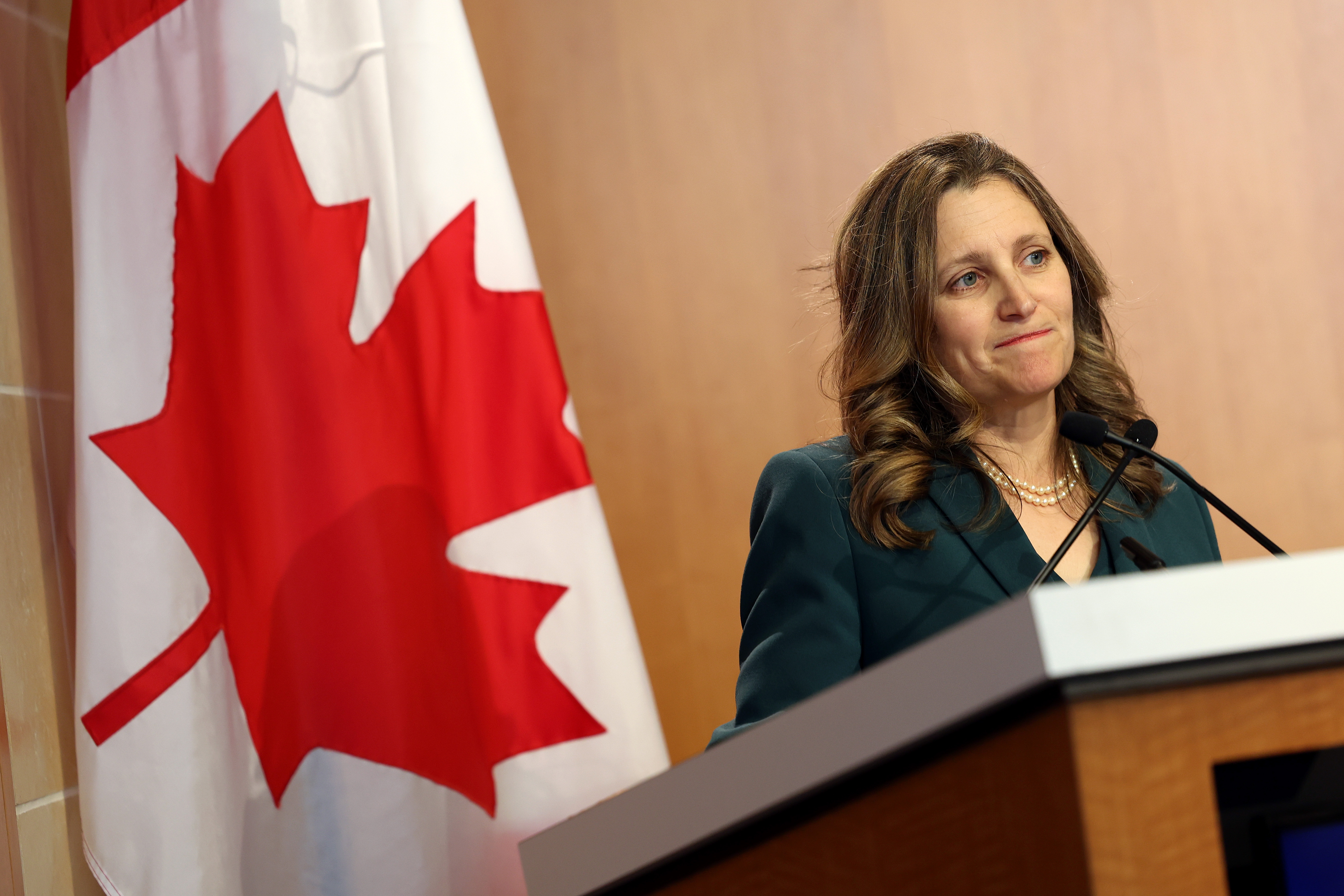
Chrystia Freeland knows those rooms. She knows the particular weight of a silent desk when the phone lines to the south go dead. For years, her job has been translation—not just of language, but of temperament. She has stood across the aisle from political actors who treat international trade agreements like real estate developments, measuring partnership not by shared history or the long arc of continental defense, but by the immediate, transactional yield of a single afternoon.
Now, the trade war she once negotiated her way around is no longer a looming abstract projection on a slide deck. It is here. It breathes. It presses against the steel mills of Hamilton and the automotive assembly lines of Windsor, turning familiar supply chains into friction points.
Consider what happens to a town built around a single border crossing when the rules change overnight. Let us call it 100 Mile House, or any of the quiet municipalities where the local economy depends entirely on the rhythm of a green light on a bridge. In a hypothetical scenario that mirrors reality across thousands of small businesses, a logistics manager named Marcus arrives at his desk at dawn. His inbox holds three emails from suppliers in Michigan and Ohio. Two of them contain new tariff schedules that effectively double the cost of component parts. The third is an apology: his primary distributor is pausing all cross-border shipments pending federal clarification.
Marcus does not care about geopolitical theory. He cares about payroll on Friday.
That is where the grand architecture of international trade meets the unyielding pavement of daily survival. Freeland’s career has been an ongoing exercise in bridging that exact chasm. When she sat across from U.S. Trade Representative Robert Lighthizer and senior administration officials during the renegotiation of NAFTA into the USMCA, the strategy required a peculiar brand of endurance. It meant absorbing volatility without flinching, recognizing that political theater in Washington often demanded public friction, even when private consensus was within reach.
She studied economic history at Oxford and worked as a journalist in Moscow during the chaotic collapse of the Soviet Union. That background leaves a mark. It teaches you that systems do not fail because they are complex; they fail because the human beings operating them lose the capacity to imagine the perspective of the person sitting across the table. When you watch her observe the unfolding trade friction today, you see the posture of someone who recognizes an old storm returning under a different name.
The mechanics of modern protectionism are seductive in their simplicity. Build a wall, tax the neighbor, protect the domestic producer. It is an argument with immediate emotional resonance. It sounds like protection. It feels like strength. But modern supply chains do not operate like medieval fiefdoms. A single automobile crosses the Canada-U.S. border up to eight times during its manufacturing lifecycle. It is wired in Ontario, stamped in Ohio, fitted with software from California, and assembled in Michigan.
When you tax that car, you are not punishing a foreign adversary. You are taxing yourself. You are slicing a single piece of paper into confetti and wondering why it no longer flies straight.
Freeland understood this deeply during the grueling months of the USMCA talks. Her team mapped every cross-border dependency down to the individual fastener. They knew that if the auto pact fractured, the shockwaves would not hit federal ministries first; they would hit the floor of a machine shop in Oshawa where workers have spent thirty years perfecting the tolerance of a transmission gear.
Yet, watching a trade war unfold from the outside is a different kind of trial. Negotiation is active. It requires your pulse to match the room, your voice to steady the fluctuations of a volatile counterpart. Watching is passive. It is the helpless sensation of a chess player who has left the table, forced to stand behind the barrier as another match begins with pieces they spent years carving.
The global trade landscape has shifted from rules-based predictability to transactional fragmentation. Allies are no longer shielded by institutional muscle memory. Every renegotiation, every election cycle, brings the architecture of cooperation back to the drafting table. For a mid-sized trading nation like Canada, this is an existential vulnerability. When elephants dance, the mouse does not merely worry about being crushed; it worries about the grass disappearing entirely.
To look at Freeland during these moments is to see the quiet calculation of a pragmatist facing ideological weather. She is not given to histrionics. Her responses to rising protectionist rhetoric are measured, sometimes frustratingly so to domestic critics who demand blood and thunder. But diplomacy is rarely saved by theatrical defiance. It is preserved by keeping channels open when everyone else is slamming doors, and by refusing to return a cheap insult when the long-term price of retaliation is paid in domestic jobs.
The real danger of a modern trade war is not the immediate imposition of tariffs, corrosive though they are. The true hazard is the slow decay of trust. Once supply chains are severed, they do not automatically reconnect when a political administration changes. Companies diversify away from risk. They find new partners in Europe, in Asia, in domestic markets that cost more to build but offer political immunity.
Borders thicken. The invisible friction accumulates. A shipment that once cleared customs in twenty minutes now sits for three days while bureaucrats argue over origin rules. Small businesses give up on exporting altogether. The economy shrinks not with a dramatic crash, but through a thousand quiet withdrawals.
This is the reality playing out behind the headlines of diplomatic cables and ministerial statements. It is the story of ordinary people navigating the collateral damage of political theater they did not write and cannot control.
When the evening falls over Ottawa and the lights in the Langevin Block stay on late, the work continues in whispers. The coffee is cold. The documents are dense. And somewhere out on a freezing highway near the Detroit-Windsor tunnel, a transport truck idles in line, waiting for clearance into a world that is rapidly forgetting how to share a fence.
There are no clean victories in this space. There is only the relentless, unglamorous effort to hold the line until sanity returns to the room. Freeland watches the trade war unfold because she knows that history is not something that happens to us from a distance. It is something we build, brick by contested brick, across borders that are only ever as secure as the patience of the people guarding them.