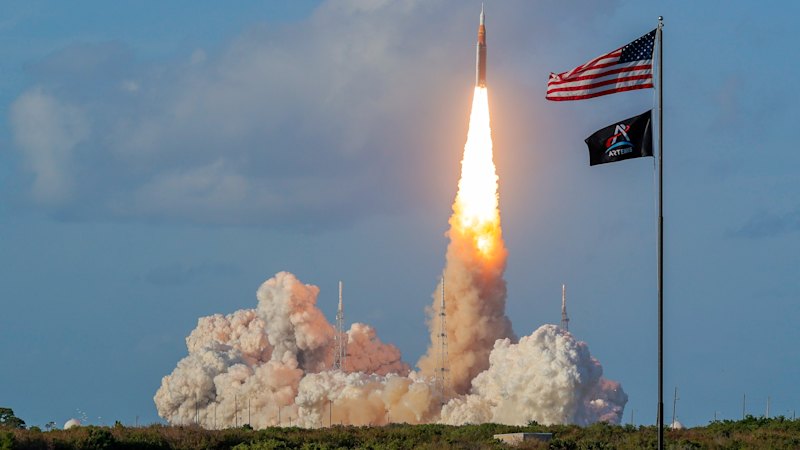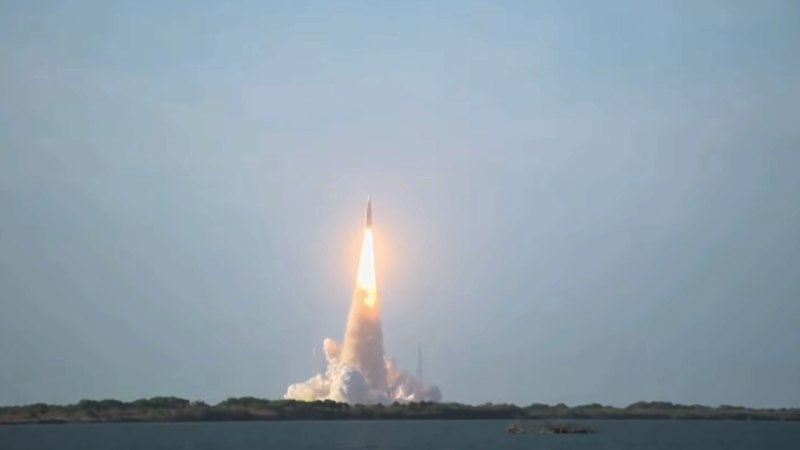
The Artemis II mission represents more than just a flight path around the lunar far side. It is the first time humans will leave low Earth orbit since 1972, carrying a crew of four into a high-stakes orbital ballet meant to prove that NASA’s Space Launch System (SLS) and the Orion spacecraft can actually sustain life in deep space. While the headlines focus on the nostalgia of the Apollo era, the reality on the ground is a grueling battle against ballooning budgets, aging infrastructure, and a hardware architecture that many critics argue was obsolete before it ever hit the launchpad.
This mission is a flight test under the most extreme conditions imaginable. The crew—Commander Reid Wiseman, Pilot Victor Glover, Mission Specialist Christina Koch, and Mission Specialist Jeremy Hansen—are effectively the ultimate sensors in a system that has only flown once without passengers. They are testing the life support systems, the manual handling of the Orion capsule, and the radiation shielding that must protect them once they pass through the Van Allen belts. If Artemis II succeeds, it validates a multi-billion dollar bet. If it fails, it likely ends the dream of a permanent human presence on the Moon for a generation. In other news, read about: The Hollow Classroom and the Cost of a Digital Savior.
The SLS Debt Trap
The Space Launch System is a beast of a rocket, but it is also a political creature. Built using components derived from the Space Shuttle—including the RS-25 engines and solid rocket boosters—it was designed to keep existing supply chains alive. This decision saved some development time but locked NASA into a high-cost, non-reusable architecture. Every time an SLS clears the tower, over $2 billion in hardware is dropped into the ocean.
Unlike the commercial sector, where companies like SpaceX are driving down costs through rapid reuse, the SLS is a "single-use" titan. This creates a massive financial bottleneck. To understand the scale of the problem, consider that the total cost of the Artemis program is projected to hit $93 billion by 2025. That is a staggering sum for a program that, until Artemis II, hasn't put a single boot on the ground or even a human in the seat. Engadget has provided coverage on this important subject in extensive detail.
The pressure on Artemis II is immense because the mission must justify this burn rate to a Congress that is increasingly skeptical of "flags and footprints" missions. The objective isn't just to orbit the Moon; it is to prove that the Orion’s European Service Module can handle the thermal swings and power requirements of a ten-day mission without the safety net of a quick return to Earth. Once the crew performs the Trans-Lunar Injection (TLI) burn, they are committed. There is no turning back early if a CO2 scrubber fails.
Orion and the Shielding Question
The Orion capsule is significantly larger and more capable than the Apollo Command Module, but it faces a more hostile environment. The Apollo missions happened during a relatively quiet solar period. Artemis II enters an era of unpredictable solar activity.
Radiation Mitigation in Deep Space
Engineers have packed Orion with shielding, but the most innovative "shield" is the cargo itself. In the event of a solar particle event, the crew is trained to retreat to the central part of the cabin and use stowage bags filled with water and supplies to create a makeshift radiation bunker. It is a low-tech solution to a high-tech problem.
The heat shield is another point of intense scrutiny. During the Artemis I uncrewed reentry, the Avcoat thermal protection system wore away in a manner that wasn't exactly what the models predicted. Small pieces of the shield "charred" and liberated differently than expected. NASA has spent months analyzing this data, knowing that with four humans on board for Artemis II, the margin for error on reentry is non-existent. They will hit the atmosphere at 25,000 miles per hour, generating temperatures that reach half the surface of the sun.
The Logistics of a Lunar Loop
Artemis II does not land. It follows a "hybrid free-return trajectory." This is a clever bit of orbital mechanics. The spacecraft will first enter a high Earth orbit to allow the crew to test the ship’s systems while they are still close enough to abort and land quickly. Once satisfied, they will fire the engines to swing around the Moon.
The gravity of the Moon will naturally pull them around and sling them back toward Earth. This trajectory is a safety feature. Even if the main engine fails after the TLI burn, the laws of physics will eventually bring them home. However, "eventually" is a long time when you are trapped in a small pressurized can with three other people. The psychological toll of being the furthest humans from Earth in history—roughly 230,000 miles away—cannot be overlooked.
The Commercial Contradiction
While NASA builds the rocket and the capsule, they are relying on the private sector for almost everything else. This creates a strange friction. The SLS is a government-owned, "old-school" rocket, but the lunar lander for Artemis III and beyond is a modified version of SpaceX’s Starship.
This creates a massive technological gap. You have a capsule (Orion) designed for a 1960s-style mission profile trying to interface with a 21st-century refueling and landing system. The complexity of this "handshake" in lunar orbit is unprecedented. Artemis II is the bridge. It has to prove that the Orion can function as a command ship, a role it will need to play when it eventually meets the Starship HLS (Human Landing System) in later missions.
The Problem with the Mobile Launcher
Even the ground equipment is a source of tension. The Mobile Launcher 1, the massive tower that supports the SLS before launch, suffered significant damage during the Artemis I liftoff. Corrosive blast residue and the sheer acoustic force of the solid rocket boosters warped steel and blew out elevators. The repairs and "hardening" required for Artemis II have added months to the timeline and millions to the bill. It is a reminder that in moonshots, the "ground truth" is often as difficult as the vacuum of space.
Why the Far Side Matters
During the mission, the crew will pass over the lunar far side, the hemisphere that never faces Earth. For a period of time, they will be in total radio silence. No Mission Control. No family calls. No data streams.
This period of isolation is a critical test of crew autonomy. In the Apollo days, the "loneliest man" was the Command Module Pilot while his two crewmates were on the surface. On Artemis II, all four will experience this total disconnection together. They will be looking at a landscape cratered by billions of years of impacts, scouting for the South Pole regions where NASA hopes to find water ice in future missions. This ice isn't just for drinking; it is the "oil" of the solar system, capable of being broken down into hydrogen and oxygen for rocket fuel.
The Shadow of Apollo
It is impossible to discuss Artemis II without the ghost of Apollo 8. In 1968, that mission provided the "Earthrise" photo that changed how humanity viewed its home. Artemis II seeks a similar cultural moment, but in a fractured, digital world.
The mission will carry high-definition cameras and high-bandwidth laser communications. We won't be looking at grainy black-and-white feeds; we will see the Moon in 4K. But the question remains: is the public's appetite for space exploration high enough to sustain the cost? During the 1960s, NASA’s budget was nearly 4% of the federal total. Today, it is less than 0.5%.
The veteran analysts in the room know that Artemis II isn't just testing a heat shield or a life support system. It is testing the political will of the United States to remain a spacefaring nation. If the mission is delayed further—or if it encounters a significant anomaly—the "Moon to Mars" roadmap will likely be scrapped in favor of more robotic missions or a retreat to low Earth orbit.
The Risks No One Likes to Mention
Spaceflight is never routine. The SLS uses solid rocket boosters that cannot be turned off once they are lit. If there is a problem in the first two minutes of flight, the crew relies on the Launch Abort System (LAS), a smaller rocket sitting on top of the capsule, to pull them away from the main stack.
The LAS is a marvel of engineering, capable of pulling the crew from 0 to 500 mph in two seconds. But using it is a violent, terrifying experience that would likely result in the loss of the spacecraft, even if the crew survives. For Artemis II, the goal is to never need it.
Then there is the issue of the "Service Module." Provided by the European Space Agency (ESA), it handles the propulsion, power, and temperature control. It is a complex international partnership. If a valve sticks or a solar array fails to deploy, the mission's objectives shift from "exploration" to "survival." This is the reality of deep space; you are always one hardware failure away from a catastrophe.
The Real Goal of Artemis II
The primary objective is simple: Demonstrate. * Demonstrate that the Orion can ventilate the cabin and scrub CO2 with four active adults.
- Demonstrate that the communication arrays can track Earth from lunar distances.
- Demonstrate that the crew can manually fly the Orion during proximity operations.
The last point is vital. On Artemis II, the crew will perform a "proximity operations" demonstration using the discarded second stage of the rocket (the ICPS). They will fly Orion close to it, backing up and moving in, to simulate how they will eventually dock with a lunar lander or the Gateway space station. This isn't just showing off; it is a required skill for the missions that follow.
The Fragile Path Forward
The Artemis II crew are not just pilots; they are flight testers in a vehicle that is a strange mix of heritage tech and futuristic dreams. They are flying in a capsule that is more cramped than a minivan, for ten days, with no shower and a toilet that has a history of being finicky in microgravity.
The mission is the ultimate stress test for an agency that has spent decades in the shadow of its own history. NASA needs Artemis II to be boringly perfect. They need the SLS to roar, the Orion to glide, and the crew to return safely to a splashdown in the Pacific.
But in the aerospace industry, "boring" is expensive and hard-won. The engineers at Kennedy Space Center are working 24/7 because they know that every bolt tightened and every wire checked is a hedge against the inherent violence of space travel. They are not just building a rocket; they are trying to prove that the Artemis architecture—despite its critics and its massive price tag—is the right way back to the Moon.
The hardware is on the pad. The crew is in training. The math has been double and triple-checked. Now, the only thing left is to see if the reality of deep space matches the simulations. The mission doesn't just represent a return to the Moon; it represents the moment we find out if we still have what it takes to leave home.
Artemis II is the bridge to a permanent presence on another world, but bridges are only useful if they can hold the weight of the ambitions crossing them. The next time we see those four faces, they will be sitting atop 8.8 million pounds of thrust, heading into a darkness that hasn't seen a human footprint in over half a century.
Move the crew to the gantry. Clear the pad.