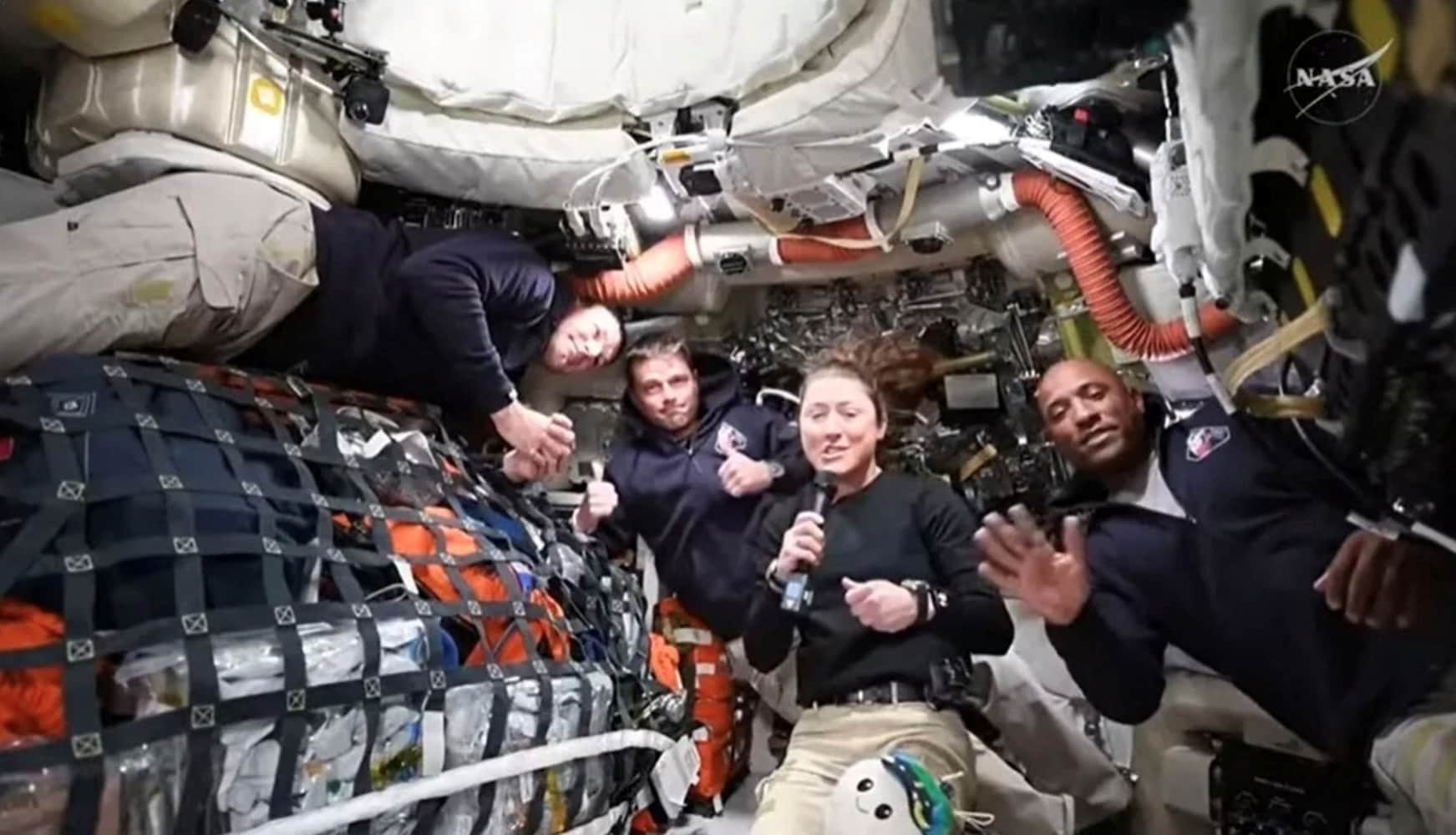
On April 6, 2026, at 7:07 p.m. EDT, the four-person crew of the Orion capsule "Integrity" did something no human being has done in over half a century. They didn't just reach the Moon; they blew past the survival-driven record set by the crippled Apollo 13 mission in 1970. Reaching a peak distance of 252,756 miles from Earth, Commander Reid Wiseman, Pilot Victor Glover, and Mission Specialists Christina Koch and Jeremy Hansen became the farthest-flung representatives of our species.
While the headlines focus on the high-definition "Earthrise" photos and the sentimental naming of lunar craters, the technical reality of this 10-day mission is far more volatile than the polished NASA press releases suggest. This is not a victory lap. It is a high-stakes stress test of a spacecraft that has already shown its teeth.
The Illusion of a Routine Loop
The mission follows what orbital mechanics experts call a free-return trajectory. To the casual observer, it looks like a simple slingshot maneuver. In reality, it is a calculated gamble. By using the Moon’s gravity to pull the spacecraft back toward Earth, NASA eliminates the need for a massive engine burn to come home. If the propulsion system fails, physics brings the crew back anyway.
But this "safety" feature is a double-edged sword. It leaves the crew at the mercy of the lunar far side, where a 40-minute communication blackout forced them to manage the ship in total isolation. During this window, the crew performed a flyby just 4,067 miles above the lunar surface—closer than many terrestrial satellites—while traveling at 3,139 mph.
The successful re-establishment of contact at 7:24 p.m. EDT was greeted with relief in Houston, but the silence served as a stark reminder. At that distance, if a life-support fan jams or a software glitch occurs, there is no real-time "Houston, we have a problem" fix. The crew must be the engineers, the mechanics, and the mission controllers all at once.
The Heat Shield Gamble
Beneath the stunning imagery of the Orientale Basin lies a technical controversy that almost kept Artemis II on the ground. During the uncrewed Artemis I test in 2022, the Avcoat heat shield experienced unexpected "charring"—small pieces of the protective material broke away in a way that wasn't predicted by computer models.
Instead of a multi-year redesign, NASA opted for a "shallow-entry" profile. By changing the angle at which Orion hits the atmosphere, engineers hope to minimize the time the shield spends at its peak thermal load of 5,000°F. It is a procedural fix for a hardware uncertainty. When the capsule slams into the Pacific at 25,000 mph on April 10, we will find out if that math holds up.
Technical Gremlins in Deep Space
While the public consumes 4K video transmitted via the new O2O laser communication system, the crew has been fighting a series of mundane but exhausting hardware failures. The onboard waste management system—the space toilet—has reportedly failed three times during the transit. In the cramped 330 cubic feet of habitable volume, a broken toilet isn't just an inconvenience; it’s a biological hazard and a massive drain on crew morale.
Furthermore, reports of software hiccups, including issues with the personal computing devices used for mission documentation and even basic email, suggest that the "all systems go" narrative is a carefully curated one. These are the "gremlins" of deep space. They aren't catastrophic on their own, but in the radiation-heavy environment beyond the Van Allen belts, every minor failure adds to the cognitive load of a crew already dealing with the physiological toll of microgravity.
Why the Distance Record Matters
Breaking the Apollo 13 record by 4,101 miles wasn't just about bragging rights. It was about testing the European Service Module (ESM) in an environment where Earth’s magnetic protection is virtually non-existent. The crew spent their record-breaking hours monitoring radiation sensors and capturing imagery of the lunar south pole—the intended site for the Artemis III landing in 2027 or 2028.
They are essentially scouts. By mapping water ice in shadowed craters and observing the Hertzsprung Basin, they are providing the ground truth needed for future mining and life-support infrastructure. However, the emotional weight of the mission is what has truly resonated. Commander Wiseman’s request to name a crater after his late wife, Carroll, and the crew’s visible emotion during the Earthrise observation, highlights a shift in NASA's culture. They are no longer just "test pilots" in the Cold War sense; they are the first residents of a new era of deep-space habitation.
The return journey is now underway. As the Orion capsule sheds its service module and prepares for the most violent reentry in the history of crewed flight, the focus shifts from the beauty of the Moon to the brutal physics of the atmosphere. The mission is a success only when the three main parachutes deploy over the Pacific near San Diego. Until then, Artemis II remains a daring experiment in whether 21st-century software can survive the 1960s-scale risks of deep space.
Secure your seat for the splashdown on April 10. The real test is just beginning.