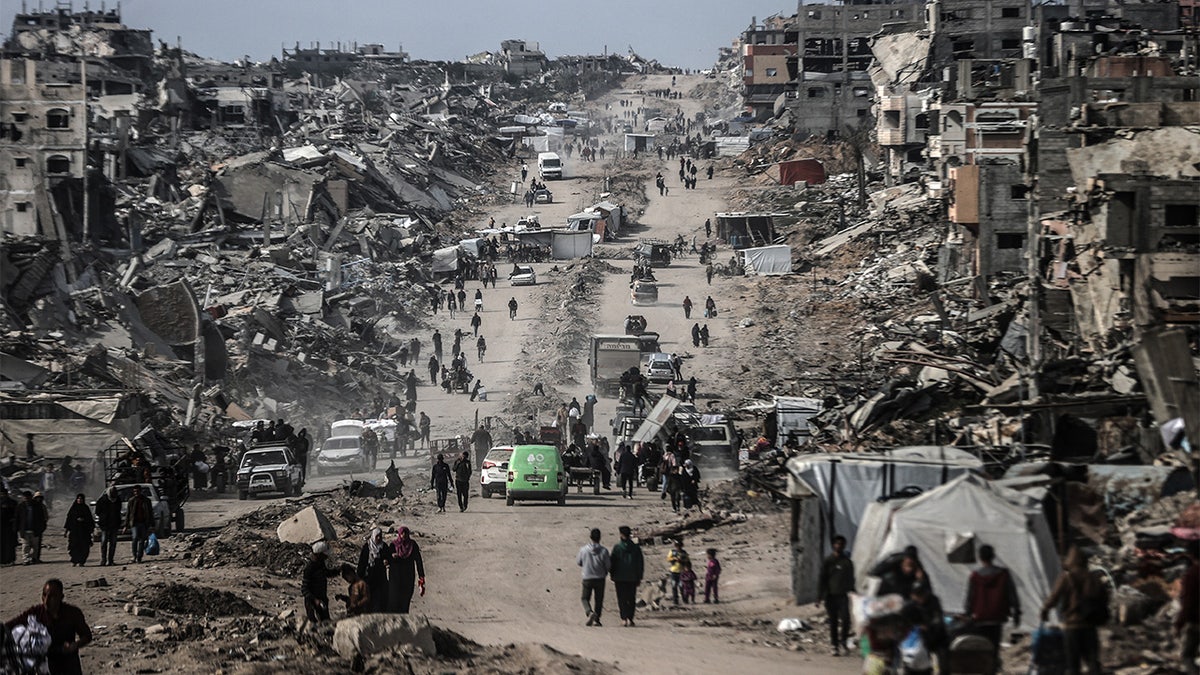
The current targeting of civilian energy grids and water systems in modern conflict is not a byproduct of inaccuracy but a calculated calibration of the Total War Utility Function. When a state actor systematically dismantles a neighbor's life-support infrastructure, they are transitioning from traditional kinetic engagement to an "attrition of biology." This strategy aims to collapse the adversary's internal social contract by making the cost of civil administration untenable. However, this shift creates a dangerous feedback loop with nuclear escalation theory. As conventional strikes move closer to nuclear energy facilities, the buffer between "conventional loss" and "existential radiological event" evaporates, forcing a reassessment of international legal frameworks that were never designed for high-intensity, peer-to-peer industrial warfare.
The Triad of Infrastructure Fragility
To understand why civilian infrastructure has become the primary theater of operations, one must analyze the three structural vulnerabilities that modern states possess:
- The Energy Dependency Ratio: Modern urban centers require a constant, high-voltage throughput to maintain sanitation, healthcare, and logistics. Unlike the decentralized agrarian societies of the past, a 40% reduction in power generation does not result in a 40% loss of efficiency; it results in a systemic failure of the urban organism.
- Dual-Use Ambiguity: International law prohibits targeting civilian objects, yet the "military necessity" loophole allows for strikes on any asset that makes an "effective contribution to military action." Since military command centers, rail logistics, and drone manufacturing plants draw from the same national power grid as hospitals and schools, the grid itself is redefined as a legitimate military objective by the aggressor.
- Psychological Siege Mechanics: The objective is to trigger a mass migration event and internal political instability. By weaponizing the winter or the lack of potable water, the attacker shifts the burden of care onto the defending government and its international allies, effectively using the civilian population as a logistical anchor.
Kinetic Proximity and the Nuclear Threshold
The most volatile variable in contemporary strikes is the proximity of high-explosive munitions to nuclear power plants (NPPs). This is not merely a matter of a "stray missile" hitting a reactor. The risk is multifaceted and governed by the Redline Convergence Model.
Cooling System Vulnerability
A nuclear reactor does not require a direct hit to fail. The primary risk is a "Station Blackout" (SBO). Reactors require external power to circulate coolant through the core. If the surrounding electrical substations are destroyed, the facility relies on diesel generators. These generators are mechanical points of failure with limited fuel supplies. The destruction of the external grid is, by extension, a kinetic assault on the reactor’s safety envelope.
Intentionality and Radiological Brinkmanship
The occupation or bombardment of nuclear sites functions as a "rad-shield." An aggressor can station military assets within the perimeter of a nuclear facility, knowing the defender cannot retaliate without risking a continental-scale meltdown. This upends the Stability-Instability Paradox, which suggests that nuclear-armed states (or those under nuclear umbrellas) are less likely to engage in major conventional wars. Instead, we see that the presence of nuclear infrastructure provides a tactical theater for conventional aggression.
The Economic Cost Function of Infrastructure Defense
Defending a national grid against sustained missile and drone campaigns is economically asymmetrical. The Cost-Exchange Ratio (CER) favors the attacker by orders of magnitude.
- The Attacker's Input: One-way attack drones often cost between $20,000 and $50,000.
- The Defender's Input: Interceptor missiles for advanced systems can cost between $1 million and $4 million per unit.
When an attacker launches a swarm of low-cost projectiles, the defender must choose between depleting their high-value interceptor inventory or allowing the destruction of a substation that costs $10 million and takes eighteen months to manufacture. This is a mathematical certainty of exhaustion. The only counter-strategy is the decentralization of the energy grid—moving from massive, centralized thermal and nuclear plants to a distributed microgrid architecture. However, such a transition takes decades, while the destruction takes seconds.
Legal Paralysis and the Failure of Attribution
The European Union and other international bodies frequently label these strikes as "illegal" under the Geneva Conventions, specifically Protocol I, Article 54. However, these legal pronouncements suffer from an Enforcement Gap.
The current international order lacks a mechanism to prosecute war crimes in real-time. This creates a "Moral Hazard" where the tactical gains of destroying a transformer station (disrupting troop movements, stopping rail lines) outweigh the long-term, theoretical risk of legal sanctions. Furthermore, the use of third-party manufactured munitions or "gray zone" tactics allows for a degree of plausible deniability that slows the diplomatic response.
Strategic Reconfiguration of the Deterrence Envelope
The escalation from striking bridge pylons to striking the electrical heart of a nation signifies that the "threshold of pain" has been raised. For global security strategy, this necessitates three immediate shifts in doctrine:
The first requirement is the Hardening of Indirect Nodes. Protection must extend beyond the reactor vessel to the "boring" parts of the infrastructure—the switchyards, the water intake pipes, and the off-site power lines. These are currently the soft underbelly of global nuclear security.
The second shift involves the Redefinition of Strategic Depth. In the 20th century, strategic depth was geographical. In the 21st, it is industrial. A nation’s ability to survive is tied to its stockpile of high-voltage transformers and its capacity for rapid, modular grid repair. Logistics is no longer just about bullets; it is about copper, silicon, and insulators.
The third and most critical evolution is the Integration of Radiological Hazards into Conventional Rules of Engagement. There is a vacuum in military doctrine regarding how to respond to a non-kinetic "siege" of a nuclear plant. If an adversary cuts the power to a plant and blockades fuel for generators, they are inducing a meltdown without firing a shot. This "Passive Radiological Warfare" must be classified as a use of a weapon of mass destruction to restore the deterrent effect.
The erosion of the boundary between civilian and military infrastructure is not a temporary deviation but a permanent feature of modern high-intensity conflict. Nations that fail to treat their electrical grids as a primary combat wing will find themselves strategically paralyzed long before a single soldier crosses their border. The strategic priority must pivot from "avoiding escalation" to "denying the utility of infrastructure destruction" through radical decentralization and hardened autonomous power systems at the municipal level.