Pundits are tripping over themselves to declare AUKUS a sinking ship because a UK parliamentary probe found a few "cracks" in the hull. They point to aging shipyards, a shrinking workforce, and budget overruns as evidence of a looming catastrophe. They are wrong. In fact, they are fundamentally misreading the mechanics of high-stakes defense procurement.
The hand-wringing over timelines and "deliverables" ignores the reality that AUKUS was never about a specific delivery date in 2040. It is a long-term restructuring of Western industrial power. If you want a project that hits every milestone on time and under budget, buy a fleet of commercial delivery vans. If you want to shift the geopolitical gravity of the Indo-Pacific, you embrace the friction. Friction is where the innovation happens.
The Myth of the "On-Time" Miracle
The obsession with the UK’s National Audit Office reports or parliamentary "probes" stems from a bureaucratic mindset that prioritizes spreadsheets over strategic utility. Every major leap in naval architecture—from the transition to steam to the birth of the nuclear sub—was defined by delays and massive cost spikes.
Critics look at the "cracks" in the UK’s submarine industrial base and see failure. I see the necessary pressure of a system being forced to scale after decades of atrophy. You don't rebuild a sovereign industrial capability by following a comfortable, linear path. You do it by breaking the existing, inadequate systems. The current "trouble" is just the sound of the gears finally turning.
Pillar Two is the Real Prize (And It’s Working)
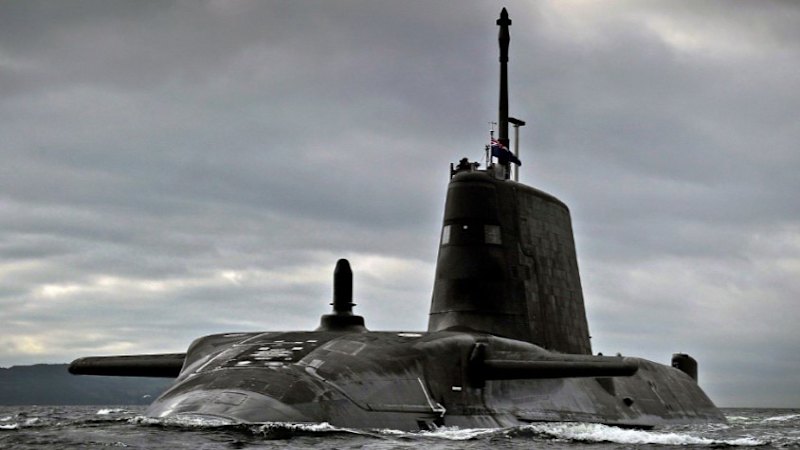
The media is fixated on the "big metal tubes" of Pillar One—the physical submarines. This is a mistake. The real disruption lies in Pillar Two: the shared development of AI, quantum technologies, undersea capabilities, and hypersonic weaponry.
While the "AUKUS is failing" crowd focuses on welding schedules in Barrow-in-Furness, the three nations are quietly integrating their digital defense DNA. This isn't just about sharing blueprints; it’s about creating a unified tech stack that bypasses the sluggish ITAR (International Traffic in Arms Regulations) bottlenecks that have hobbled cooperation for years.
By the time the first SSN-AUKUS hits the water, the actual "weapon" won't just be the torpedoes it carries. It will be the distributed sensor network and autonomous undersea vehicles it manages. The submarine is just the bus. The software is the driver. The UK probe's focus on shipyard capacity is like criticizing a tech giant for having a messy warehouse while they’re busy inventing a new operating system.
The Workforce Shortage is a Feature, Not a Bug
We hear constantly about the "crisis" of finding enough nuclear engineers and skilled tradespeople. Yes, the numbers are tight. But this scarcity is forcing a radical shift toward automation and advanced manufacturing that the defense industry has resisted for half a century.
I’ve spent time in environments where "how we’ve always done it" is the mantra. It’s a recipe for obsolescence. The pressure of the AUKUS timeline is the only thing capable of killing the old ways.
- Additive Manufacturing: We are seeing parts that used to take months to forge being printed in weeks.
- Modular Design: The "cracks" in the UK infrastructure are forcing a move toward modular construction that allows for faster upgrades later in the lifecycle.
- Recruitment Overhaul: The defense sector is finally being forced to compete with Silicon Valley for talent, which means better pay, better tools, and a total rejection of the "gray suit" culture.
If there were a surplus of labor, we would keep using 1990s processes. The shortage is the catalyst for the modernization we actually need.
The Australia-UK-US "Asymmetry"
A common critique is that the US is doing the heavy lifting while the UK and Australia struggle to keep up. This "asymmetry" is touted as a weakness. On the contrary, it is a deliberate strategic hedge.
The US provides the immediate surge capacity through the Virginia-class transfer. This buys the UK and Australia the time—and the "stress-test" environment—to rebuild their own sovereign capabilities. It’s a tiered entry system. If the UK were "ready" today, there would be no need for AUKUS. The very fact that the UK needs to scramble is proof that the pact is doing exactly what it was designed to do: revitalize a dormant industrial giant.
The Cost of the "Safe" Path
Imagine a scenario where we didn't have these "cracks." Imagine a world where the UK and Australia stayed on their previous, low-ambition trajectories.
- Technological Stagnation: Australia would be stuck with a conventionally powered fleet that is increasingly detectable by modern sensor arrays.
- Industrial Decay: The UK’s submarine yards would continue to operate on a "trickle" basis, barely maintaining enough skill to keep the current fleet afloat, let alone innovate.
- Geopolitical Irrelevance: The West would have no unified underwater deterrent in the most contested waters on the planet.
The "safe" path leads to certain obsolescence. The "troubled" path leads to a chance at dominance. I’ll take the cracks and the chaos over a smooth ride to the bottom of the ocean any day.
Stop Asking "When?" and Start Asking "What?"
The "People Also Ask" sections of the internet are filled with queries like "Will AUKUS happen?" or "Is AUKUS a waste of money?" These are the wrong questions. They assume a binary outcome.
AUKUS is a process, not a product.
The real question is: What does the integration of these three economies do to the global arms market? It creates a closed-loop ecosystem of high-end tech that China and Russia cannot replicate. It creates a massive barrier to entry for any competitor. The delays are just the cost of admission to the most exclusive club in the world.
Critics point to the projected £31 billion price tag for the UK's share and gasp. They shouldn't. In the context of total defense spending over thirty years, it’s a bargain for the level of deterrent and industrial base it secures. You aren't paying for submarines; you're paying for the survival of the Western maritime order.
The Sovereignty Trap
There is a loud contingent arguing that AUKUS erodes national sovereignty, particularly for Australia. This is a misunderstanding of how power works in the 21st century.
True sovereignty isn't the ability to build every single component of a weapon system yourself—no one can do that anymore. True sovereignty is the ability to influence the global standards and supply chains that your security depends on. By embedding themselves in the heart of US and UK nuclear tech, Australia and the UK gain more leverage than they ever had as standalone players.
The "cracks" reported by the UK probe are superficial. They are the growing pains of an alliance that is finally getting serious about the next century of conflict.
Stop looking at the shipyard delays as a sign of failure. Start looking at them as the price of a total industrial reset. The West is finally waking up, and it’s going to be a loud, messy, and expensive morning.
Build the boats. Fix the yards. Ignore the skeptics.