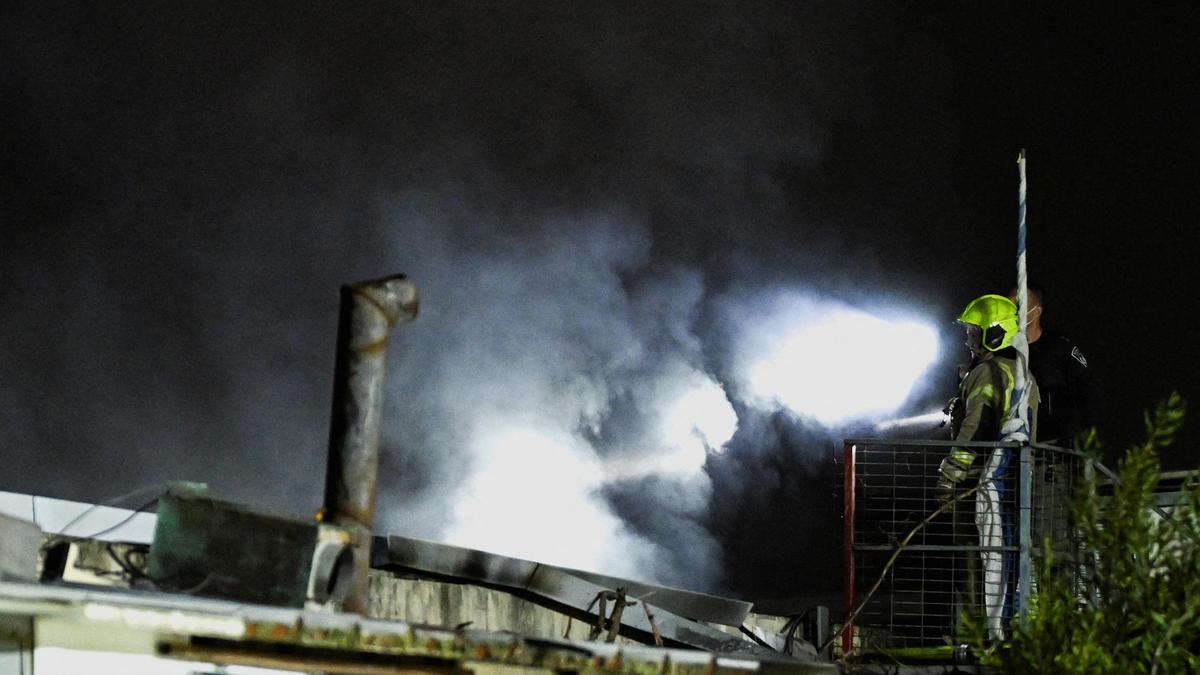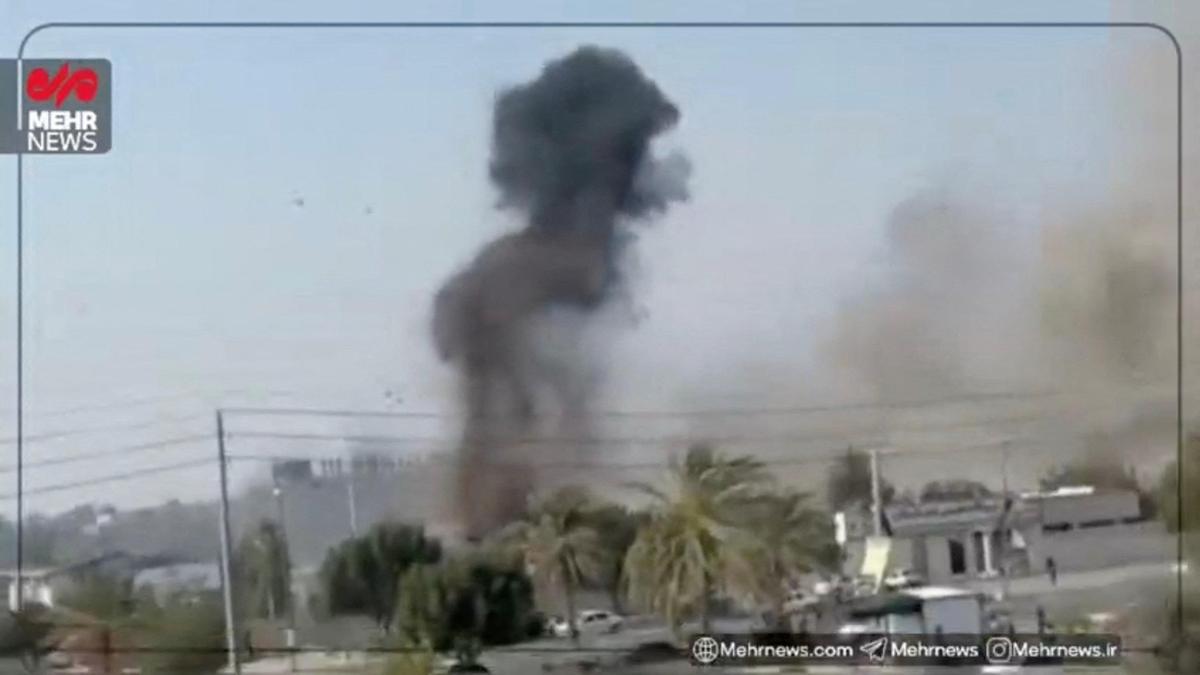
Australia is officially stepping into the Middle East’s latest firestorm. Prime Minister Anthony Albanese confirmed today that the Royal Australian Air Force (RAAF) is heading to the United Arab Emirates, but not for a ground war. The government is sending an E-7A Wedgetail surveillance aircraft and a shipment of advanced medium-range air-to-air missiles (AMRAAMs) to help the UAE hold its own against a wave of Iranian drone and missile strikes.
If you're wondering why we're sending high-tech hardware halfway across the world, it’s about the 115,000 Australians currently caught in the crossfire. With the Strait of Hormuz basically a no-go zone and commercial flights drying up, the government is trying to keep the exit doors open. It's a defensive play, but in a region this volatile, "defensive" is a relative term. Also making headlines in this space: Finland Is Not Keeping Calm And The West Is Misreading The Silence.
The Wedgetail is the real star of this deployment
Don't let the "surveillance" label fool you. The E-7A Wedgetail isn't just a plane with a camera. It’s a flying command center. Based on a Boeing 737 frame, that distinctive "top hat" radar on its back can track targets in the air and on the sea simultaneously over huge distances.
In the current chaos, where Iran has reportedly launched over 1,500 rockets and drones at the UAE alone, the Wedgetail acts as the brain of the operation. It spots incoming threats long before ground-based radar and tells the local interceptors exactly where to aim. This is the same kit we sent to Poland to keep an eye on Ukraine’s borders. Sending it to the Gulf for an initial four-week stint shows how serious the situation has become. Further information into this topic are covered by The Washington Post.
Around 85 ADF personnel are tagging along to keep the bird in the air. Richard Marles, the Defence Minister, was quick to point out that these crews aren't there to pick a fight. They’re there to provide "early warning," which is military-speak for making sure nobody gets surprised by a swarm of suicide drones at 3:00 AM.
Why the UAE needs Australian missiles right now
The decision to hand over AMRAAMs—Advanced Medium-Range Air-to-Air Missiles—is the more aggressive-looking part of the deal. But look at the numbers. The UAE has been burning through its interceptor stockpiles at a record pace. When you're swatting down 1,500 threats in a matter of days, you run out of "bullets" fast.
These missiles are the gold standard for taking out aerial threats. By supplying them, Australia is essentially refilling the UAE’s magazine so they can keep their "Iron Dome" style defense active. If the UAE's air defenses fail, the airports in Dubai and Abu Dhabi shut down. If those airports shut down, those 24,000 Australians living in the UAE are effectively trapped.
I've seen critics argue that this drags us into a regional war. Albanese is banking on the "not a protagonist" angle. He’s explicitly stated we aren't putting boots on the ground in Iran and we aren't flying offensive sorties. We're the guy handing the shield to a friend who's being pelted with rocks.
The bigger picture of the Australia UAE Strategic Partnership
This isn't just a sudden reaction to a bad week of headlines. This move is the first real test of the Strategic Partnership and the Comprehensive Economic Partnership Agreement (CEPA) that kicked in late last year. Australia and the UAE have been getting cozy for a while, moving beyond just trading sheep and aluminum.
The UAE is our biggest trade partner in the Middle East. We're talking about a $12.7 billion relationship. Beyond the money, the UAE acts as the logistical gateway for everything Australia does in that part of the world. If that gateway slams shut, our regional influence and economy take a massive hit.
Risks of the defensive label
Is there a risk? Of course. Even "defensive" support can be seen as escalation by the other side. Iran has already shown it's willing to strike targets across 11 different countries in this current flare-up. By providing the eyes (Wedgetail) and the sting (AMRAAMs), Australia is firmly picking a side.
Foreign Minister Penny Wong isn't sugarcoating it. She’s telling Australians to get out now while commercial flights still exist. The government has already used C-17A Globemasters and KC-30A tankers for repatriation, but the goal is to keep the commercial lanes stable enough so they don't have to run a full-scale military evacuation like we saw in Kabul.
What happens next for the ADF in the Gulf
The Wedgetail is scheduled for a one-month deployment. That's a short window, which suggests the government is hoping for a quick de-escalation or is planning to rotate assets if things stay ugly.
If you have family in the region or you’re planning travel, don't wait for the military to come get you. The window for commercial travel is closing as insurance costs for airlines skyrocket. Check your registration on Smartraveller and keep a close eye on the flight boards in Dubai. The Wedgetail can help protect the airspace, but it can't force an airline to fly if they decide the risk isn't worth the ticket price.
Monitor the Department of Foreign Affairs and Trade (DFAT) updates daily. If you're currently in the UAE, ensure your travel documents are packed and ready. This deployment is a shield, not a guarantee of safety.