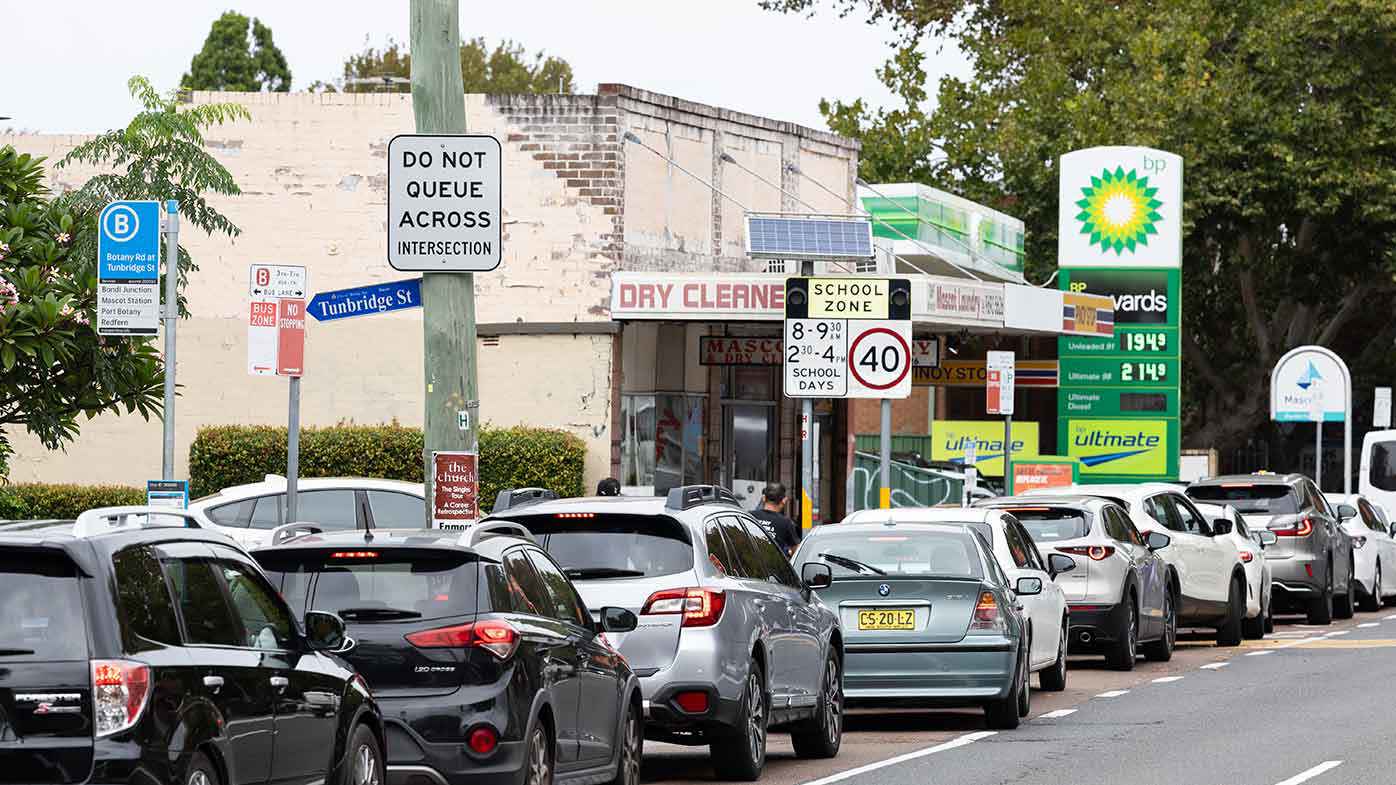
Australia’s current vulnerability to Middle Eastern geopolitical volatility is not a product of recent escalation but a decade-long strategic choice to prioritize short-term procurement efficiency over long-term sovereign resilience. While Iranian state media frames the current shortfall as a victory for asymmetric pressure, a clinical analysis reveals that the crisis is actually the inevitable result of three specific structural failures in Australia's domestic energy policy: the decay of domestic refining capacity, the systemic underfunding of the Minimum Stockholding Obligation (MSO), and a geographic "last-mile" dependency on Asian processing hubs.
The Anatomy of Vulnerability: The 20% Baseline
The fundamental bottleneck in the Australian fuel market is the collapse of domestic production. As of March 2026, the nation’s two remaining refineries—the Ampol Lytton facility in Brisbane and the Viva Energy plant in Geelong—contribute only 17% to 20% of national refined petroleum demand. This creates a permanent structural short of approximately 800,000 to 1,000,000 barrels per day. Discover more on a related topic: this related article.
The "Just-In-Time" supply chain model, which functioned during periods of low maritime friction, has broken under the current blockade of the Strait of Hormuz. Because Australia is at the end of the global supply chain, it lacks the gravitational pull of larger markets to redirect diverted cargoes. The current shortage is defined by a Supply-Demand Gap Function:
$$G = D - (R + I_a)$$ More journalism by Forbes delves into comparable views on this issue.
Where $G$ is the supply gap, $D$ is daily demand (approx. 1.2 million barrels), $R$ is domestic refining output, and $I_a$ is the volume of available, non-intercepted imports. With $I_a$ falling due to the closure of the Strait and the subsequent "stalling" of roughly 13 million barrels per day globally, the gap $G$ has expanded beyond the capacity of existing strategic reserves to bridge.
The Three Pillars of the Current Crisis
The crisis is supported by three distinct operational failures that have converged simultaneously:
- Reserve Deficit vs. IEA Benchmarks: Australia remains the only International Energy Agency (IEA) member that consistently fails to meet the 90-day net import coverage mandate. Currently, diesel reserves sit at approximately 34 days, while petrol and jet fuel hover between 29 and 36 days. This creates a "Hard Stop" date for economic activity if regional inflows are not restored within a single month.
- Refining Incompatibility: Even when Australian crude oil is available, domestic refineries are technically optimized for specific light-sweet grades. They cannot easily pivot to process the heavy-sour crudes that might be sourced from alternative markets without significant capital expenditure and efficiency losses. This "refinery-feedstock mismatch" limits the utility of any domestic drilling surges.
- Geographic Choke-point Substitution: While Australia imports relatively little crude directly from the Middle East, it is highly exposed to the Asian refineries (Singapore, South Korea, Japan) that process Middle Eastern oil. When these hubs face feed-stock shortages, they prioritize their own domestic markets, triggering "Force Majeure" clauses on Australian contracts.
Quantifying the Strategic Petroleum Reserve (SPR) Intervention
The Australian government’s recent authorization to release 762 million litres of petrol and diesel is a tactical bandage, not a systemic cure.
- Volume Analysis: 762 million litres sounds substantial but represents only three days of national consumption.
- Sector Allocation: 400 million litres are earmarked for unleaded petrol (light transport), while 362 million litres are dedicated to automotive diesel.
- Operational Friction: The release is not an immediate injection into pumps. It takes between 7 and 21 days for this volume to move from strategic port terminals (like Port Botany) through the wholesale market and into the retail network.
This delay creates a "shadow shortage" where, despite the announcement of reserves, regional outlets in Victoria and Queensland continue to report dry pumps. The price gouging observed in late March—where some retailers increased margins by 50 cents per litre—is a direct result of this distribution lag.
The Cost Function of Sovereign Neglect
The economic impact of this fuel shortage is not limited to the transport sector; it is a cascading failure across the entire supply chain.
- Agriculture: The timing of the March conflict coincides with critical planting seasons. Diesel shortages threaten the availability of farm machinery and the production of urea-based fertilizers, 80% of which depend on energy-intensive processing.
- Mining and Minerals: As Australia's largest export earner, the mining sector consumes nearly 10% of national diesel. A 20% reduction in diesel availability translates to a proportional drop in bulk commodity exports, directly impacting the Australian Dollar ($AUD) and national tax revenue.
- Inflationary Multiplier: Unlike consumer discretionary goods, fuel is an inelastic input. The current 10% spike in Brent crude, combined with the domestic supply premium, acts as a regressive tax on the entire economy, accelerating headline inflation figures toward the 6%–7% range.
Strategic Reconfiguration and Mitigation
The current crisis proves that reliance on international maritime security as a "free" input is a failed strategy. To exit this cycle of vulnerability, the following structural pivots are required:
1. Mandatory Minimum Stockholding Obligation (MSO) Reform
The MSO must be decoupled from commercial "working stock." Currently, the government allows companies to count fuel already in the pipes or on ships as part of their reserve. A true strategic reserve requires physically segregated, government-owned storage that is not part of the daily commercial churn.
2. Feedstock Diversification and Refinery Hardening
Investing in "Cracking" technology at the Geelong and Lytton refineries would allow them to process a wider range of global crudes, including those from the US and West Africa, reducing the dependency on Middle Eastern feedstock processed in Singapore.
3. Accelerated Industrial Electrification
The most effective way to reduce oil shock exposure is to lower the demand variable ($D$) in the supply gap equation. This is not about passenger EVs alone, but the electrification of heavy haulage and mining fleets which are currently the primary drivers of diesel vulnerability.
The Iranian narrative of an Australia "on its knees" is hyperbolic, but the data confirms a nation operating on a razor-thin margin. The 762 million litre release will prevent a total systemic collapse in the short term, but it does nothing to address the 80% import dependency that remains the primary threat to Australian economic sovereignty.
Would you like me to conduct a comparative analysis of Australia's fuel reserve policies against Japan's 240-day strategic petroleum coverage model?