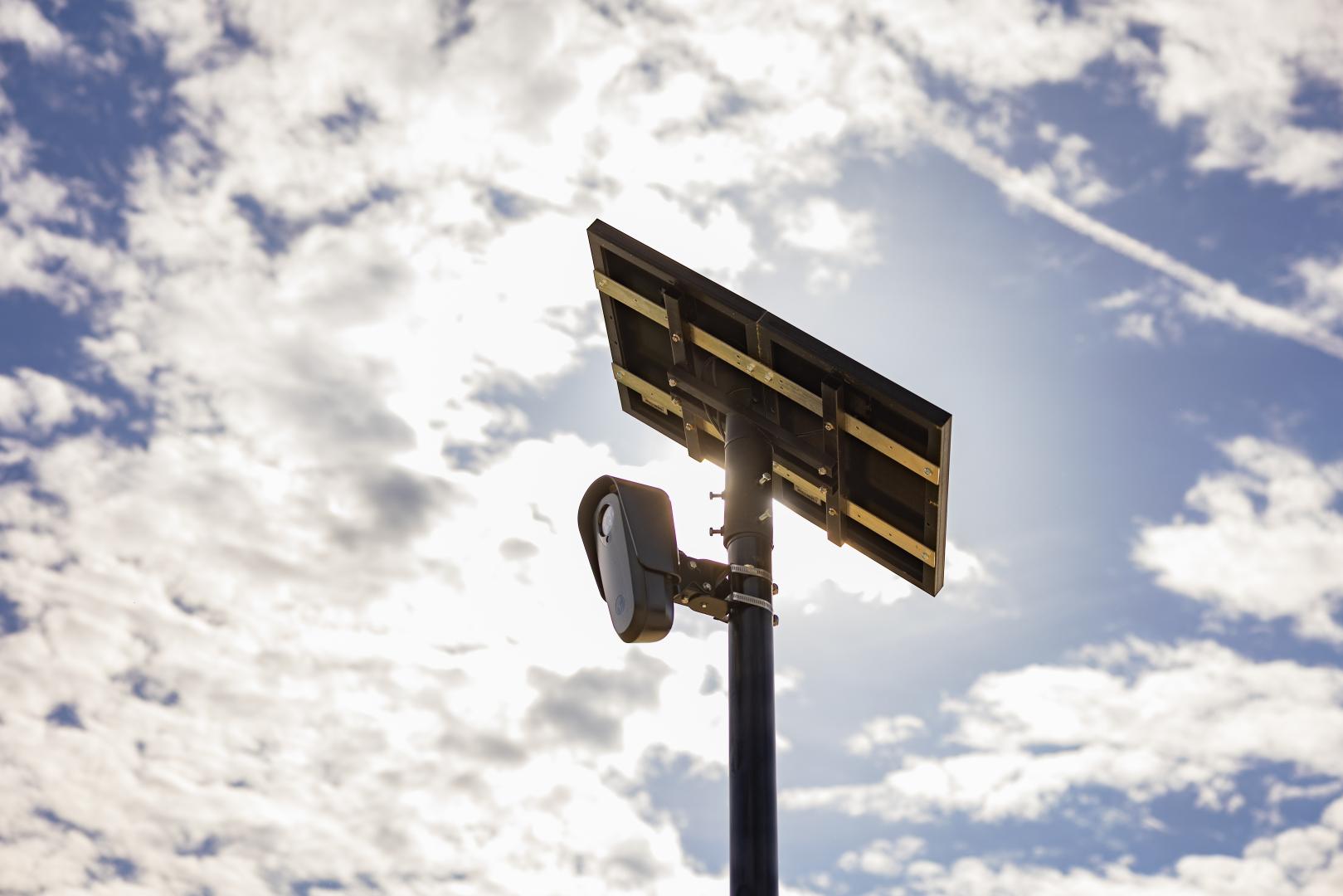
Privacy advocates are screaming into a void of their own making. For years, the narrative around Automated License Plate Recognition (ALPR) has been a repetitive loop of "Big Brother" anxieties and "surveillance state" hand-wringing. They focus on the cameras. They focus on the "flashpoint" of immigration. They are missing the entire point.
The problem isn't that the technology is too good. The problem is that our legal framework for data ownership is a rotting relic of the analog age. If you think removing a few cameras at the border or in sanctuary cities solves the problem, you are playing a losing game of whack-a-mole while the house burns down.
The Myth of the "Invasive" Camera
Every time a news outlet covers ALPRs in immigration battles, they treat the camera like an active predator. It isn't. An ALPR is a glorified high-speed scanner. It captures a public fact: a piece of metal, registered by the state, was present on a public road at a specific time.
The "lazy consensus" suggests that the harm occurs at the moment of the flash. It doesn't. The harm occurs in the database.
When a company like Vigilant Solutions or Flock Safety aggregates billions of these "public facts," they aren't just tracking cars. They are mapping the social graph of a nation. They know who you sleep with, where you worship, and which protests you attend—not because they are "spying," but because they are the only ones savvy enough to realize that metadata is the new oil.
Civil rights groups want to ban the hardware. That is like trying to stop global warming by banning thermometers. The data already exists. It’s being sold by private brokers who operate with more efficiency and less oversight than any government agency.
Why Sanctuary Cities are Selling You Out
Politicians in sanctuary cities love to stand in front of microphones and denounce ICE. They pass ordinances to "limit" data sharing. It is theater.
In reality, these cities often use the same private vendors that the federal government uses. While the city might not "directly" hand over a database to federal agents, the vendor—acting as a third-party aggregator—often provides "commercial access" to the same data pool.
I have seen municipal IT departments sign contracts with "Standard Data Sharing" clauses they don't even understand. They think they are catching car thieves. In reality, they are feeding a decentralized national dragnet.
If a city wants to be a sanctuary, it shouldn't just ban the sharing of data. It should mandate the immediate destruction of all non-hit data.
- The Hit: A plate linked to a specific, active violent crime warrant.
- The Non-Hit: Everything else.
Currently, most agencies keep "non-hit" data for months or years. Why? "Just in case." That "just in case" is the loophole big enough to drive a deportation bus through.
The Third-Party Doctrine is a Suicide Pact
The legal backbone of this entire mess is the Third-Party Doctrine. This is the Supreme Court-sanctioned idea that you have no "reasonable expectation of privacy" in information you voluntarily turn over to third parties.
In 1979, this meant the phone numbers you dialed. In 2026, the government argues this applies to your entire physical movement because you "voluntarily" drove on a public road where private cameras might see you.
We are operating on a legal framework designed for a world where cameras required film and a darkroom.
We need to stop asking "Should ICE have this data?" and start asking "Why does this data exist at all?" If the data isn't purged within 24 hours of a non-match, it becomes a liability. But vendors hate this. Their valuation is tied to the size of their "data lake." They aren't selling cameras; they are selling a historical record of human movement.
The Business of Fear and the Data Loophole
Follow the money. The companies dominant in this space—Flock, Motorola Solutions (Vigilant), and others—don't just market to police. They market to Homeowners Associations (HOAs) and private businesses.
When an HOA puts an ALPR at the entrance of a gated community, that data often flows into the same regional "fusion centers" used by law enforcement. The "immigration battle" isn't happening at the border. It’s happening in the suburbs.
The "flashpoint" isn't a policy clash; it's a market expansion.
Dismantling the "Public Safety" Defense
The standard rebuttal from law enforcement is: "This technology solves murders."
Does it? Or does it just make the paperwork easier for crimes that would have been solved anyway?
We have very little independent data proving that mass ALPR surveillance reduces crime rates significantly compared to traditional investigative work. What we do have is evidence that it creates a false sense of security while expanding the "suspect pool" to include every person with a registered vehicle.
The Practical, Brutal Truth
If you want to protect vulnerable populations from automated surveillance, stop protesting the cameras. Start attacking the storage.
- Legislative Poison Pills: Pass laws that make it a felony for any vendor to store non-hit data for more than 48 hours. Watch how fast the "innovative" surveillance startups flee the state when their data-mining business model evaporates.
- Audit the Aggregators: We need mandatory, public-facing audits of who is accessing the commercial side of these databases. If a federal agency can't get the data from the LAPD, but they can buy it from a broker using LAPD's feed, the law is a joke.
- End the HOA Loophole: Private entities should be barred from feeding public-access data into law enforcement databases without a specific, time-bound warrant for every single search.
The "immigration battle" is just the canary in the coal mine. Today it's about finding undocumented immigrants. Tomorrow it's about identifying people who visited a reproductive health clinic or an "unauthorized" political gathering.
The technology isn't the enemy. The hoarding is. We have allowed the concept of "public space" to be weaponized into a "total visibility" mandate.
If you aren't fighting for the right to be forgotten by a database, you aren't fighting at all. You're just complaining about the color of the cameras.
Stop looking for "balance." Privacy and mass-data retention are diametrically opposed. You cannot have a "responsible" database of every citizen's movements. You either have the data, or you have freedom.
Pick one.