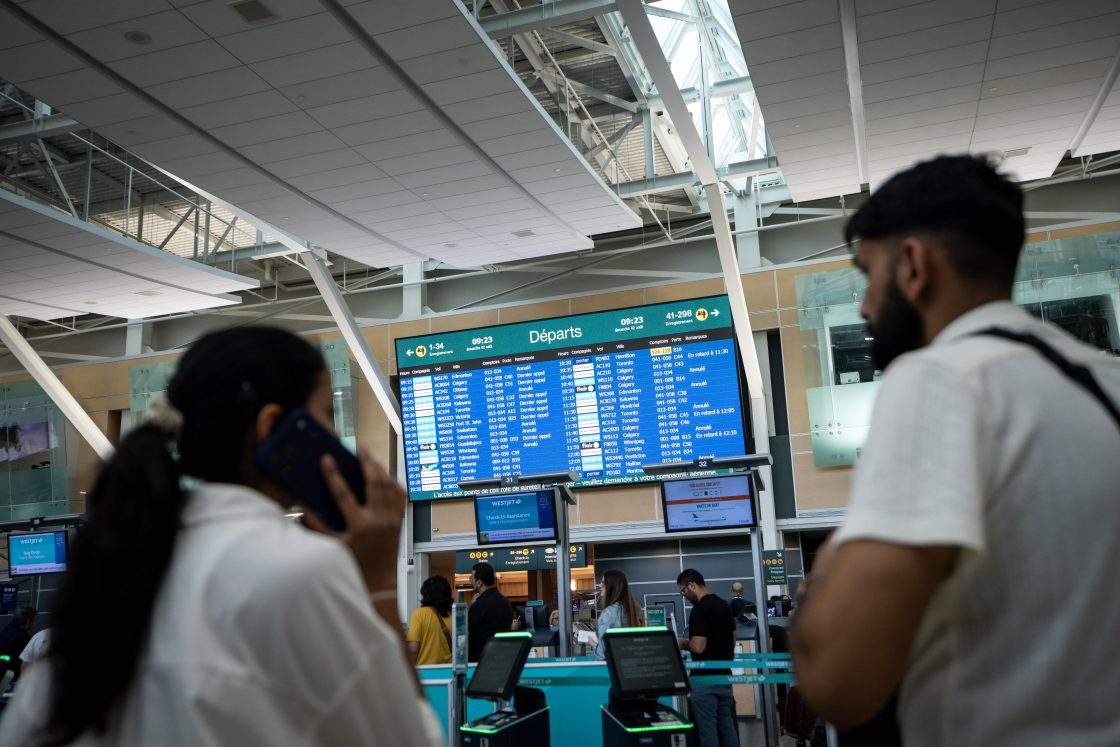
Every time British Columbia edges closer to locking its clocks in permanent Daylight Saving Time, the exact same chorus of panic merchants crawls out of the woodwork. The airline lobbyists start hyperventilating about missed connections at YVR. The enterprise software consultants wring their hands over legacy database migrations. Local news outlets run breathless segments warning that skipping the bi-annual clock ritual will somehow shatter supply chains, confuse every smartphone in the Pacific Northwest, and strand travelers in temporal purgatory.
It is complete nonsense.
The lazy consensus framing B.C.’s non-time change as a looming operational disaster gets the entire problem backward. Dropping the clock change will not break modern technology or global travel. It is simply going to expose how fragile, outdated, and poorly engineered those systems already are. If a single province refusing to arbitrarily shift its wall clocks by sixty minutes twice a year brings your tech stack or flight schedule to its knees, the problem is not Victoria's legislation. The problem is your architecture.
The Myth of the Software Apocalypse
Let’s look at how modern computing actually handles time, because most commentary on this topic sounds like it was written by someone who still thinks computers run on mechanical gears.
Your phone, your laptop, and every cloud server worth its salt do not care what time B.C. says it is. Under the hood, modern systems operate on Unix Epoch Time—a continuous, unbroken count of seconds that have elapsed since January 1, 1970, in Coordinated Universal Time (UTC). UTC never springs forward. UTC never falls back. It is the immutable bedrock of global computing.
What you see on your screen—7:00 AM in Vancouver, 10:00 AM in Toronto—is merely a cosmetic layer applied at the very last millisecond by the IANA Time Zone Database (commonly known as the tz database or Olson database). When a government changes its time zone rules, maintainers update a few lines of plain text in the IANA repository, push a routine over-the-air update, and billions of devices adjust automatically.
I have watched enterprise IT teams burn millions of dollars on "time zone remediation" projects because a junior developer in 2014 decided to store local timestamps as plain strings instead of UTC offsets. That is not a legislative failure. That is engineering malpractice.
Where Systems Actually Break (And Why They Deserve To)
If B.C. permanently adopts UTC-7 (Pacific Daylight Time) while Washington, Oregon, and California stay on the seasonal rollercoaster, the only software that will break is software that was already rotting from the inside out:
- Hardcoded Offsets: Any application that assumes
America/Vancouveris permanently bound toAmerica/Los_Angelesviolates basic internationalization standards. Regional alignment is a political convenience, not a technical invariant. - Air-Gapped Legacy Hardware: Parking meters, industrial SCADA controllers, and ancient point-of-sale terminals that never receive network updates will show the wrong hour. They already do this every time a nation alters its DST calendar—just ask system administrators who dealt with Russia, Turkey, or Brazil changing their rules over the past decade.
- Fragile Cron Jobs: Scheduled tasks tied to local wall-clock time rather than UTC intervals will fire an hour early or late. Again, any competent DevOps engineer knows scheduling critical batch jobs on local time is a rookie mistake, because local time has a built-in duplication bug every November and a black hole every March.
Blaming B.C. for exposing hardcoded assumptions in enterprise software is like blaming a storm for revealing that you built your house out of cardboard.
Aviation Does Not Run on Local Clocks
The travel industry’s hand-wringing is even harder to take seriously. Spend five minutes inside an airline operations center and you will realize that commercial aviation abandoned local time decades ago.
Every flight plan filed with NAV CANADA or the FAA, every air traffic control handoff, every crew duty-time calculation, and every aircraft maintenance log runs strictly on Zulu time—aviation’s term for UTC. Pilots do not calculate fuel burn based on whether Vancouver is observing standard or daylight time. The Boeing 787 flying from YVR to London Heathrow does not care what the municipal clock in Richmond says.
The friction in travel is strictly a human interface problem, and it is one the industry has already solved in dozens of jurisdictions worldwide.
Look at Arizona. Aside from the Navajo Nation, Arizona has ignored Daylight Saving Time since 1968. Phoenix Sky Harbor International Airport is one of the busiest hubs in North America. For half the year, Phoenix is on the same time as Los Angeles; for the other half, it aligns with Denver. Flights do not fall out of the sky every March. Travelers do not wander around Terminal 4 in a daze, incapable of reading a boarding pass.
Look at Saskatchewan. It has stayed on permanent Central Standard Time for decades while bordering Alberta and Manitoba shift back and forth. Air Canada, WestJet, and cross-border trucking fleets manage to cross the 110th meridian every single day without collapsing into chaos.
The Real Reason Airlines Complain
When airline executives warn about "schedule disruption" from B.C. breaking sync with Seattle and Los Angeles, translate that from corporate-speak into plain English. They are not worried about safety or passenger confusion. They are worried about slot utilization and crew pairing efficiency.
Hub-and-spoke networks rely on tight banking windows—waves of regional flights arriving at YVR or SEA simultaneously to feed long-haul departures. If Vancouver and Seattle are separated by an hour for four months of the year (November through March), airlines have to tweak departure banks to preserve connection windows and respect airport curfew hours in places like Tokyo, Frankfurt, or Sydney.
That requires airlines to update their scheduling optimization models. It is a mild administrative annoyance for network planners, not an existential threat to Pacific Northwest mobility.
The Cascadia Alignment Fallacy
The loudest political argument against B.C. moving ahead alone is the sacred cow of Cascadia alignment. In 2019, B.C. passed the Interpretation Amendment Act to enable permanent Daylight Saving Time, only to tack on a self-imposed handcuff: waiting for Washington, Oregon, and California to do the same.
Since then, Victoria has sat on its hands waiting for the U.S. Congress to pass the Sunshine Protection Act—a bill that routinely dies in committee because Washington, D.C. cannot agree on anything, let alone clocks.
Let’s dismantle the myth that B.C. cannot function out of sync with Seattle:
- Cross-border commerce already spans multiple time zones. B.C.’s largest trading partners include Ontario (3 hours ahead), Texas (2 hours ahead), and Asia-Pacific markets (15 to 17 hours ahead). Nobody claims Vancouver businesses cannot trade with Toronto because their clocks do not match.
- Financial markets do not care. The TSX opens at 9:30 AM Eastern. Whether that is 6:30 AM or 7:30 AM in Vancouver, institutional traders in B.C. are already waking up before dawn. Keeping clocks steady actually removes a bi-annual disruption to trading desk routines.
- Border crossings operate 24/7. Commercial freight at the Pacific Highway or Peace Arch crossings moves on logistics schedules tied to warehouse receiving windows and driver Hours of Service (HOS) electronic logging devices—which, once again, calculate compliance via GPS and UTC, not dashboard clocks.
Waiting for California to fix its legislative gridlock before B.C. fixes its own public health policy is pure institutional cowardice.
The Uncomfortable Truth About Permanent DST
Now, before anyone mistakes this for a blind cheerleading session for Victoria’s plan, let’s address the massive, glaring flaw in B.C.’s actual legislation—a flaw that the tech and travel panic completely obscures.
If you ask chronobiologists, sleep researchers, and neuroscientists—the actual heavy hitters who study human circadian biology, such as the Society for Research on Biological Rhythms (SRBR)—they will tell you that B.C. is picking the wrong permanent time.
Victoria wants permanent Daylight Saving Time (UTC-7). Science overwhelmingly favors permanent Standard Time (UTC-8).
Here is why that distinction matters far more than whether your calendar app needs an update:
- Morning Light Anchors Circadian Rhythm: Human biology relies on morning sunlight to suppress melatonin and trigger cortisol production, resetting our internal master clock every 24 hours.
- The Winter Sunrise Problem: Under permanent DST in Vancouver (latitude 49.28° N), the sun would not rise until 9:07 AM in late December. In northern B.C. cities like Prince George or Fort St. John, sunrise would push past 9:30 AM or 10:00 AM.
- Social Jetlag: Commuting, working, and attending school in pitch darkness for months creates chronic circadian misalignment—a condition researchers call "social jetlag." Decades of epidemiological data link permanent DST experiments (like the U.S. attempt in 1974 and Russia’s experiment from 2011 to 2014) to higher rates of sleep deprivation, metabolic disorders, cardiovascular strain, and seasonal depression. Russia hated permanent DST so much that it abandoned the experiment after three years and switched to permanent Standard Time.
This is the real debate B.C. should be having. Not "Will Expedia get confused?" but "Do we want our kids walking to school in pitch-black darkness until 9:15 AM every winter?"
How to Actually Prepare (If You Run Tech or Operations)
If you are a CTO, a product manager, or an operations lead with footprints in Western Canada, stop reading breathless op-eds about travel chaos and audit your own house. Time zone independence is basic hygiene.
1. Audit Your Data Layer Immediately
Search your codebase for datetime.now(), LOCALTIMESTAMP, or any database column storing dates without explicit time zone offsets (TIMESTAMP WITHOUT TIME ZONE in PostgreSQL is a ticking time bomb). Convert everything at the ingestion boundary to UTC. Store it in UTC. Perform all math in UTC. Only convert to local time at the UI presentation layer.
2. Decouple Geographic Assumptions
If your system groups America/Vancouver and America/Los_Angeles into a single "Pacific Time" bucket in your business logic, rip that abstraction out. Map every user, office, and warehouse to its specific IANA identifier. Never infer a time zone from a country code or a rough geographic region.
3. Stress-Test Your Scheduling Engines
If you run logistics, appointment booking, or shift-scheduling software, simulate a scenario where Vancouver is UTC-7 year-round while Seattle shifts between UTC-7 and UTC-8. Look for:
- Booking windows that overlap or vanish during transition weeks.
- Automated SLA timers that miscalculate business hours across the 49th parallel.
- API integrations with third-party vendors still clinging to legacy Windows time zone names instead of IANA standards.
4. Stop Scheduling Events in Local Time Across Borders
If you manage distributed teams across Vancouver, Seattle, and Toronto, pick an anchor UTC time for recurring cross-regional syncs, or accept that one office’s meeting slot will shift twice a year while the other stays put. Modern calendar clients like Google Calendar and Microsoft Outlook handle cross-zone recurrence effortlessly—provided the meeting organizer didn't manually type "9:00 AM PST" into a plain-text invite body.
The hand-wringing over B.C. ditching the clock change is a textbook case of legacy industries projecting their own technical debt onto public policy. Airlines survived Arizona. Software survived Saskatchewan. The internet survived every country on earth rewriting its time zone rules over the last thirty years.
If a one-hour offset between Vancouver and Seattle breaks your business, don't lobby the provincial government to keep a broken century-old ritual alive. Fix your code.