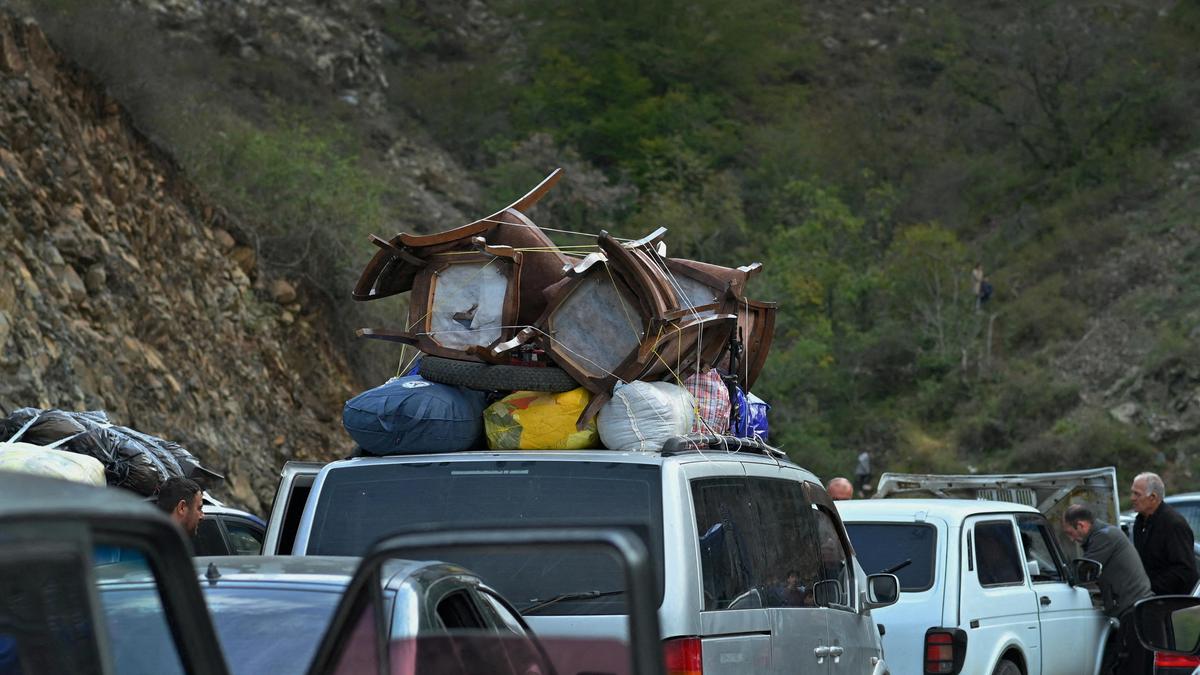
The diplomatic rift between Baku and Brussels has reached a boiling point. By summoning the European Union’s envoy to protest "biased" statements regarding the treatment of Armenians in the Karabakh region, Azerbaijan is doing more than just venting frustration. It is signaling a hard pivot away from Western oversight. This confrontation stems from a fundamental disagreement over sovereignty and the aftermath of the 2023 military operation that saw Azerbaijan regain full control of the territory. While the EU frames its concerns as a humanitarian necessity, Baku views them as a direct assault on its domestic authority and a violation of its territorial integrity.
The Strategy Behind the Summons
Diplomacy is rarely about the words spoken in the room. It is about the power dynamic those words represent. When the Azerbaijani Foreign Ministry called in Peter Michalko, the EU Ambassador, the objective was to dismantle the EU’s self-appointed role as a regional referee. Azerbaijan’s leadership believes the conflict is over. For them, Karabakh is no longer a "disputed" zone; it is a domestic administrative district.
By targeting EU officials, Baku is attempting to set new boundaries for international engagement. They are making it clear that any discussion regarding the ethnic Armenians who fled the region must happen on Azerbaijani terms, not under the pressure of European parliamentary resolutions. The move also serves as a warning to other Western powers that the era of mediation via moralizing is over.
The Weaponization of Humanitarian Metrics
Brussels continues to lean heavily on reports concerning the "right of return" and the preservation of cultural heritage. These are not just talking points. They are tools used to maintain a foothold in the South Caucasus. Azerbaijan sees this as a double standard. For thirty years, while hundreds of thousands of Azerbaijanis were displaced from the same lands, the international response was largely confined to toothless resolutions. Now that the tide has turned, the sudden urgency from the EU feels, to Baku, like a targeted political maneuver rather than a genuine pursuit of justice.
The friction is intensified by the presence of the EU Monitoring Mission in Armenia (EUMA). Baku views this mission as a "binocular diplomacy" effort that gathers intelligence under the guise of border stability. To the Azerbaijani government, the EU has stopped being a neutral broker and has instead become an advocate for Armenian interests. This shift has forced Baku to look elsewhere for security and economic partnerships, most notably toward Moscow and Ankara.
Energy Security and the Limits of Influence
The EU finds itself in a precarious position. It needs Azerbaijani gas to diversify away from Russian energy. This creates a massive contradiction in European foreign policy. On one hand, Brussels issues stern warnings about human rights and the treatment of minorities. On the other, it signs multi-billion dollar energy deals to keep the lights on in Budapest and Rome.
Azerbaijan knows this. They understand that the EU’s leverage is crippled by its own energy needs. This "energy shield" allows Baku to take a much more aggressive stance in diplomatic corridors. When a country knows its customer has no other immediate options, it doesn't need to be polite. The summoning of the envoy is a display of this confidence. It is a reminder that while the EU can pass resolutions in Strasbourg, Azerbaijan controls the valves that heat European homes.
The Internal Pressures within the European Union
It is a mistake to view the EU as a monolithic entity. There is a deep divide between the European Parliament, which tends to be more vocal about Armenian rights, and the European Commission, which manages the practicalities of trade and energy. Baku’s recent diplomatic hostility is specifically calibrated to exploit these cracks.
By making life difficult for diplomats on the ground, Azerbaijan forces the more pragmatic elements of the EU leadership to reign in the ideological factions. They want the Commission to tell the Parliament to stay quiet. It is a classic divide-and-conquer strategy applied to international relations.
The Reality of the Karabakh Reintegration
Baku claims that the departure of the Armenian population was a voluntary choice, fueled by fear-mongering from separatist leaders rather than direct coercion. Independent observers have noted that while there was no large-scale kinetic violence during the exodus, the psychological environment made staying feel impossible for many.
Azerbaijan is now pouring billions into "Great Return" projects. They are building smart cities, airports, and highways in record time. This reconstruction serves two purposes. First, it physically cements their claim to the land. Second, it creates a "fait accompli" that makes international calls for a different political status for the region look increasingly delusional.
Why the West is Losing the South Caucasus
The EU's insistence on focusing on the Karabakh Armenians, while ignoring the new geopolitical realities on the ground, is backfiring. Instead of bringing Baku back to the negotiating table, it is pushing them further into the orbit of the "3+3" regional platform—a group consisting of Azerbaijan, Armenia, Georgia, Russia, Turkey, and Iran.
This platform explicitly excludes Western powers. If the EU continues to prioritize rhetoric over the recognition of Azerbaijan’s victory, they risk losing all relevance in one of the world’s most important transit corridors. The Middle Corridor, which connects China to Europe via the Caspian Sea, runs directly through Azerbaijan. If Brussels loses its seat at the table in Baku, it loses its say in the future of global trade routes.
The Geopolitical Cost of Moral Superiority
The summoning of the EU envoy is a symptom of a larger malaise in Western diplomacy. There is an inability to reconcile values-based foreign policy with realpolitik. Azerbaijan is demanding respect as a regional power. They are no longer the struggling post-Soviet state of the 1990s. They are a well-armed, energy-rich nation that has achieved its primary national goal through force of arms and strategic patience.
For the EU to regain its footing, it must move beyond the "crisis management" phase and address Azerbaijan as it is, not as Brussels wishes it to be. This means acknowledging the reality of Azerbaijani sovereignty over Karabakh without caveats. Anything less will be met with more summoned envoys, more canceled meetings, and a steady erosion of European influence in the East.
The Role of Domestic Narratives
In Baku, the standoff with the EU is a domestic winner. It portrays the government as a defiant defender of national pride against "Crusader" mentalities in the West. This narrative is incredibly effective at unifying the public. Every time a European official criticizes Azerbaijan, it provides the state media with more fuel to consolidate support for the current administration.
Conversely, in Armenia, the EU's vocal support provides a glimmer of hope for a population that feels abandoned by its traditional security guarantor, Russia. However, this hope may be misplaced. If the EU cannot back up its words with meaningful action—which it cannot, due to the aforementioned energy dependency—it is merely setting Armenia up for further disappointment.
Dissecting the Foreign Ministry’s Language
The official statements from Baku used terms like "unacceptable," "interference," and "double standards." These are not chosen at random. They are designed to mirror the language often used by Russia and China when dealing with Western criticism. It is a rejection of the "rules-based order" in favor of a "sovereignty-based order."
In this new framework, human rights are treated as internal matters, and international borders are the only metrics that matter. Azerbaijan’s success in Karabakh is being watched closely by other nations with "frozen" conflicts. It provides a blueprint for how to solve a territorial dispute through military means and then use diplomatic aggression to keep the international community at bay.
The Infrastructure of Exclusion
Baku is currently auditing every international NGO and media outlet operating within its borders. The pressure on the EU envoy is just one part of a broader "cleansing" of foreign influence. The government wants to ensure that the only narrative regarding Karabakh is the one being produced in Baku. By making the environment hostile for diplomats, they encourage a self-censorship that is more effective than any formal ban.
The EU now faces a choice. It can continue to issue statements that result in their diplomats being hauled into the Foreign Ministry for a lecture, or it can fundamentally rethink its approach to the South Caucasus. The current path leads only to a total breakdown in communication.
The era of the EU acting as the moral arbiter of the Caucasus is dead. Azerbaijan has buried it under the weight of natural gas contracts and a decisive military victory. If Brussels wants to remain a player in the region, it must stop treating the aftermath of the Karabakh war as a debate and start treating it as a settled fact. Power in the 21st century does not flow from resolutions; it flows from the ground up, and right now, Azerbaijan holds the ground.
Stop looking for a compromise that isn't coming.


