Donald Trump recently urged his supporters to vote by mail if necessary, marking an abrupt tactical pivot in a years-long crusade that previously characterized postal ballots as a vehicle for systemic fraud. This reversal exposes a stark tactical contradiction at the heart of modern conservative election strategy. For years, party leadership spent millions convincing their base that dropping a ballot in a mailbox was equivalent to surrendering the election. Now, faced with mounting mathematical disadvantages in cumulative turnout, the machinery is shifting gears. The core question is no longer whether mail-in ballots are secure, but whether the Republican base can unlearn four years of skepticism fast enough to survive an election cycle where early and postal voting dominate total volume.
To understand why this about-face happened, one must look at the brutal arithmetic of modern American elections. For decades, conservative voters overwhelmingly showed up on a single Tuesday in November, treating Election Day as a sacred civic ritual. Democrats, meanwhile, systematically optimized early voting and postal drop-offs, banking thousands of votes weeks before the physical polls even opened. When voting behavior shifted dramatically during the pandemic era, Trump doubled down on condemning postal logistics. That rhetoric created a self-inflicted structural deficit. Republican candidates routinely found themselves staring down massive Democratic margins before election day even began, leaving their ground game vulnerable to bad weather, long lines, or unexpected disruptions on the final Tuesday.
The friction, however, goes deeper than simple rhetoric. It sits inside the legal and administrative architecture that the administration attempted to reshape. Over the past year, federal actions targeted postal delivery rules and data-sharing mechanisms, attempting to impose heavy restrictions on election mail. When federal courts blocked several of these eleventh-hour limitations, it left local party apparatuses in a state of operational whiplash. Precinct chairs who spent cycles telling voters that paper ballots were compromised suddenly had to pivot to distributing instructional guides on how to properly fill out and mail those exact same envelopes.
This brings up a persistent behavioral hurdle. Trust is easy to dismantle and exceptionally difficult to rebuild. When a political leader spends years declaring a process corrupt, the faithful tend to believe them. Polling data consistently illustrates that while a significant portion of the conservative base eventually adapts out of sheer necessity, a stubborn core remains deeply suspicious of the post office's capacity to handle their civic duty. Every time an irregularity makes local news, those anxieties resurface. Asking voters to utilize a system they have been trained to distrust creates an environment of permanent friction.
Consider a hypothetical suburban precinct in a swing state. Under the old paradigm, a local organizer could spend October convincing undecided voters on the phone while assuming committed base voters would naturally appear on election day. Under the revised tactical framework, that same organizer must now convince a skeptical voter who believes the system is rigged to actually fill out the paperwork, sign the affidavit correctly, track the barcode, and drop it into a collection box. If the voter makes a minor administrative error—such as forgetting a signature or missing a secrecy sleeve—the ballot faces rejection during the cure window. The margin for error shrinks dramatically when shifting an entire population from in-person booths to remote logistics.
The tension also exposes a deep rift between national strategy and local execution. While national figures recognize that refusing to bank early votes is electoral suicide, local activists often remain emotionally invested in the narrative of physical-day purity. This creates a fragmented message. One official tells a rally to utilize every available legal method to cast a ballot, while another rails against the entire infrastructure on social media. Voters caught in the middle receive contradictory signals about what constitutes a legitimate vote.
Ultimately, this pivot is not an ideological conversion. It is a cold, calculated surrender to reality. Parties cannot afford to leave thirty to forty percent of the electorate's potential volume on the table simply because of historical grievances or past rhetorical traps. Yet, managing this transition requires overcoming the very ghosts that leadership conjured up. Until the rhetoric matches the mechanical necessity of modern campaigns, the push-and-pull over the mailbox will remain one of the most volatile variables in American politics.
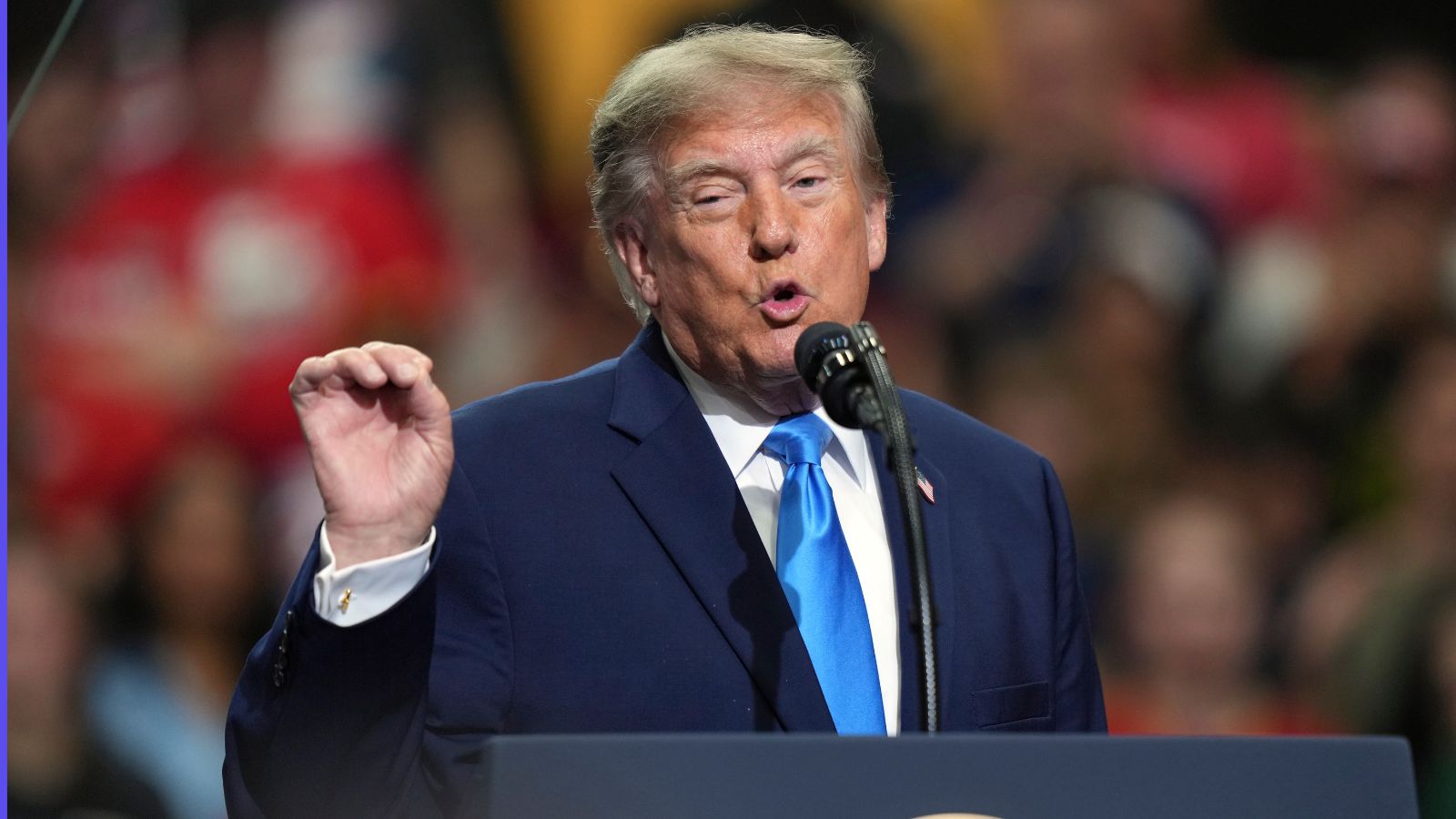
Trump: "They can vote by mail if they want"
This video captures the exact moment the administration shifted its public posture on postal ballots, illustrating the tension between past condemnation and current electoral necessity.