The Eco-Alarmism Epidemic
Local news rooms love a good ecological horror story. Whenever the waters of the Inner Harbor turn a vibrant, toxic-looking shade of green, the standard narrative writes itself. "Algae bloom triggers mass fish kill." "Pollution strikes again."
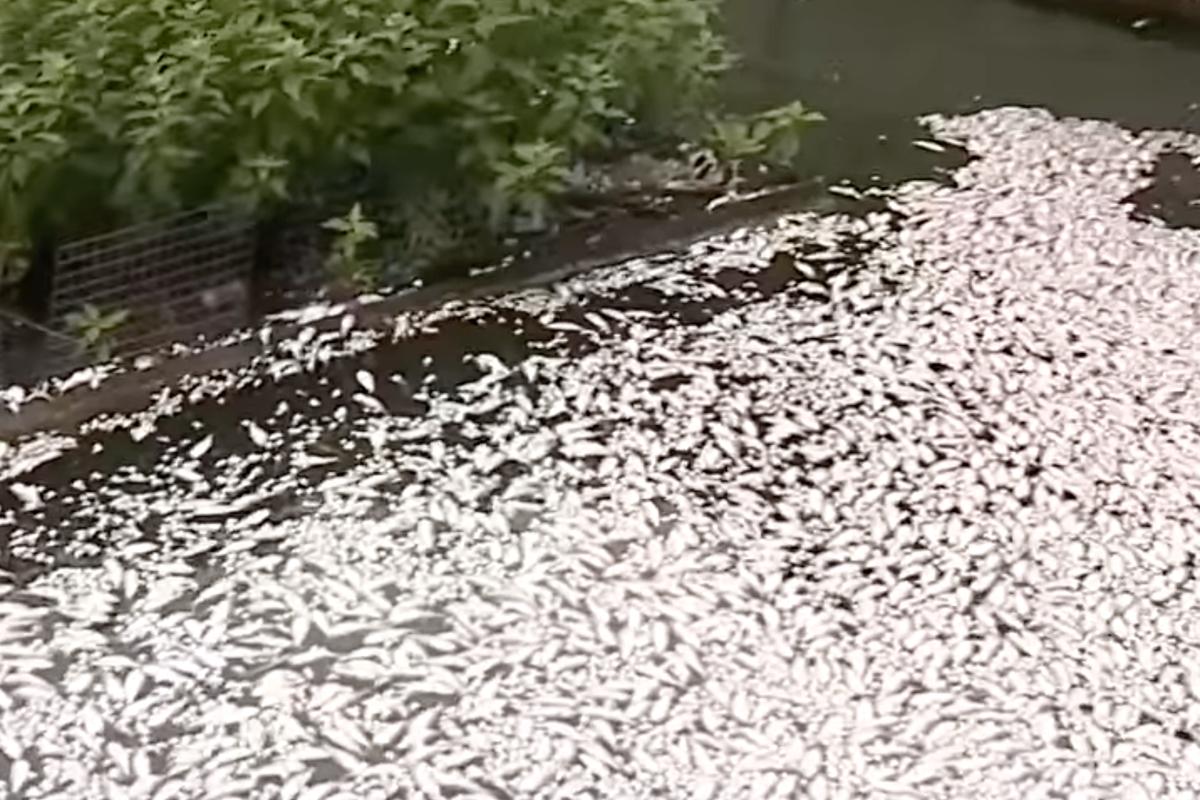
The recent coverage of Baltimore’s "pistachio tide" follows this exact script. Outraged columnists point fingers at urban runoff, clutch their pearls over a few hundred dead menhaden, and demand immediate, expensive intervention.
They are missing the entire point.
The hysteria surrounding the Gyrodinium instriatum bloom—the specific dinoflagellate responsible for the striking green hue—is a textbook case of viewing complex marine ecology through a simplistic, emotional lens. I have spent years analyzing urban water systems and advising municipalities on ecological management. If there is one thing I have learned, it is that nature does not operate on human aesthetic preferences.
The pistachio tide is not a sign of a dying harbor. It is the sign of a highly resilient ecosystem working exactly the way it is supposed to.
The Misunderstood Anatomy of a Bloom
To understand why the mainstream panic is flawed, you have to understand what Gyrodinium instriatum actually is. Unlike the notorious blue-green algae (cyanobacteria) that plague freshwater lakes, or the toxic red tides (Karenia brevis) that devastate the Florida coast, Gyrodinium instriatum is largely non-toxic. It does not produce the potent neurotoxins that pose a direct threat to human health or mammalian life.
When the media reports that the algae is "killing fish," they are confusing a secondary symptom with a primary cause.
The fish do not die from poisoning. They die from localized oxygen depletion, a phenomenon known as hypoxia. This happens during the final stage of the bloom cycle, when the massive population of algae dies off simultaneously and bacteria consume dissolved oxygen to decompose the organic matter.
[Nutrient Spike] -> [Algae Population Explosion] -> [Sunlight Blocked/Nutrient Exhaustion] -> [Mass Algae Die-off] -> [Bacterial Consumption of Oxygen] -> [Localized Hypoxia]
Here is the nuance the lazy consensus completely ignores: this cycle is a brutal, yet necessary, self-correcting mechanism for a nutrient-loaded urban body of water. Baltimore Harbor suffers from chronic legacy loading of nitrogen and phosphorus. If microscopic organisms do not rapidly consume these nutrients, the water column becomes choked in far more insidious ways. The pistachio tide acts as a massive, natural sponge, locking up excess nutrients at a speed no engineered human filtration system could ever match.
The Problem With the "Fixes"
Whenever these blooms occur, well-meaning environmental groups demand that the city "do something." They suggest artificial aeration, chemical treatments, or massive physical harvesting of the algae.
I have watched cities waste millions of dollars chasing these superficial fixes. They fail because they treat the symptom rather than the systemic reality.
- Chemical Algicides: Spraying copper sulfate or other algicides might turn the water blue again, but it causes a catastrophic, instantaneous crash of the bloom. This releases all the locked-up nutrients and toxins back into the water at once, creating a massive, widespread dead zone far worse than the localized hypoxia caused by a natural decline.
- Artificial Aeration: Installing giant bubblers in an open, tidal estuary like the Patapsco River is like trying to air-condition the Sahara Desert. The energy expenditure is astronomical, and the ecological impact is negligible.
Dismantling the "People Also Ask" Panic
The public discourse surrounding urban water quality is driven by flawed assumptions. Let us dismantle the most common questions cluttering search engines with brutal honesty.
Is it safe to swim in the pistachio tide?
No, but not for the reason you think. You should not swim in Baltimore Harbor regardless of its color. The danger does not stem from the Gyrodinium bloom. It stems from the baseline levels of enterococci bacteria and urban runoff that exist in any industrialized port city after a heavy rain. Framing the algae as the primary threat distorts public risk assessment. It makes people think the water is safe when it looks blue. It isn't.
Why does the harbor keep turning green?
Because Baltimore Harbor is working as an unintentional bioreactor. The city’s aging infrastructure, combined with regional agricultural runoff from the Susquehanna River, ensures a steady diet of nutrients flows into the Chesapeake Bay's tributaries. The green color is simply nature responding to an abundance of food. If you provide the fuel, biology will provide the engine.
How do we stop the fish kills permanently?
You don't. At least, not without completely destroying the economic and historical reality of the region. To completely eliminate localized hypoxic events, you would need to revert the entire Patapsco watershed back to pre-industrial forested wetlands. Short of bulldozing the city of Baltimore and banning agriculture in Pennsylvania, fish kills will remain an occasional, natural pressure valve for an urbanized estuary.
The Hard Truth About Urban Marine Life
We need to talk about the fish themselves. The primary victims of the pistachio tide are Atlantic menhaden.
Menhaden are a schooling, migratory species that enter the harbor in massive numbers during the warmer months. They are filter feeders, effectively acting as vacuum cleaners for the water column. When a massive school enters a restricted, shallow area like the Inner Harbor during a late-stage algae bloom, their sheer biomass accelerates the oxygen depletion.
They are not passive victims of an environmental crime; their own behavioral patterns contribute directly to the localized drop in dissolved oxygen.
Imagine a scenario where thousands of people crowd into an unventilated room. Eventually, the air gets stale. It is a tragedy of crowding and bad timing, not a systemic collapse of the atmosphere. The menhaden population in the Chesapeake Bay is remarkably robust, numbering in the billions. A loss of a few hundred, or even a few thousand, fish in an industrialized harbor is an ecological rounding error. It has zero long-term impact on the health of the bay's fisheries.
A Radical Shift in Perspective
Stop looking at the Inner Harbor as if it should be a pristine mountain stream. It is a working, historic industrial port. It has been dredged, hardened, and reshaped by human commerce for over two centuries.
The expectation that this body of water should look like a postcard from the Caribbean is a delusion born of ecological naivety.
The pistachio tide is a visual reminder that biological forces are still dominant, even in an environment dominated by concrete and steel. The algae bloom is a highly efficient, adaptive response to human alteration. It processes the waste we create, absorbs the energy of the summer sun, and resets the nutrient balance of the water column, albeit through a messy, unappealing process.
The real downside to accepting this contrarian view is political inertia. It requires admitting that some environmental phenomena cannot—and should not—be managed by municipal committees or expensive engineering firms. It requires acknowledging that nature's clean-up process is often ugly, smelly, and offensive to urban sensibilities.
We do not need more regulations targeting temporary algae blooms. We do not need more public funding allocated to cosmetic water-clarity projects that offer nothing but theater for tourists.
Accept the green water. Accept the cyclical nature of the estuary. Stop trying to sanitize an ecosystem that is fighting to keep itself alive.



