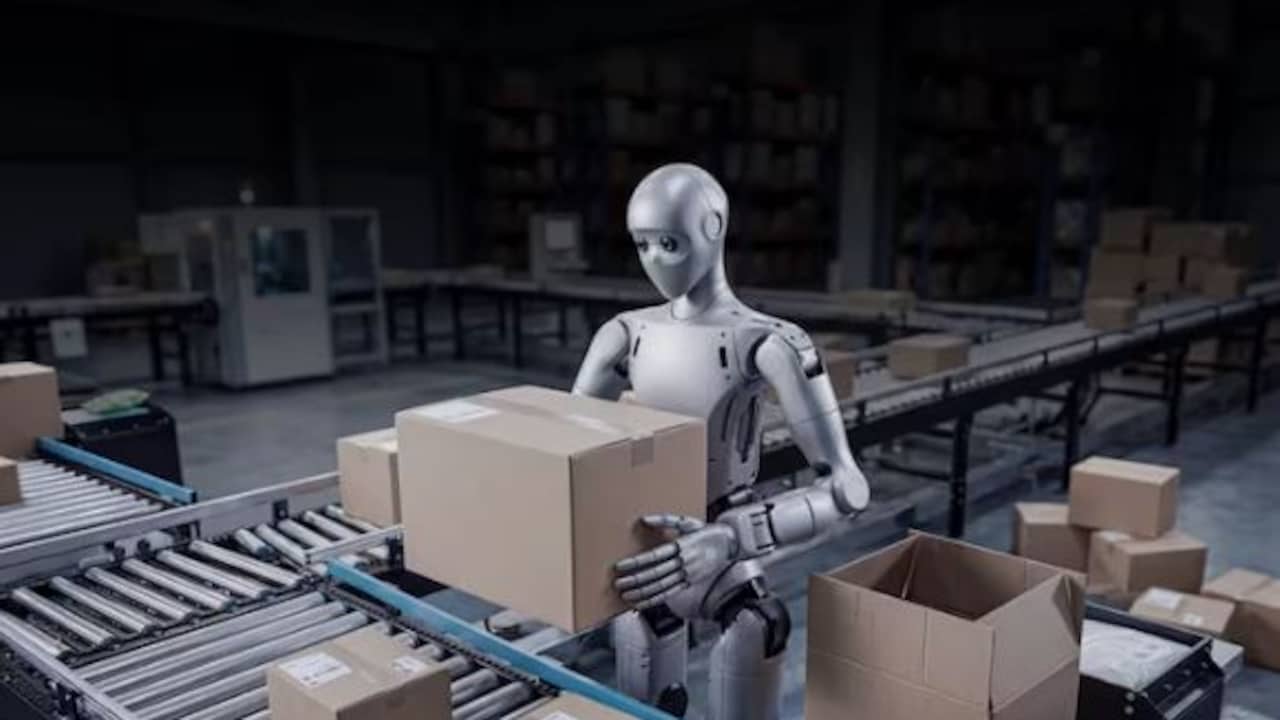
Washington loves a clean narrative. Grab a villain, slap a national security label on it, pass a protectionist ban, and wait for the applause. The latest panic-driven headline claims the US is banning foreign-made humanoid robots to starve overseas rivals of market share and secure domestic supremacy.
It sounds smart on a cable news broadcast. It is complete economic suicide.
I have watched companies burn nine figures trying to build proprietary hardware from scratch because they thought procurement was patriotism. I have sat in boardrooms where executives chose inferior domestic prototypes over world-class hardware simply to dodge regulatory crosshairs. The lazy consensus says keeping foreign metal out of American factories builds a moat.
The reality? It starves the ecosystem of the very volume required to survive.
The Fallacy of Import Substitution in Hardware
Protectionism works when you are guarding a mature industry with high switching costs and stable unit economics. Humanoid robotics is not that. We are not manufacturing steel or assembling sedans on a twentieth-century assembly line. We are trying to commercialize a brand-new mechanical species that still struggles to fold a t-shirt reliably without breaking a servo.
The premise behind the ban rests on a profound misunderstanding of how physical intelligence scales. Software eats the world because code reproduces at zero marginal cost. Hardware does not. Hardware lives and dies by iteration speed, supply chain density, and component cost reduction.
If you choke off access to cheap, high-density actuators, gearboxes, and sensor suites coming out of overseas manufacturing hubs, you do not force domestic startups to innovate. You force them to spend eighty percent of their capital just trying to recreate basic hardware components that Asia solved three years ago.
You trade long-term market dominance for short-term political theater.
The Software Is the Product Not the Shell
Ask any engineer who has spent a week elbow-deep in ROS2 and neural network weights what actually matters. It is not the carbon fiber pelvis or the aesthetic chassis. It is the policy engine. It is the end-to-end foundation model that translates visual inputs into physical manipulation.
The hardware is just a heavy, expensive peripheral.
When politicians scream about foreign-made bipedal machines infiltrating sensitive supply chains, they are treating a humanoid robot like an advanced spy drone. That comparison betrays a total lack of domain expertise. A surveillance drone operates autonomously in classified airspace. A factory humanoid robot is a tethered, local-network-dependent worker that needs three external cooling fans and a battery swap every four hours.
Worrying about foreign espionage via an industrial robot arm is like panicking because a forklift has an overseas part number. If your operational security depends on the brand name of the actuator in your warehouse floor sweeper, your entire cybersecurity architecture is already compromised.
Why Domestic Hardware Monopolies Fail
Let us look at the historical data. Every time the government steps in to hand domestic incumbents an unearned regional monopoly through regulatory exclusion, innovation stalls. Without fierce, unforgiving global competition, engineering teams grow fat and lazy. They stop optimizing for cost and start optimizing for government subsidies.
I've seen companies blow millions on custom actuators built in domestic contract shops because of compliance paranoia, only to watch those parts fail thermal stress tests within a week. Meanwhile, overseas suppliers are shipping millions of units to consumer electronics factories, driving down failure rates through sheer volume.
Volume is the only metric that matters in hardware. You cannot simulate your way to mechanical reliability. You need ten million operating hours in the dirt, the dust, and the heat. By walling off the American market from global hardware competition, policymakers are cutting off the precise volume feedback loop required to make domestic robots viable in the first place.
The Real National Security Threat
The true threat to American technological leadership is not that a factory in Ohio might buy a bipedal chassis built in Shenzhen. The threat is that American companies will spend the next decade fighting over scraps of overpriced, heavily subsidized domestic hardware while global competitors deploy millions of units into the field, iterating their intelligence models at a pace we cannot touch.
National security in the twenty-first century is determined by productivity, output, and speed of deployment. If your factories are running at half-capacity because you legislated out forty percent of the supply chain, your industrial base becomes a museum exhibit.
Stop treating hardware protectionism as a substitute for actual technological breakthrough. If American robotics companies want to win, they should win by writing better intelligence, dropping unit costs, and out-executing the rest of the world on the open market.
If they need a government moat to survive, they deserve to drown.
The next time a lobbyist tells you that banning foreign hardware protects the homeland, ask them how many units their production line shipped last quarter.
If the answer is less than a thousand, ignore them. They are not protecting national security. They are begging for a bailout.