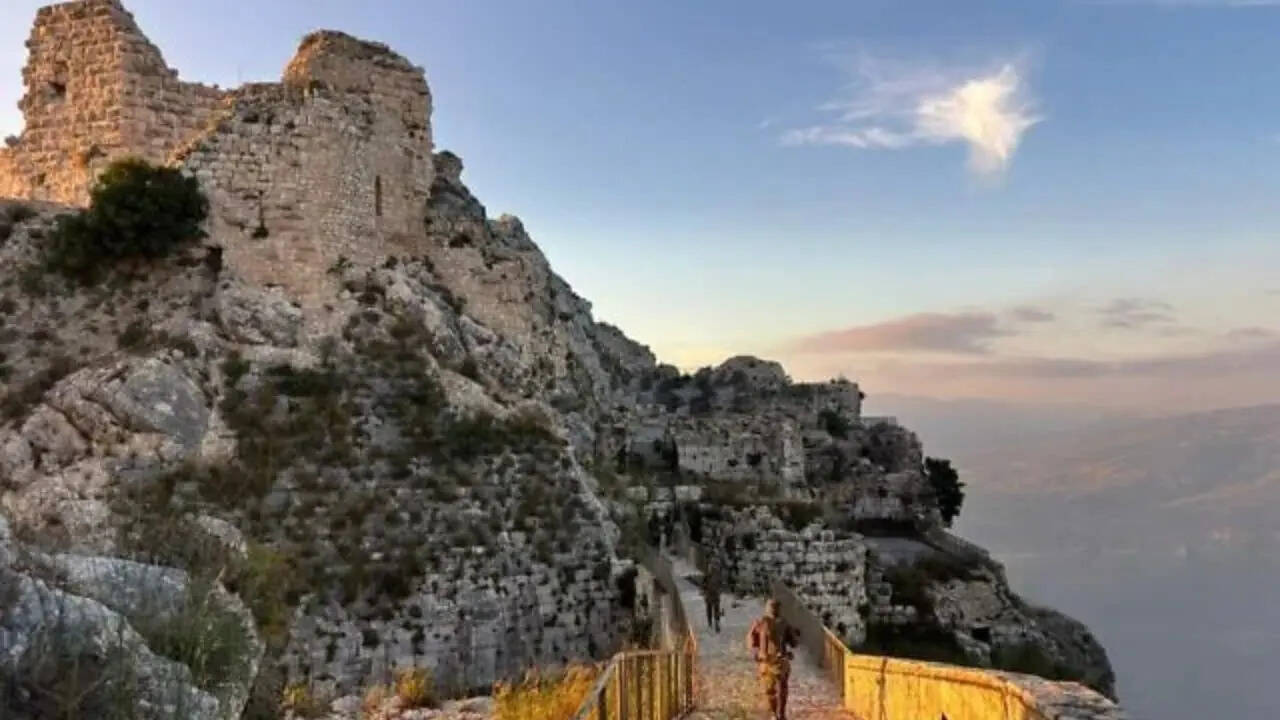
The fragile truce in southern Lebanon just took a massive hit. Despite an official ceasefire meant to halt hostilities between Israeli forces and Hezbollah, heavy combat recently erupted around one of the region's most iconic strategic prizes. Israeli troops captured the historic Beaufort Castle after days of intense fighting.
This isn't just a minor skirmish over a pile of old stones. The fall of this specific fortress exposes the deep flaws in the current diplomatic framework. It shows exactly why drawing lines on a map rarely matches the messy reality of ground warfare. If you want to understand why peace keeps slipping away in the Middle East, you have to look at who controls the high ground. If you found value in this article, you might want to look at: this related article.
Why Beaufort Castle Matters to Both Sides
Beaufort Castle sits on a rocky crag roughly 700 meters above the Litani River. It dominates the landscape. From its crumbling stone walls, you get a clear, unobstructed view of northern Israel and large swathes of southern Lebanon. Militarily, whoever holds this ridge controls the valley below.
Historically, the site has been a bloody flashpoint. The Crusaders built it, the Ottomans fought over it, and during the late 20th century, it became a symbol of the long Israeli occupation of southern Lebanon. Israel held it for nearly two decades before withdrawing in 2000. Hezbollah immediately moved in, turning the surrounding hillsides and subterranean networks into a heavily fortified staging ground. For another angle on this story, check out the latest coverage from BBC News.
For Israel, leaving Beaufort in hostile hands felt like an intolerable security risk, ceasefire or no ceasefire. For Hezbollah, losing it means losing their best observation post and a vital psychological stronghold.
The Flawed Logic of the Current Ceasefire
The main reason fighting flared up here comes down to conflicting interpretations of the truce terms. Diplomatic agreements signed in distant capitals often lack clarity on the ground.
- The Buffer Zone Dispute: The ceasefire framework requires Hezbollah to pull its armed presence north of the Litani River. However, the agreement also gave Israeli forces a staggered timeline to withdraw from positions they already occupied during the ground offensive.
- The Enforcement Gap: International monitors and the Lebanese Armed Forces were supposed to secure these vacated areas. But a massive security vacuum opened up before those international forces could fully deploy.
- Preemptive Strikes: Israel claimed that Hezbollah fighters were actively moving back into the Beaufort sector to re-establish missile launch sites. Hezbollah argued they were simply maintaining their native positions.
The result was inevitable. Israel chose to launch a decisive assault to secure the ridge rather than risk letting Hezbollah reoccupy the fortress. They didn't want to wake up a month from now facing an entrenched enemy on the most dangerous high ground in the region.
Tactical Realities of the Assault
The fight for the castle wasn't a quick operation. It took days of grinding infantry combat, heavy artillery shelling, and targeted airstrikes.
Hezbollah spent years digging deep concrete bunkers and tunnels directly into the bedrock beneath the Crusader ruins. Standard airstrikes can't easily clear those out without destroying the historic site entirely. Israeli commandos had to clear the complex bunker by bunker.
This highlights a massive issue with modern ceasefires in asymmetrical warfare. When an insurgent group embeds itself inside historical infrastructure or civilian areas, conventional military forces usually rely on overwhelming firepower to minimize their own casualties. The physical destruction of the area becomes a secondary concern to tactical dominance.
The Domino Effect Across Southern Lebanon
The capture of Beaufort Castle sets a dangerous precedent for the rest of the border region. It signals to both sides that the ceasefire lines are fluid, not fixed.
[Israel Secures High Ground]
         │
         ▼
[Hezbollah Retaliates with Long-Range Fires]
         │
         ▼
[Ceasefire Framework Erodes Globally]
When one side seizes a major asset during a technical truce, the other side feels compelled to retaliate elsewhere to rebalance the scales. We are already seeing increased rocket fire and drone activity deeper into Lebanese territory, matched by retaliatory Israeli strikes on suspected weapons depots. The diplomatic paper agreement is rapidly losing its relevance.
What Happens Next on the Ground
If you are tracking this conflict, stop looking at the political statements coming out of Beirut or Tel Aviv. Watch the troop movements around the Litani River basin instead.
First, look at whether Israel establishes a permanent military footprint at Beaufort Castle or eventually hands it over to Lebanese army units. A prolonged Israeli occupation of the fortress will trigger a continuous war of attrition. Hezbollah will target the supply lines winding up the hill.
Second, monitor the deployment speed of the Lebanese Armed Forces. If the national army cannot rapidly fill the vacuum in these strategic zones, regional militias will step back in. That dynamic completely undermines the core intent of the peace deal.
The battle for Beaufort Castle proves that a ceasefire is only as strong as the willingness of the combatants to accept tactical disadvantages. Right now, neither side is willing to blink first, making a return to full-scale warfare a distinct and immediate possibility.