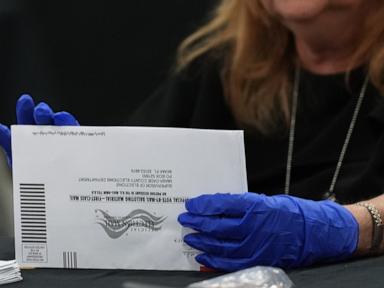
The kitchen table is where democracy actually happens. Not under the vaulted arches of marble halls, not behind the heavy mahogany doors of appellate courts, but right there among the coffee rings, the scattered bills, and the school permission slips.
Picture Clara. She is seventy-four years old, her knees stiffen when the autumn damp settles into the floorboards, and the local polling place sits three miles down a winding, unpaved county road. For decades, Clara walked it or drove it. Now, the car ride hurts, and the walk is out of the question. To Clara, a mail-in ballot is not a partisan talking point or a legal abstraction. It is a lifeline. It is the quiet assurance that her voice, earned through a lifetime of paying taxes and raising children in the same zip code, still counts.
When a federal judge once again blocks an executive order aimed at restricting how those paper envelopes travel from kitchen tables to county offices, the headlines treat it as a dry chess match between political factions. They talk about injunctions, jurisdictional boundaries, and the high probability of an expedited appeal rushing toward higher benches.
They miss the human tremor entirely.
Let us be honest about what is happening beneath the legal briefs. We are watching a slow-motion collision between modern convenience and ancient anxiety. Voting by mail has transformed from an administrative afterthought—once reserved mostly for absent soldiers and the bedridden—into the primary battleground of American civic participation. Millions of voters now expect to cast their ballots in slippers, reading the fine print of local referendums with a cup of tea in hand.
Yet every time that convenience expands, a counter-reaction stirs. Power fears what it cannot easily herd. When polling places are centralized, lines grow long, and access concentrates in the hands of those with flexible work hours, reliable transportation, and physical mobility. When ballots travel through postal sorting facilities, the machinery of democracy disperses, reaching into rural farmhouses and cramped urban apartments alike.
The executive order in question attempted to place severe roadblocks in front of this dispersion. It sought to draw bright, restrictive lines around how mail ballots are collected, handled, and counted. Proponents argued for uniformity, for a return to the visual theater of the traditional polling booth where a citizen steps behind a curtain under the watchful eye of a precinct worker.
But uniformity imposed from above often looks like exclusion from below.
Consider what happens next when an order like this hits the courts. Judges do not exist in a vacuum; they weigh the immediate, irreparable harm against the abstract promise of administrative order. In blocking the order yet again, the judiciary recognized a fundamental truth: you cannot dismantle an established mechanism of civic participation weeks before an election without plunging millions of voters into chaos. The legal reasoning is dense, wrapped in procedural terminology about executive authority and statutory interpretation, but the practical effect is simple. The kitchen table remains a valid polling booth. For now.
This is not the end of the story, of course. The legal machinery grinds onward, and the promised appeal will inevitably wind its way toward justices who hold the ultimate authority to redefine how Americans cast their votes. Every legal setback for these restrictions is treated by their architects as a temporary trench lost in a longer war. They will refile, they will revise, they will press every procedural lever available to narrow the funnel through which public opinion flows.
We have lived through this cycle before. American history is littered with the debris of barriers erected to manage who gets to speak and whose voice carries weight. Poll taxes gave way to literacy tests, which gave way to purges of voter rolls, which now give way to battles over the humble paper envelope. The vocabulary changes, but the underlying impulse remains identical. It is the eternal tension between those who want the electorate to be as wide and unruly as the population itself, and those who believe democracy functions best when it is filtered, managed, and restricted.
Clara does not know the docket number of the case. She does not track the appellate briefs flying back and forth between legal teams in high-rise offices. She only knows that when her ballot arrives in the mail next month, she will sit at her wooden table, carefully fill in the ovals with a black ballpoint pen, seal the flap, and sign her name with the shaky, deliberate care of someone who knows exactly what is at stake.
The judges will argue. The politicians will posture. The appellate courts will issue their rulings in clipped, formal prose. But the battle is not really being fought on paper in a courtroom. It is being fought for the right of every citizen to participate in the messy, magnificent experiment of self-governance without having to scale an artificial wall just to have their say.
The envelope waits on the table. The ink is dry.


