The envelope sits on the linoleum next to a cold cup of coffee. It is stark white, franked with official postage, and carries a weight far heavier than its actual ounces. Inside lies a piece of paper that connects a citizen to the machinery of the republic.
Across the United States, that piece of paper has become the epicenter of a silent war.
For months, courtrooms from Georgia to Arizona have turned into high-stakes theaters. Lawyers in sharp suits argue over millimeters of paper, postmark timestamps, and the precise definition of a signature match. They debate under fluorescent lights while, miles away, millions of voters simply want to know if their voice will count when the midterm elections arrive.
We talk about voting rights as if they are abstract paintings hanging in a gallery of political science. We discuss them in percentages, district maps, and Supreme Court briefs. But democracy does not happen in a federal courtroom. It happens at a kitchen table at 8:00 PM under the amber glow of a desk lamp.
Consider Sarah, a fictional nurse working twelve-hour shifts at a crowded urban hospital. For Sarah, standing in line at a polling place on a Tuesday morning is a mathematical impossibility. Her schedule leaves no margin for civic rituals performed on someone else's timeline. The mail-in ballot is not a convenience for her; it is her only doorway into the democratic process.
When legal challenges restrict absentee voting procedures, Sarah does not read the legal briefs. She only feels the door closing.
The legal machinery driving these midterms is vast and relentless. On one side, advocates argue for expansive access, pointing out that ease of voting strengthens the foundational mandate of a representative government. They cite historical turnout data, demonstrating that mail-in voting increases participation among rural residents, shift workers, and the elderly.
On the other side, challengers press for tighter controls. They invoke the language of security, chain of custody, and the prevention of administrative chaos. They argue that strict deadlines and rigorous verification methods are the structural beams holding up public trust in the outcome.
Both sides claim to protect the integrity of the vote. Yet, the human casualty of their crossfire is the citizen's peace of mind.
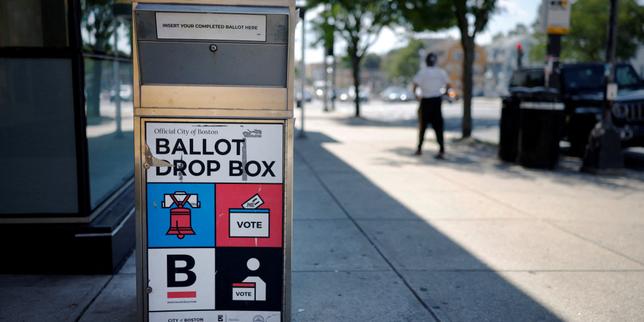
When rules change weeks before an election, confusion spreads faster than any ballot can travel. A voter receives a packet with instructions that contradict last year’s procedure. Do they need a witness signature? Does the postage need to be pre-paid, or must they hunt for a stamp? Can a family member drop the envelope into a collection box, or does the law now treat that act as a suspicious maneuver?
These are not trivial administrative details. They are friction points. And friction causes people to give up.
History whispers a warning here. Whenever voting procedures become a labyrinth, participation drops among those who have the least margin for error. Think of the elderly voter whose hands tremble while filling out a mandatory birthdate field that wasn't required in the previous election cycle. Think of the college student whose ballot is rejected because a signature processed digitally looks slightly different from the one scribbled on a driver's license ten years ago.
The legal battles playing out right now in state and federal courts are deciding the boundaries of these margins. Judges are asked to draw lines with permanent ink while the ground beneath them shifts. Every injunction issued, every stay granted or denied, ripples outward into communities that are already deeply cynical about whether the system cares about them at all.
We have built a political culture that obsesses over the scoreboard while ignoring the integrity of the playing field.
The absurdity of the situation lies in its contradiction. We live in an era where technology can track a pair of sneakers across an ocean in real-time, yet the simple act of mailing a folded piece of paper to a county clerk's office can trigger a constitutional crisis.
Behind every disputed ballot is a human intention. Someone took the time to read the candidates' positions, weigh the issues, mark the circles, seal the flap, and carry the envelope to the mailbox. That act requires a leap of faith. It requires believing that the system is listening.
When courts invalidate batches of ballots over technicalities—a missing date on an outer envelope where the vote itself is otherwise pristine—that faith shatters. It teaches the citizen a cynical lesson: that the machinery of the state is looking for reasons to exclude them rather than include them.
The upcoming midterms will not be decided solely by which party runs the better campaign or raises the larger war chest. They will be decided in the quiet spaces where rules meet reality. They will be decided by whether a postal worker catches a delivery delay, whether a judge blocks a restriction twenty-four hours before printing begins, and whether a voter has the stamina to navigate a bureaucratic obstacle course.
The envelope on the kitchen table waits. The coffee cools completely. Sarah picks up a blue pen, signs her name inside the designated box, and prays the rules don't change before tomorrow morning.