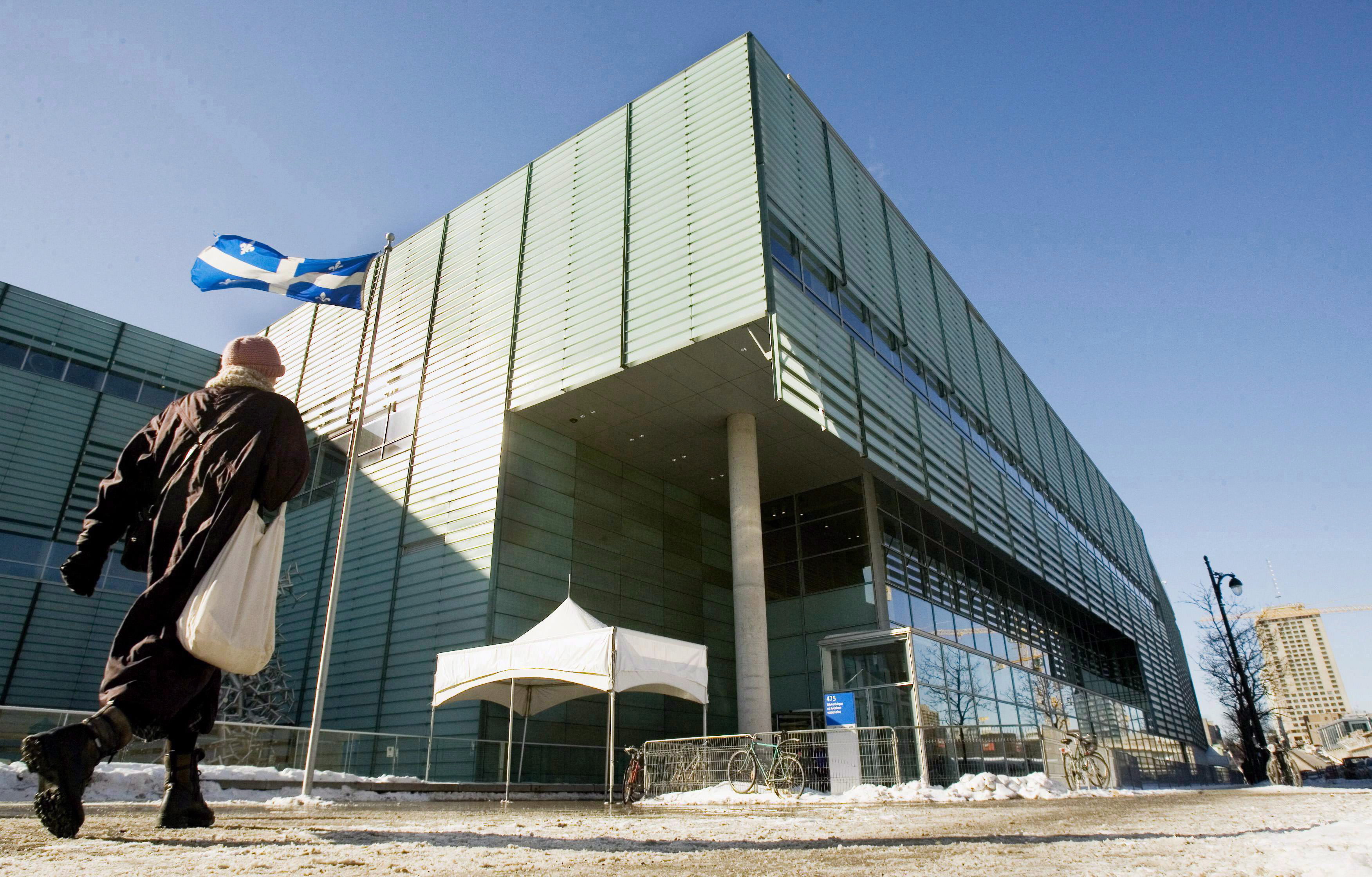
Quebec is building an official cultural and government databank to feed artificial intelligence systems, explicitly designed to correct the deep bias embedded in Silicon Valley’s models. Driven by Bibliothèque et Archives nationales du Québec (BAnQ), the province’s national library and archives, the project has transitioned from a theoretical feasibility study into an active, experimental development phase. This initiative is a defensive firewall. Large language models trained predominantly on English-centric Internet data consistently distort, hallucinate, or entirely erase the specific cultural, legal, and historical realities of Quebec society and its indigenous communities.
By constructing an authorized, sovereign repository of French-language and Indigenous-language data, BAnQ intends to force commercial AI platforms to interact with an accurate reflection of the province. This is a direct response to a systemic failure. When a citizen asks a major commercial chatbot about provincial tenancy laws, local literary history, or regional public health policies, the infrastructure beneath that chatbot frequently defaults to American or Parisian paradigms.
The initiative moves past archival preservation into geopolitical tech sovereignty. It addresses an existential vulnerability: if a distinct society does not format its own history for machine consumption, commercial AI will simply invent a convenient substitute.
The Hidden Deficit of Silicon Valley Language Models
The structural logic of generative artificial intelligence rewards volume over nuance. Silicon Valley technology firms scraped the open web to compile their foundational training corpuses, capturing massive troves of American media, English-language forums, and homogenized European content. For a distinct cultural enclave like Quebec, the mathematical consequence of this architecture is systemic erasure.
When an algorithmic model encounters French data, it processes that data through statistical weights heavily influenced by France. The distinct linguistic syntax of Quebec French, along with its specific administrative, legal, and cultural frameworks, becomes statistical noise.
[Standard Training Data] -> Scraped Open Web -> High Weight: US/France Culture -> Output: Distorted Local Nuance
[BAnQ Sovereign Data]   -> Curated Repositories -> High Weight: Quebec/Indigenous -> Output: Accurate Local Reality
This structural bias creates real-world friction across several sectors.
- Legal Misdirection: Commercial AI systems routinely confuse the Civil Code of Quebec with the common law systems used throughout the rest of Canada and the United States, producing inaccurate legal summaries for local businesses and citizens.
- Historical Hallucination: Key historical figures, regional labor movements, and provincial policy developments are either omitted or filtered through an external geopolitical lens.
- Indigenous Language Extinction: Indigenous languages native to the territory face near-total omission from mainstream foundational models, starving local communities of modern digital tools.
BAnQ is attempting to correct this data starvation by aggregating millions of public, institutional, and historical documents. The organization is shifting its institutional mandate from a repository for human researchers to an engineered data pipeline for machine learning algorithms.
Inside the Logistics of the Sovereign Data Vault
The technical execution of the project exposes the immense friction of preparing physical and legacy digital archives for modern AI consumption. It is not a simple matter of granting an API key to a web crawler.
A significant portion of BAnQ’s vast physical archive requires rigorous text extraction, optical character recognition optimization, and structural metadata tagging before it can serve as clean training data. Legacy government documents, century-old newspapers from regional municipalities, and audio recordings of oral histories must be transformed into highly structured, machine-readable text files.
+--------------------------+     +-------------------------+     +--------------------------+
|  Legacy Physical Assets  | --> | Optical Character Recog. | --> | Structured Text & Meta   |
| (Newspapers, Documents)  |     |   (OCR Optimization)    |     |   (Ready for Training)   |
+--------------------------+     +-------------------------+     +--------------------------+
The data curation process demands strict adherence to intellectual property laws and privacy protocols. Unlike commercial tech entities that scraped copyrighted material without consent, a state-backed institution must operate within explicit legal frameworks. This constraint limits the speed of data aggregation.
The experimental phase centers heavily on designing data-sharing frameworks that protect the rights of local authors, publishers, and creators while ensuring the data remains useful for complex algorithmic training.
A secondary technical hurdle involves the representation of Indigenous languages. Languages such as Innu-aimun, Cree, and Inuktitut lack the massive digital footprints required by modern deep-learning architectures. BAnQ's initiative requires building hyper-specific, high-density datasets that preserve syntax and cultural context without allowing the dominant French or English frameworks to dilute the underlying linguistic structure.
The Commercial Leverage Dilemma
The long-term risk of the BAnQ strategy lies in the economics of distribution. Building a pristine, culturally accurate dataset does not guarantee that trillion-dollar tech firms will willingly integrate it into their systems, especially if it arrives with strict regulatory strings attached.
                       +-------------------------+
                       |  BAnQ Sovereign Data    |
                       +-------------------------+
                                    |
                                    v
                       +-------------------------+
                       | Compliance & IP Demands |
                       +-------------------------+
                                    |
                 +------------------+------------------+
                 |                                     |
                 v                                     v
+---------------------------------+   +---------------------------------+
|      Silicon Valley Giants      |   |       Sovereign Local AI        |
|  (May reject strict conditions)  |   | (Niche models, limited scaling) |
+---------------------------------+   +---------------------------------+
If Quebec demands that commercial AI developers pay licensing fees or adhere to rigid cultural accuracy audits, major technology companies may simply choose to ignore the dataset entirely. For a global tech giant, omitting a highly specific dataset representing a population of nine million people is a negligible commercial loss.
Conversely, if BAnQ surrenders the data with no strings attached to ensure its adoption, the province essentially subsidizes the product development of foreign tech monopolies using public cultural assets.
This reality splits the project's potential trajectory into two distinct paths.
The Big Tech Integration Path
BAnQ successfully negotiates data-use agreements with major developers like OpenAI, Anthropic, or Google. These companies integrate the curated dataset into their broader model updates. While this directly fixes the accuracy problem for everyday users, it leaves the province dependent on foreign infrastructure to access its own digital heritage.
The Sovereign Model Path
Quebec uses the dataset to train smaller, specialized, open-weights models tailored specifically for the province's internal public administration, academic institutions, and legal systems. This approach secures complete technological independence but requires continuous public funding to maintain, run, and update the underlying compute infrastructure.
Cultural Preservation vs Algorithmic Exploitation
The project highlights a deep tension at the intersection of state-funded cultural preservation and corporate technology development. For decades, national libraries operated on the principle of open public access. The goal was to make knowledge free for any human being walking through the doors or logging into a portal.
Generative artificial intelligence breaks this civic contract. Commercial AI entities do not access public archives to learn; they ingest them to build closed, commercial software tools that monetize that extracted knowledge.
By stepping into the data supply chain, BAnQ is attempting to reassert public control over this extraction process. The strategy shifts the role of the archivist from a passive guardian of history to an active data broker managing a critical geopolitical asset.
The success of the project will not be measured by the size of the database or the completion of its current experimental phase. It will be determined by whether a small, distinct culture can successfully force the global AI ecosystem to respect its boundaries, or if its digitized history will merely become free fuel for someone else's machine.