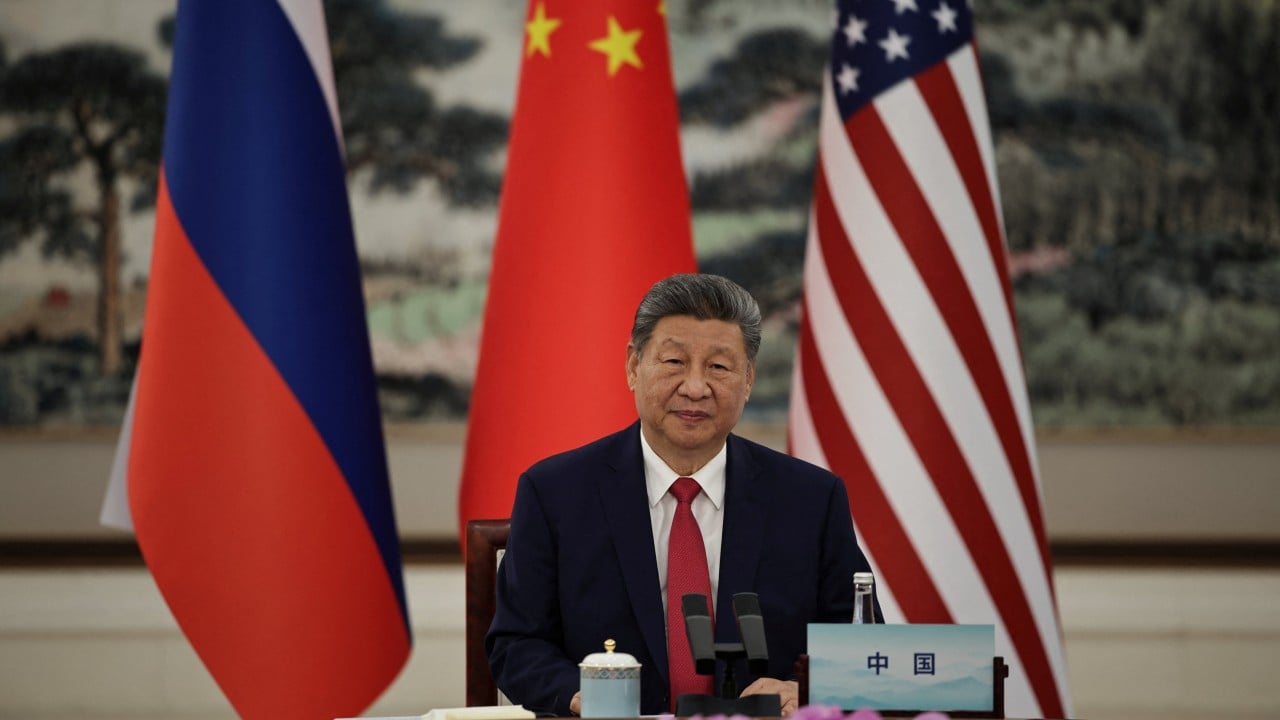
When Chinese President Xi Jinping tells Washington to do the "right thing" on Taiwan to avoid setbacks in bilateral relations, he is not offering diplomatic advice. He is issuing a calibrated warning rooted in decades of rigid strategic doctrine. In Beijing's lexicon, doing the "right thing" means strictly adhering to the One-China principle, halting arms sales to Taipei, ending high-level official exchanges, and actively opposing Taiwan independence rather than merely stating a lack of support for it.
The phrase sounds deceptively simple in a wire service headline. Yet behind those two words sits a high-stakes contest over legal definitions, military deterrence, and the survival of the post-World War II security order in the Indo-Pacific. Wire reports routinely capture the quote and move on to the next diplomatic readout. Doing so misses the mechanics of how Beijing uses ambiguity as a weapon and why Washington's traditional balancing act is running out of room.
The Semantic Trap Behind Doing the Right Thing
Diplomacy between Washington and Beijing runs on carefully policed vocabulary. To understand why Xi Jinping's phrasing triggers immediate alarm inside the State Department and the Pentagon, you have to look at the gap between two nearly identical terms.
Beijing demands adherence to its One-China principle. Under this doctrine, there is only one sovereign state under the name China, the People's Republic of China serves as its sole legitimate government, and Taiwan is an inalienable part of that territory. There is no room for negotiation in that sentence.
Washington, by contrast, operates under its own One-China policy. Built on the Three Joint Communiqués, the Taiwan Relations Act of 1979, and the Six Assurances, the American policy acknowledges Beijing's claim without endorsing it. The United States maintains unofficial relations with Taipei, sells defensive weapons to the island, and insists that any resolution of Taiwan's status must happen peacefully and with the assent of the people on Taiwan.
When Xi tells an American president or cabinet official to do the "right thing," he is attempting to collapse that distinction. Beijing wants Washington to replace its flexible policy with Beijing's rigid principle.
Why Diplomatic Warnings Are Escalating Now
Diplomatic language does not harden in a vacuum. Over the past several years, the structural pillars that kept peace across the Taiwan Strait for four decades have eroded from both sides.
First, domestic politics in Taiwan have shifted decisively away from unification. Generations of voters who grew up in a vibrant, self-governing democracy view themselves primarily as Taiwanese rather than Chinese. When Beijing watches Taipei elect leaders who refuse to accept the 1992 Consensus—a deliberately vague formula suggesting both sides belong to one China—Xi faces mounting pressure at home to show that his hardline posture yields results.
Second, Washington has steadily hollowed out its own self-imposed restrictions on engaging Taipei. Cabinet-level visits, expanded military training missions on the island, and congressional delegations have become routine. From the American perspective, these moves counter Beijing's relentless campaign to isolate Taiwan diplomatically and intimidate it militarily. From Beijing's perspective, Washington is engaging in "salami slicing"—gradually eroding the status quo until Taiwan achieves de facto independence in all but name.
Third, the military balance has tilted. For decades, the United States Navy could project overwhelming power into the Western Pacific without serious challenge. Today, the People's Liberation Army fields the world's largest navy by hull count, alongside dense networks of anti-ship ballistic missiles designed specifically to keep American aircraft carriers far from Taiwan's shores. Confidence breeds assertiveness. Xi speaks differently because his generals tell him they have options their predecessors lacked.
The Anatomy of a Setback in US-China Relations
Diplomatic readouts always carry an implied threat. If Washington fails to do the "right thing," Beijing warns of "setbacks" or "severe damage" to the relationship.
What does a setback actually look like in practice? Beijing rarely severs ties outright, because economic interdependence still cuts both ways. Instead, Chinese leadership weaponizes cooperation on issues Washington cares about most.
- Military-to-Military Channels: Beijing routinely freezes theater-level defense hotlines whenever Washington approves a major arms package or hosts a senior Taiwanese official. When fighter jets and warships operate within yards of each other in the South China Sea and the Taiwan Strait, turning off the phones turns routine friction into a potential spark for accidental war.
- Counternarcotics Enforcement: Progress on stemming the flow of precursor chemicals used to manufacture fentanyl is consistently tied to the broader political climate. When tensions spike over Taiwan, regulatory cooperation in Beijing mysteriously slows to a crawl.
- Climate and Global Debt Negotiations: Chinese diplomats treat climate commitments and debt restructuring for developing nations not as shared global responsibilities, but as bargaining chips to be withheld when Washington crosses perceived red lines.
- Targeted Economic Coercion: While broad tariffs hurt China's own export-driven economy, Beijing excels at surgical retaliation—blocking agricultural imports from politically sensitive American congressional districts or launching antitrust investigations into major US tech and industrial firms operating on the mainland.
This linkage strategy is deliberate. Xi wants American policymakers to feel a tangible domestic cost every time they take a step closer to Taipei.
Strategic Ambiguity Under Pressure
For over forty years, American deterrence rested on strategic ambiguity. Washington refused to say definitively whether it would intervene militarily if China invaded Taiwan, while simultaneously refusing to give Taipei a blank check that might embolden it to declare formal independence. The theory was simple: keep Beijing guessing about the risk of war with a nuclear superpower, and keep Taipei cautious enough not to provoke one.
That formula is showing severe cracks.
Critics in Washington argue that ambiguity no longer deters an increasingly powerful China. If Xi believes the United States might stay out of a regional conflict, he might gamble on a rapid blockade or amphibious assault. Advocates of strategic clarity insist the United States must state plainly that it will defend Taiwan, backed by overwhelming forward-deployed munitions.
Yet moving toward clarity carries its own lethal risks. If Beijing concludes that Washington has permanently abandoned the One-China framework and committed to defending a separate Taiwanese state indefinitely, Xi may decide that peaceful unification is dead. In Beijing's strategic calculus, a war fought today under unfavorable conditions is preferable to accepting the permanent loss of Taiwan tomorrow.
The Economic Tripwire Nobody Can Afford to Pull
Strip away the historical grievances and geopolitical posturing, and the Taiwan question still collides with a brutal material reality: the global economy cannot function without Taiwan.
Through companies like TSMC, the island manufactures the vast majority of the world's most advanced semiconductors. These chips power everything from smartphones and data centers to fighter jets and medical equipment. A military conflict in the Taiwan Strait—or even a sustained Chinese naval quarantine—would trigger an immediate global depression far worse than the 2008 financial crisis or the pandemic supply chain shocks.
Fab facilities are extraordinarily fragile. They rely on uninterrupted ultra-pure water, massive amounts of electricity, specialized chemicals imported from Japan and Europe, and extreme ultraviolet lithography machines serviced by foreign engineers. You cannot simply bomb a semiconductor plant and seize it intact. Any full-scale invasion would almost certainly destroy the very industrial crown jewel Beijing covets, while simultaneously severing China's own access to global markets and imported energy.
This economic mutual assured destruction is the strongest brake on war. Xi Jinping knows a blockade or invasion would devastate China's economy at a moment when the country is already wrestling with a prolonged property crisis, high youth unemployment, and shrinking demographics.
Reading Between the Lines of Beijing's Readouts
Veteran China watchers know that official statements from the Ministry of Foreign Affairs and state media follow strict formulas. Every adjective is weighed. Every omission is intentional.
When Xi frames Taiwan as the "first red line that must not be crossed," he is speaking to two audiences simultaneously. Externally, he is attempting to establish deterrence and frame the United States as the reckless disruptor of regional stability. Internally, he is signaling to the Chinese Communist Party and a nationalist public that he remains firmly in control of the nation's core interests.
Notice what Xi usually avoids in these direct exchanges with American leaders: hard timelines. Despite intelligence assessments and think-tank speculation about specific target dates for military readiness, Xi rarely boxes himself into a public deadline for unification. A deadline creates a trap. If the date arrives and Taiwan remains self-governed, the leader faces a crisis of legitimacy at home. By keeping the timeline open-ended while demanding immediate American concessions, Xi preserves maximum tactical flexibility.
The Unspoken Counter-Argument in Taipei and Washington
Beijing's narrative rests on the premise that Taiwan is an internal matter left over from the Chinese Civil War, and that outside interference is the sole obstacle to peaceful resolution. That framing ignores the agency of twenty-three million people living on the island.
In Taipei, the debate is rarely about whether to provoke Beijing. Most Taiwanese citizens favor maintaining the status quo—neither rushing toward formal independence, which invites war, nor submitting to Beijing's rule, which means losing their democratic freedoms. Having watched Beijing dismantle civil liberties and political opposition in Hong Kong, voters in Taiwan view Xi's promises of "one country, two systems" as thoroughly discredited.
For Washington, doing the "right thing" cannot mean sacrificing a thriving democracy and a vital security partner simply to buy temporary calm in bilateral meetings. At the same time, endless symbolic gestures that anger Beijing without actually strengthening Taiwan's physical ability to defend itself represent the worst of both worlds—maximum provocation paired with minimal deterrence.
Where Deterrence Actually Lives
Real deterrence in the Taiwan Strait is not built in diplomatic communiqués. It is built in the unglamorous logistics of asymmetric warfare, hardened infrastructure, and alliance cohesion.
While diplomats argue over phrasing, military planners focus on whether Taiwan possesses enough mobile anti-ship missiles, naval mines, air defense batteries, and resilient communications networks to survive an initial strike and turn an amphibious crossing into a slaughter. They look at whether the United States has cleared its multi-billion-dollar backlog of approved weapons deliveries to Taipei, and whether allies like Japan and the Philippines are willing to grant access to bases in a crisis.
Diplomatic warnings from Beijing will continue whenever Washington and Taipei interact. Xi Jinping will keep repeating that the United States must do the "right thing" because repetition is how Beijing shifts the baseline of acceptable behavior. The danger lies not in the words themselves, but in letting rhetoric obscure the simple reality on the water: peace across the Taiwan Strait holds only so long as the cost of breaking it remains unmistakably higher than any political reward Xi could ever gain by trying.