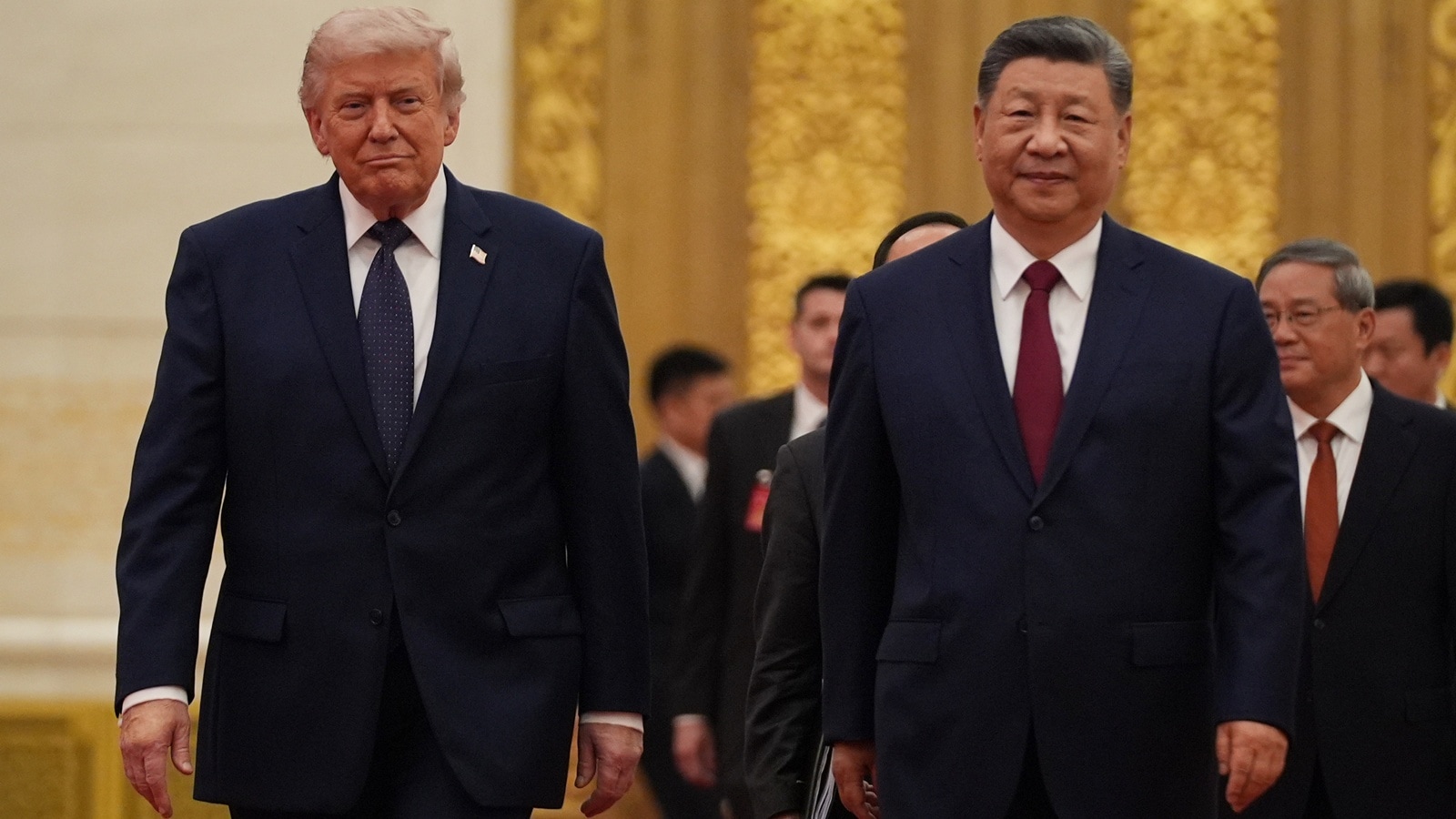
In the Hall of the People this week, the air was thick with the scent of high-grade Oolong and the crushing weight of a billion-dollar optics machine. Xi Jinping didn’t just welcome Donald Trump back to Beijing; he staged a masterclass in strategic deference. To the casual observer, the scene looked like a surrender. There were promises of increased American oil purchases, nods toward relaxing rare earth export licenses, and a smile from Xi that seemed almost genuine.
But don't be fooled by the hospitality. Underneath the red carpets and the ceremonial handshakes lies a cold, calculated "reset" designed to neutralize American leverage while the U.S. political clock ticks down. Beijing isn't looking for a peace treaty. It’s looking for a ceasefire on its own terms to protect its industrial base from the 145% tariff threats that have defined the last year. Also making waves lately: The Great Wall of Symbolism and the Brutal Reality of US-China Ties.
The Illusion of the Grand Bargain
The "Busan 2.0" framework emerging from these talks is built on a foundation of tactical flexibility. Trump wants "deliverables"—concrete numbers he can post on social media to show he’s winning the trade war. Xi is happy to provide them, provided they are reversible. The agreement to buy more American energy is a classic Beijing maneuver. It addresses the trade deficit immediately but creates a dependency on a commodity that China can pivot away from the moment tensions rise again.
This isn't a structural change in the Chinese economy. It is a subscription model for peace. By agreeing to these short-term purchases, Beijing buys a reprieve from the most "prohibitive" tariff zones—the ones that threaten to decouple the two economies entirely. The Chinese leadership has realized that Trump is a deal-maker who values the theater of the win as much as the substance. They are giving him the theater. Further information regarding the matter are explored by The Washington Post.
The Rare Earth Ransom
One of the most overlooked factors in this summit is the quiet negotiation over 19 of the 20 most strategic minerals on earth. While the headlines focus on oil and corn, the real war is being fought over the refinery capacity for high-tech manufacturing. China currently controls roughly 70% of the global market for processed rare earths.
During the closed-door sessions, the Chinese delegation hinted at "conditional stability" for these supply chains. It’s a polite way of saying they have a finger on the kill switch for the American EV and defense industries. If the U.S. continues to press on semiconductor export controls, those rare earth licenses—suddenly "unblocked" as a gesture of goodwill—will vanish overnight. It is leverage masked as a concession.
The Red Line in the Room
Taiwan remains the ghost at the feast. While Trump has signaled a willingness to treat global politics as a series of business transactions, Xi has made it clear that Taiwan is not a line item on a ledger. Before the summit even began, Beijing reinforced its "four red lines," with Taiwan at the top.
The Chinese strategy here is to separate the economic from the existential. They are betting that the Trump administration’s "America First" posture translates to "America Only," effectively gambling that the U.S. will trade strategic ambiguity in the Pacific for a massive trade win in the Midwest. Xi’s rhetoric during the summit—invoking the "Thucydides Trap"—was a calculated warning. He is framing the relationship as a choice between a shared prosperous future and an inevitable, catastrophic conflict.
The Tech Wall Remains Standing
Despite the talk of "opening up," there has been zero movement on the issues that actually matter to the American tech sector: intellectual property theft, forced technology transfer, and state subsidies for national champions. China is offering "market access" in sectors it has already dominated or those that are no longer central to its "Made in China 2025" goals.
The reality is that Beijing is building a fortress economy. They are using this period of managed détente to accelerate their own self-sufficiency. Every month that the full-scale trade war is delayed is another month for Chinese engineers to bridge the gap in lithography and AI compute. They aren't seeking a level playing field; they are seeking enough time to ensure the field doesn't matter anymore.
The Strategy of Disappearing Leverage
The most dangerous part of this "reset" for Washington is the erosion of its own tools. When tariffs are used as a permanent threat, they lose their efficacy. If the U.S. agrees to a "tariff moratorium" in exchange for commodity purchases, it effectively disarms itself.
Beijing’s negotiators are masters of "calendar management." They know that the U.S. is entering another election cycle where economic stability is paramount. They are offering Trump a quiet 2026 in exchange for a permanent foothold in the strategic sectors of the 2030s.
The handshake in Beijing wasn't a sign of two powers coming together. It was the sound of a trap snapping shut. Xi Jinping is playing a game of centuries while Washington is playing a game of fiscal quarters. By the time the U.S. realizes the "grand reset" was actually a strategic stall, the leverage used to secure it will have evaporated.
Focus on the rare earth licenses. That is where the real power shifted this week.
Watch the full analysis of the Trump-Xi Beijing summit
This video provides an on-the-ground report from the Beijing summit, detailing the specific agreements made regarding the Strait of Hormuz and the purchase of American oil.