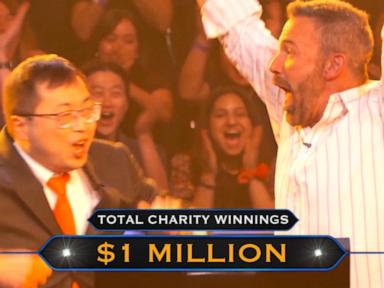
The flashing lights of the Las Vegas strip often serve as a backdrop for vanity projects, but a recent intersection of professional poker and charitable giving suggests a different kind of motivation. When Ben Affleck and Jamie Ding walked away from a high-stakes charity event with significant winnings, the headlines focused on the celebrity sheen. Behind the glare of the flashbulbs, however, lies an efficient mechanism for moving capital toward philanthropic goals through the medium of calculated risk.
This was not a casual gathering of hobbyists. The event operated under the logic of high-stakes tournament play, where the objective is to maximize the prize pool specifically for donation. Affleck, whose history with competitive card games is well-documented in industry circles, brings a disciplined approach to the table. Ding, recognized for her own strategic acumen in high-level gaming, complemented this effort. They did not just win; they controlled the flow of the game to ensure the charitable beneficiaries walked away with a check that outweighed the initial overhead costs of the event. Don't forget to check out our recent post on this related article.
The Economics of Celebrity Poker
Charity tournaments are frequently misunderstood as mere social mixers. From an analytical perspective, they function as micro-economies. The entry fees and side bets act as a concentrated pool of capital. In the world of high-stakes philanthropy, the goal is to drive the return on investment for the charity as high as possible. When individuals with public profiles participate, they do more than play cards. They attract external sponsors and media attention that would otherwise require a massive marketing budget to procure.
Affleck and Ding occupy a specific space where their personal brand equity translates directly into financial outcomes. By placing themselves in the dealer’s crosshairs, they provide the narrative hook that draws the audience in. It is a cynical view, perhaps, but a necessary one: without the celebrity draw, these events often fail to reach the threshold required to justify the logistical expense of organizing a top-tier tournament. To read more about the background of this, Variety provides an informative breakdown.
Strategy Over Luck
Observers often mistake the win for a stroke of fortune. Professionals know better. The game of poker, especially at this caliber, is about the mitigation of variance. While an amateur relies on the cards to dictate their fate, a seasoned player treats the game as a series of repeated decisions.
Affleck has long favored a tight-aggressive strategy. He avoids the chaotic, wide-ranging play that leads to early exits in major tournaments. During this event, his patience was the deciding factor. He allowed the field to thin itself out before escalating the aggression when the pots were at their most meaningful. Ding, conversely, utilized a highly adaptive style. She tracked the betting patterns of the table with mechanical precision, identifying the precise moment her opponents reached their psychological limit.
This is the intersection of skill and charity. They did not play to entertain; they played to execute. By maintaining this level of professional distance from the emotional highs of the game, they ensured that the donation amount grew in direct proportion to their dominance at the table.
The Reality of Charitable Impact
There is a tension inherent in celebrity-led fundraising. Critics frequently point out that the administrative costs associated with luxury charity events can erode the bottom line. It is a valid concern. If a tournament requires thousands of dollars in venue fees, catering, and security, the net gain for the charity can be diminished.
However, the event involving Affleck and Ding successfully bypassed this hurdle through private underwriting. When donors cover the operational costs upfront, every dollar of the buy-in and subsequent pot growth goes directly to the cause. This represents a mature evolution in how celebrities handle their philanthropic portfolios. It is no longer enough to simply sign a check; there is a tangible desire to be the architect of the fund-gathering process itself.
Transparency remains the primary metric for success. In this instance, the disclosure of the winnings serves as a benchmark for future organizers. It forces a conversation about accountability in the nonprofit sector. If a celebrity can leverage their presence to generate a hundred thousand dollars in an afternoon, the industry begins to expect that level of performance as the baseline rather than the exception.
The Long Game
The involvement of recognizable names in poker circles serves as a gateway for younger demographics to engage with philanthropy. When an audience watches a high-stakes match, they are seeing a display of logic, nerves, and tactical movement. It creates a bridge between the entertainment industry and the harder, more pragmatic work of humanitarian aid.
The money raised is the immediate deliverable. Yet, the secondary benefit is the normalization of calculated risk as a tool for public good. It demonstrates that the same traits required to succeed in a competitive, high-pressure environment—resilience, tactical foresight, and the ability to read the room—are the exact same traits required to manage a successful charitable initiative.
The cameras will eventually turn away from the table. The chips will be collected, and the room will be cleared. What remains is the shift in the balance sheet of the charity. If more players adopt the analytical rigor demonstrated by Affleck and Ding, the landscape of private fundraising will undergo a necessary shift toward efficiency and cold, hard results. Sentimentality is fading. Performance is the new currency.