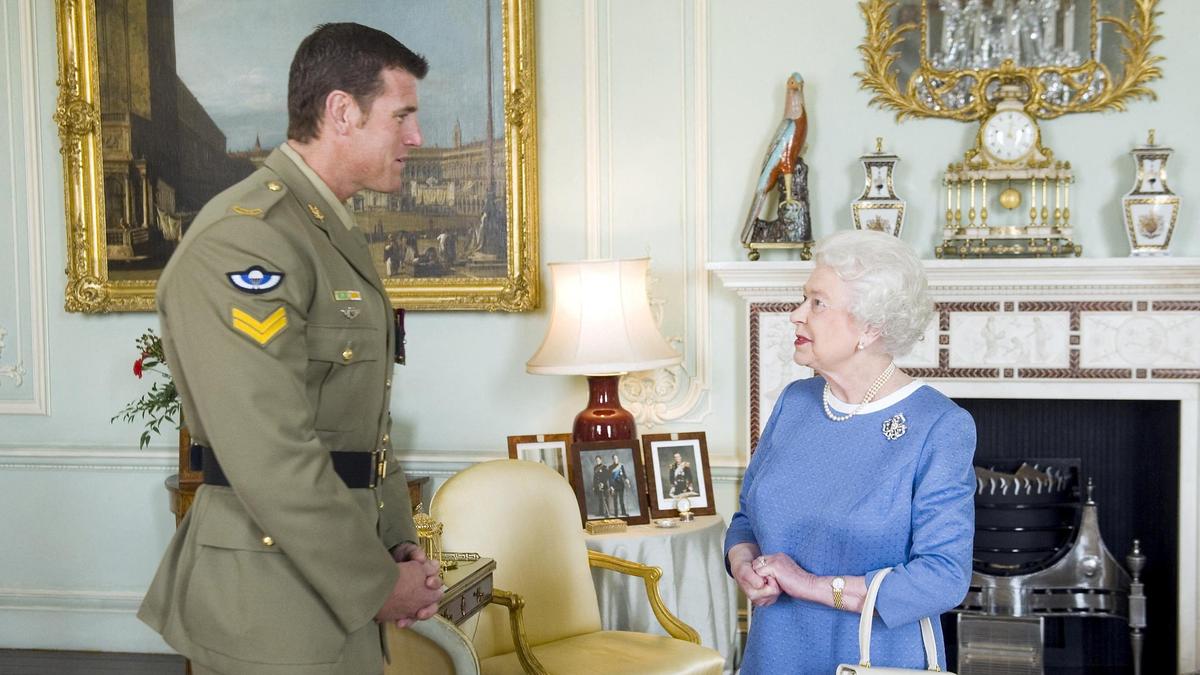
The arrest of Ben Roberts-Smith isn’t a shock to anyone who understands the structural decay of modern expeditionary warfare. The media loves a fallen idol story because it’s easy to sell. They frame it as a singular "bad apple" or a tragic descent. That is a lazy consensus. The reality is far more uncomfortable: the Australian public and the military brass spent a decade cultivating a specific brand of "warrior culture" that they are now desperately trying to disown.
You cannot demand a predator and then act surprised when it bites.
The Myth of the Clean War
The competitor coverage of these alleged war crimes treats the battlefield like a courtroom with high-definition cameras. It presumes that "rules of engagement" are as clear as traffic laws in a suburban cul-de-sac. This is a fundamental misunderstanding of the friction of high-tempo Special Forces operations.
When you deploy the SASR (Special Air Service Regiment) into the same Afghan valleys for over a decade, you aren't conducting a "peacekeeping mission." You are conducting a high-stakes, repetitive, and psychologically corrosive attrition cycle. The Brereton Report, which outlined many of these allegations, didn't just find individual failings; it found a "warrior culture" that placed operators above the law.
But here is the nuance the news cycles miss: that culture didn't grow in a vacuum. It was encouraged by a leadership that wanted results without wanting to know the price of those results.
The Hero Industrial Complex
Australia has a deep-seated obsession with the Anzac legend. We treat our soldiers not as professionals doing a job, but as secular saints. Ben Roberts-Smith was the ultimate avatar for this obsession. He was the Victoria Cross recipient, the corporate speaker, the face of national pride.
I’ve seen institutions—from tech giants to national militaries—invest everything in a single high-performer while ignoring the toxic wake they leave behind. They ignore the red flags because the "output" (in this case, battlefield success and public relations gold) is too valuable to lose.
Why the "Bad Apple" Theory is Flawed
- Institutional Validation: Roberts-Smith was promoted, awarded, and shielded by the highest levels of the Australian Defence Force for years.
- The "Special" in Special Forces: The SASR was given a level of autonomy that bypassed standard military oversight. When you tell a group of men they are "special" long enough, they eventually decide the rules are for the "normals."
- The Disconnect: The people who cheered loudest for the VC recipient are the same ones now calling for his head. It’s a performative moral cleansing.
The Legal Reality vs. The Public Sentiment
The arrest isn't just about the specific allegations in Uruzgan. It is a desperate attempt by the Australian government to stave off International Criminal Court (ICC) intervention. If Australia doesn't prosecute its own, the ICC will. This isn't just about justice; it's about sovereignty.
Critics argue that "war is hell" and that soldiers shouldn't be judged by people who have never held a rifle. This is a classic logical fallacy. Professionalism is defined by the ability to operate within constraints under extreme pressure. If you remove the constraints, you aren't a soldier; you're a mercenary with a flag on your shoulder.
The Cost of Accountability
The current legal proceedings will cost taxpayers millions. It will likely destroy the reputation of the SASR for a generation. But the alternative is worse. The alternative is a military that answers to no one, fueled by a public that wants the glory of war without the moral stain of its execution.
Imagine a scenario where a corporate CEO cooked the books for ten years. When the fraud is discovered, the board claims they had "no idea" despite the CEO being their top earner and public face. That is exactly what the ADF is doing right now. They are the board of directors trying to fire the CEO they enabled.
The Strategic Failure
The real crime isn't just what happened in those Afghan villages; it's the strategic vacuum that allowed it. For years, Australia’s involvement in Afghanistan lacked a clear, achievable objective. When soldiers are sent to the same places year after year to "mow the grass" without a plan for victory or exit, the psychological barrier between "combatant" and "civilian" dissolves.
We ask 20-year-olds to make split-second moral decisions in a foreign land, then we spend ten years in air-conditioned courtrooms debating those seconds. The hypocrisy is staggering.
The media focuses on the man. They should focus on the machine. The machine is what broke. Ben Roberts-Smith is just the part that fell off and hit the floor with the loudest thud.
Stop looking for a hero to save the narrative. Stop looking for a villain to blame for the system. The system produced exactly what it was designed to produce: a lethal, unchecked force that eventually turned its lethality inward.
The arrest isn't the end of the story. It’s the autopsy of a failed military philosophy.
Own the outcome or stop asking for the fight.