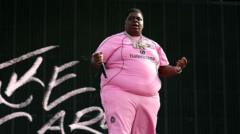
Every time a prominent rapper gets pulled over for a missing front license plate or an expired registration and ends up staring down weapons and cannabis charges, the media rolls out the same tired script. They clutch their pearls about law and order, framing the artist as a reckless menace.
Stop buying the theater.
The lazy consensus treats these headlines as simple morality plays about celebrity scofflaws. Look closer at the mechanics of policing on southern highways and you will spot a much more systemic reality. These recurring busts are not about public safety. They are textbook examples of pretextual policing used to target high-profile Black men under the thin guise of minor traffic infractions.
The Anatomy of a Pretextual Trap
Let us look at the operational playbook. When Dallas rapper BigXthaPlug gets cuffed in Collin County or pulled over leaving a chicken spot for a bumper technicality, the public assumes smoke equals fire.
Here is what is actually happening behind the flashing lights.
Pretextual stops occur when law enforcement uses a minor traffic violation—a missing front plate, a rolling stop, a lane marker infraction—as a legal wrapper to fish for major crimes. Courts have unfortunately given police wide latitude to pull over motorists based on minor infractions, even when the underlying motivation has nothing to do with traffic safety.
Imagine a scenario where an expensive truck rolls through a high-income suburb or an over-policed urban corridor. If the driver is a rising star in the entertainment industry wearing heavy ice, the vehicle instantly turns into a moving target. The missing plate or minor registration issue is just a constitutional blank check for officers to conduct an exploratory search.
The Hypocrisy of Weed and Iron
The charges attached to these recurring arrests usually boil down to two things: a nominal amount of green and a firearm.
We are living in an era where cannabis legalization is sweeping the map, turning over massive tax revenues across dozens of states, yet a routine traffic stop in Texas can still weaponize a pinch of flower against a civilian. It is an absurd legal friction.
Then comes the firearm charge. For a public figure constantly moving through unfamiliar cities, late-night venues, and unlit studio lots, security is not a luxury; it is a basic survival necessity. Yet, legal databases and ambiguous gang affiliations—often pulled from opaque, error-riddled law enforcement tracking systems—are weaponized to strip individuals of their second amendment protections the second a cop smells an opening.
When officers ask the classic trick question, "Do you have any weapons in the vehicle?" they are not inquiring out of conversational curiosity. They are setting a trap. If you lie, you catch a felony obstruction charge. If you tell the truth because you hold a legal mindset, they use your honesty to dismantle your defenses on the spot.
Fixing the Real Problem
The mainstream narrative wants you to focus on the mugshot. It wants fans to shake their heads and lecture artists about staying out of trouble.
That misses the point entirely. The issue is not that musicians need to drive safer vehicles with pristine bumpers. The issue is a predatory traffic enforcement model that treats young Black men with success as walking probable cause.
Until policy forces objective oversight on routine traffic stops and eliminates the legal loophole of pretextual fishing expeditions, these headlines will keep looping every August like clockwork.
Quit blaming the artist for getting caught in the web and start examining who built the trap.