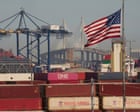
The federal government is quietly engineering a massive financial U-turn. After years of collecting aggressive duties on Chinese imports, the United States is now building the administrative machinery necessary to return billions of dollars to American importers. This is not a shift in diplomatic tone; it is the inevitable fallout of a legal reckoning that has been brewing in the U.S. Court of International Trade for years. The "Section 301" tariffs, initiated under the Trump administration and largely maintained by the Biden administration, have faced a relentless barrage of litigation from thousands of American companies claiming the government overstepped its statutory authority.
Those companies are finally seeing the light at the end of a very expensive tunnel. Customs and Border Protection (CBP) is currently refining the technical systems required to process a volume of refunds that would break the standard bureaucratic workflow. We are looking at a logistical undertaking that mirrors the scale of the tariffs themselves—a tax collection effort that shifted the cost of global trade directly onto the balance sheets of U.S. manufacturers, retailers, and tech firms.
The Legal Fault Lines of Section 301
To understand why the government is preparing these checks, you have to look at how the trade war was structured. The Trade Act of 1974 gave the executive branch the power to respond to unfair foreign trade practices. When the initial "Lists 1 and 2" were rolled out, they targeted specific industrial sectors. However, by the time the government reached "Lists 3 and 4A," the scope had ballooned to include everything from seafood to electronics.
The core of the legal challenge rests on the Administrative Procedure Act. Thousands of plaintiffs, including retail giants and small-scale distributors, argued that the Office of the U.S. Trade Representative (USTR) failed to provide adequate opportunity for public comment and failed to demonstrate a clear rationale for the rapid escalation of the tariffs. The courts have been wrestling with whether the USTR had the right to "modify" the tariffs by essentially creating an entirely new, massive tax regime on the fly.
While the courts haven’t issued a blanket order to scrap the tariffs entirely, the pressure of over 6,000 consolidated lawsuits has forced the government to prepare for a scenario where partial or full remands are issued. The sheer weight of the litigation has made the "status quo" untenable.
The Logistics of a Mass Liquidation
Refunding money at this scale is not as simple as hitting a "reverse" button on a digital ledger. The U.S. customs system is a labyrinth of entry dates, protest filings, and "liquidation" statuses. When a shipment hits a U.S. port, the duty is paid, and the entry eventually "liquidates," meaning the transaction is finalized in the eyes of the law.
For a company to get its money back, it generally had to keep those entries "open" or file timely protests. CBP is now tasked with identifying which specific entries across the last six years are eligible for relief based on the evolving court rulings.
- Automated Commercial Environment (ACE) Updates: The backbone of U.S. trade tech is being adjusted to handle "mass protest" processing.
- Interest Calculations: The government doesn't just owe the principal; in many cases, it owes interest on the held funds, which adds another layer of budgetary pain for the Treasury.
- Verification Hurdles: CBP must ensure that refunds go to the "importer of record," which can be complicated in cases of corporate acquisitions or bankruptcies that occurred during the trade war years.
This is a defensive maneuver. By building the system now, the government is attempting to avoid a total collapse of its administrative capacity if a final court order demands an immediate payout.
The Economic Ghost in the Machine
The irony of this refund preparation is that the money being returned has already done its damage. For many small businesses, the 25% duties on essential components were a death sentence. They lacked the capital to wait for a five-year legal battle to conclude. The larger firms that survived did so by raising prices on consumers, meaning the "refund" essentially goes back to the corporation, while the inflation it caused remains baked into the historical economy.
There is also the question of "duty drawback" and middleman fees. Custom house brokers and trade attorneys will take a significant slice of these billions. In many ways, the refund process is a secondary economy in itself—a complex industry of recovery that wouldn't need to exist if the initial policy had been more surgically applied.
The Quiet Pivot in Trade Policy
While the headlines focus on the "tough on China" stance, the internal mechanics of the U.S. government are signaling a more pragmatic, or perhaps exhausted, reality. The cost of defending these tariffs in court is mounting. Each month the litigation drags on, the potential interest owed by the government grows.
We are seeing a transition from "tariff-first" diplomacy to a more nuanced, albeit slower, approach. The preparation of this refund system is a tacit admission that the legal foundation of the later tariff rounds was, at best, shaky. It serves as a warning for future administrations: executive power in trade is broad, but it is not infinite. When you tax billions of dollars of commerce without a bulletproof administrative record, the bill eventually comes due.
High Stakes for the Treasury
The scale of the potential payout is enough to trigger concerns about the federal deficit. We aren't talking about a few million dollars in clerical errors; we are talking about a significant percentage of the total duties collected since 2018. If the Court of International Trade rules that Lists 3 and 4A were procedurally flawed, the resulting flood of claims will be the largest single "return to sender" event in the history of U.S. trade.
The Treasury Department has to account for this. This isn't just an "if" anymore; the infrastructure being built by CBP suggests it is a "when." The government is effectively pre-positioning its defenses to ensure that when the dam breaks, the resulting flow of capital is managed through a digital pipeline rather than a chaotic manual process that would paralyze the ports.
Identifying the Beneficiaries
Who actually gets the money? The primary beneficiaries will be the industries that were caught in the crossfire of the later tariff rounds. This includes:
- Consumer Electronics: Firms that couldn't shift supply chains out of China fast enough.
- Auto Parts: Manufacturers who rely on specialized Chinese components for domestic assembly.
- Home Goods: Retailers that saw their margins evaporated by 10% to 25% surcharges on high-volume, low-margin products.
For these sectors, the refund is not a windfall; it is a partial recovery of lost growth. It is capital that was stripped from R&D and expansion to pay into a federal escrow account that is only now being unlocked.
The Burden of Proof
Even with an automated system, the burden of proof will remain on the importer. Companies that didn't maintain meticulous records or failed to file protective protests may find themselves locked out of the refund pool. This creates a tiered recovery where the most "sophisticated" importers—those with the most expensive legal teams—will be the first to be made whole.
The complexity of the Automated Commercial Environment means that even a minor data mismatch can trigger an audit. Importers should be auditing their own data now, matching their internal records against the ITRAC data (Importer Trade Activity) provided by the government to ensure that when the "Apply for Refund" button finally goes live, their data is synchronized with the government's ledger.
The Strategy of Delay
There is a cynical view that the government has used the legal process to effectively secure an interest-free loan from the American business community. By fighting the lawsuits at every turn and only now building the refund system, the government has kept billions of dollars on its books during a period of intense fiscal pressure.
However, that strategy has a shelf life. The courts are losing patience with the USTR’s justifications. The preparation of the refund system is the final defensive line. It is an acknowledgment that the "Trade War" as an executive project is entering its forensic phase—where the bold proclamations of the past are replaced by the cold, hard math of the courtroom.
Checking the Ledger
If you are an importer of record, your next move is to verify the status of every Section 301 entry made between 2018 and the present. You cannot assume the government will simply mail you a check based on their own initiative. The system being built is a mechanism for processing claims, not necessarily for volunteering them. Ensure your legal counsel has filed the necessary "Notice of Appearance" in the relevant consolidated cases to preserve your rights to any court-ordered relief.