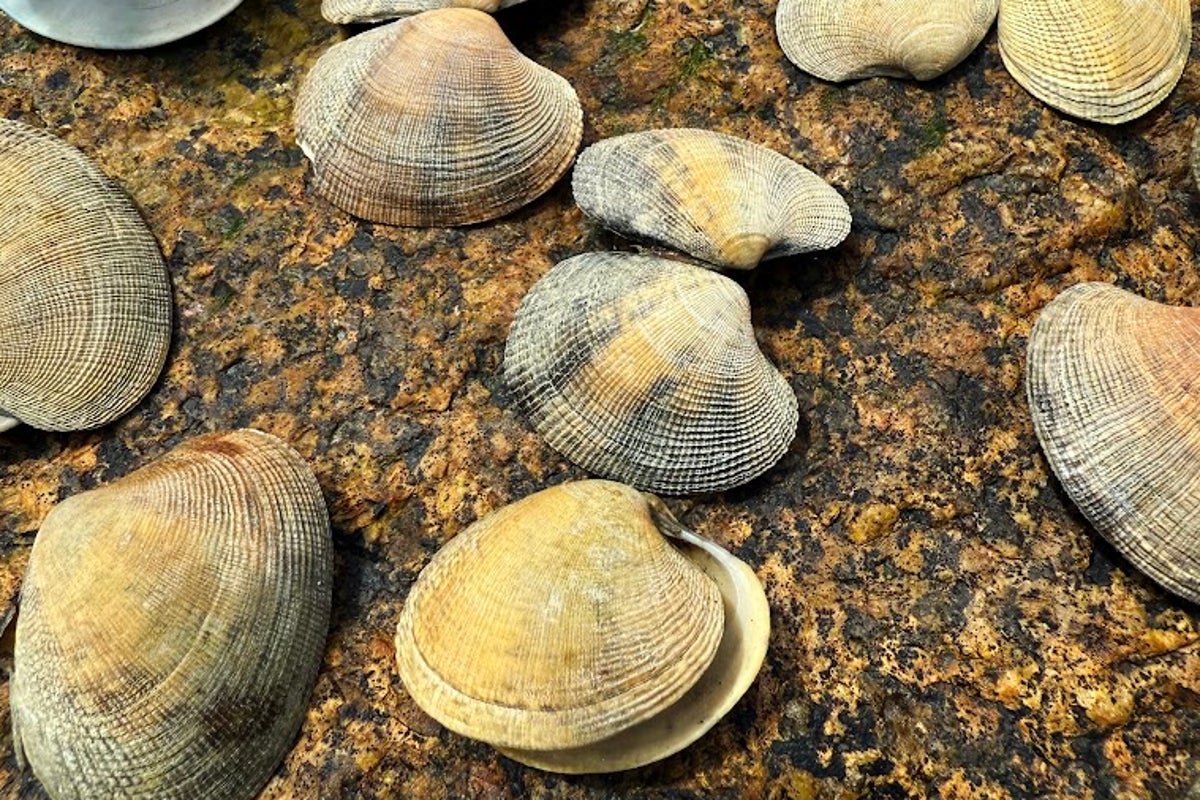
The establishment of a self-sustaining breeding population of the Manila clam (Ruditapes philippinarum) along the northwestern Atlantic coastline represents the final spatial consolidation of a $7 billion global seafood commodity across the temperate Northern Hemisphere. For over a century, the cold-water estuaries of New England functioned as the last major biogeographical barrier against this highly adaptive bivalve. Collaborative ecological surveys spanning Boston Harbor, Cape Cod, and Salem Sound have confirmed the presence of multiple age classes—ranging from 500-micrometer post-larval settlers to mature 71-millimeter spawning adults—signaling that localized recruitment is actively occurring.
This ecological shift is not merely a conservation concern; it is a complex economic reallocation. The introduction of a high-value commercial bivalve into a marine ecosystem already destabilized by rising sea-surface temperatures and existing invasive pressures creates a multi-variable optimization problem for coastal resource managers.
The Ecological and Trophic Friction Matrix
To project the trajectory of Ruditapes philippinarum in New England, we must analyze its performance relative to native bivalves—predominantly the softshell clam (Mya arenaria) and the northern quahog (Mercenaria mercenaria). The competitive dynamics are governed by three primary physiological vectors:
                  [ Trophic & Spatial Resources ]
                                 │
         ┌───────────────────────┴───────────────────────┐
         ▼                                               ▼
[ Spatial Niche Overlap ]                      [ Filtration Efficiency ]
  • Shallow mud, sand, gravel                    • High clearance rate (Seston)
  • Vertical stratification (0-10cm)             • Direct competition with Mya arenaria
1. Spatial Niche Overlap and Substrate Displacement
Ruditapes philippinarum exhibits high plasticity in substrate selection, occupying shallow intertidal and shallow subtidal zones composed of mud, sand, and gravel mix. Unlike Mya arenaria, which burrows deeply (often 10 to 30 centimeters below the sediment surface), the Manila clam is a shallow burrower, typically residing in the top 5 to 10 centimeters of substrate. This shallow positioning directly overlaps with the juvenile recruitment zones of both Mya arenaria and Mercenaria mercenaria.
In dense aggregations, physical overcrowding at the sediment-water interface limits the settlement success of native spat. Furthermore, the bioturbation caused by dense populations of Manila clams destabilizes fine sediment surfaces, increasing the local rate of sediment resuspension and interfering with the feeding apparatus of native filter feeders.
2. Trophic Competition and Clearance Rates
Manila clams possess high filtration efficiency relative to their dry tissue weight. Their clearance rate—the volume of water cleared of suspended particles per unit of time—allows them to deplete localized concentrations of seston (microscopic organic matter and phytoplankton) in the benthic boundary layer. Because Ruditapes philippinarum can feed efficiently at lower phytoplankton densities than Mya arenaria, it acts as a trophic sink, effectively starving native competitors during periods of seasonal nutrient limitation.
3. Thermal Tolerance and Climatic Tailwinds
The historical barrier preventing the colonization of the northwestern Atlantic was the thermal floor. Ruditapes philippinarum requires water temperatures to consistently exceed 13°C to 15°C for gametogenesis and spawning to occur. Historically, the Gulf of Maine and northern Massachusetts waters maintained colder baselines.
The rapid warming of the Gulf of Maine—warming faster than 99% of the global ocean—has removed this thermal constraint. The rising baseline of estuarine temperatures during summer months has expanded the temporal window for spawning and accelerated larval development rates, dramatically increasing the probability of successful recruitment cohorts.
The Predator-Prey Buffet Paradox
The introduction of Ruditapes philippinarum alters the local trophic cascade, creating an ecological buffer that may counterintuitively stabilize certain native bivalve fisheries.
                             [ Carcinus maenas ]
                             (European Green Crab)
                                      │
                   ┌──────────────────┴──────────────────┐
                   ▼                                     ▼
           [ Mya arenaria ]                     [ Ruditapes philippinarum ]
         (Softshell Clam - Native)                 (Manila Clam - Invasive)
           • Deeply burrowed                        • Shallow burrowed
           • High search/handling cost              • Low search/handling cost
The European green crab (Carcinus maenas), an established invasive predator in New England, exerts severe predatory pressure on native softshell clams, driving massive declines in commercial wild harvests. Green crabs are opportunistic, size-selective predators. Their foraging strategy is guided by optimal foraging theory, which dictates that predators select prey that maximize net energy intake per unit of handling time.
Because Ruditapes philippinarum resides close to the sediment surface, the energy expended by green crabs in locating and excavating them is significantly lower than that required to dig up deeply buried Mya arenaria. This creates a predatory diversion. If the density of Manila clams surpasses a critical threshold, green crabs will disproportionately target them as a lower-cost energy source.
This predatory buffering effect could lower the mortality rate of juvenile native softshell clams. However, this buffer is highly dependent on predator-prey density ratios. If the abundant food source triggers a positive demographic response in the green crab population, the absolute abundance of predators will increase, ultimately escalating predatory pressure on all bivalve species in the system once the Manila clam population fluctuates or stabilizes.
The Bio-Economic Conundrum: Delicacy vs. Biohazard
The $7 billion global valuation of the Manila clam industry underscores its immense potential as a highly liquid commercial asset. Its arrival in New England presents a classic policy conflict between biosecurity conservation and blue economy optimization.
| Parameter | Conservation-First Biosecurity Model | Commercial Optimization Model |
|---|---|---|
| Primary Objective | Containment and population suppression | Commercial exploitation and sustainable harvest |
| Regulatory Framework | Strict eradication protocols, transport bans, and reporting mandates | Controlled lease allocations, wild harvest permits, and quality testing |
| Economic Impact | High enforcement costs; preservation of native softshell/quahog wild-capture markets | New revenue stream for commercial clammers; integration into existing global distribution chains |
| Ecological Trade-off | Limits genetic hybridization and native species displacement | Tolerates niche displacement to secure predictable high-yield seafood volumes |
The transition from early detection to permanent establishment represents a critical threshold. Because multi-cohort breeding populations have been documented across geographically distinct regions (Boston Harbor, Cape Cod, and Salem Sound), complete eradication is no longer a viable management strategy. The larval dispersal phase of Ruditapes philippinarum—characterized by a planktonic veliger stage lasting two to four weeks—allows currents to distribute offspring over vast coastal distances before settlement occurs.
The policy bottleneck is the regulatory status of the wild harvest. Under current Massachusetts Division of Marine Fisheries guidelines, harvesting shellfish from uncertified or closed waters (such as industrial areas within Boston Harbor) is strictly prohibited due to biotoxin and heavy metal bioaccumulation risks.
If wild populations spread to clean, commercially certified shellfishing beds, managers will face immediate pressure to legalize commercial wild-capture harvesting. While this would instantly create a lucrative local fishery, it risks incentivizing the human-assisted transfer of the species to uninvaded estuaries by actors seeking to seed new public flats, thereby accelerating the ecological displacement of native species.
Strategic Action: The Dual-Track Management Framework
To navigate this ecological transition without sacrificing economic resilience, coastal managers and industry stakeholders must deploy a dual-track strategy that balances containment with controlled commercialization.
First, regulatory bodies must establish a Spatiotemporal Genetic Baseline. State resource managers should partner with local academic institutions to conduct immediate genomic sequencing of the established New England populations. Identifying whether these populations originated from European aquaculture strains or Pacific wild stocks will reveal the primary vector of introduction (e.g., commercial bait release, ballast water, or illegal aquaculture seeding). Concurrently, high-resolution environmental DNA (eDNA) monitoring arrays must be deployed northward into the Gulf of Maine and southward toward Long Island Sound to map the front edge of larval dispersal in real-time.
Second, the state should design an Invasive Extraction Zone (IEZ) Shellfish Program. Instead of pursuing a futile, costly eradication strategy, the state can leverage commercial fishing pressure as a bio-control mechanism. By designating regions of high ecological sensitivity—such as native quahog restoration sanctuaries—as open-access, zero-limit extraction zones for Manila clams, commercial and recreational harvesters can be deployed to systematically suppress Manila clam densities. In clean waters, these harvests can enter the seafood supply chain, converting a biosecurity threat into a self-funding conservation tool.