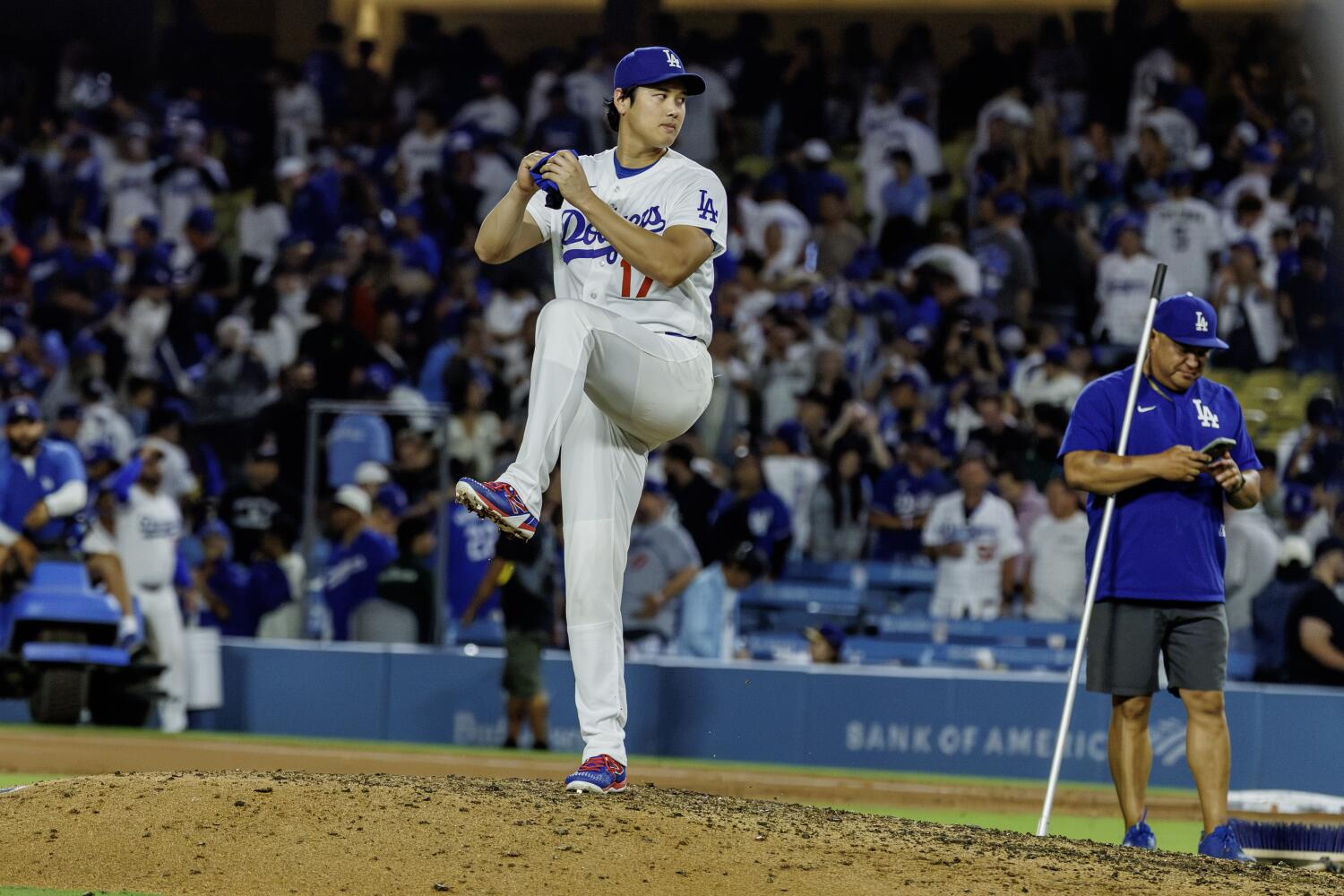
Optimizing a two-way athlete at the elite level requires balancing maximum athletic output against progressive physical degradation. The Los Angeles Dodgers' decision to scratch Shohei Ohtani from his July 10, 2026, pitching start against the Arizona Diamondbacks and withdraw him from the 2026 All-Star Game in Philadelphia isolates a critical variable in modern sports science: the mechanical decoupling of a dual-threat asset. By maintaining Ohtani as the designated hitter while completely halting his pitching and travel schedule, the organization is running a controlled workload intervention designed to stabilize a recurring structural vulnerability without completely forfeiting his offensive volume.
The driving force behind this optimization strategy is ongoing irritation in Ohtani's left knee. This is not an isolated, acute injury, but rather the manifestation of a chronic underlying pathology. Understanding the exact mechanical strain of a two-way workload reveals why the pitching motion must be shut down immediately while the batting rotation remains active.
The Dual-Workload Friction Curve
The human body operates under a finite recovery budget. In a standard single-discipline player, load management involves tracking acute-to-chronic workload ratios (ACWR) across one specific kinetic chain. For a two-way player, these demands overlap, compounding structural fatigue.
Ohtani's physical limitations during the first half of the 2026 season highlight this compounding strain. Before the knee irritation escalated, his kinetic chain suffered from minor regional disruptions:
- A right-hand blister restricted finger-to-ball friction and altered spin metrics.
- Right bicep tightness created a localized bottleneck in torque transfer during the acceleration phase of throwing.
- Left knee inflammation, which initially caused an early exit from a June 11 game, has become the primary systemic failure point.
The structural significance of the left knee lies in its role within Ohtani’s asymmetrical mechanics. Ohtani is a right-handed pitcher and a left-handed batter.
In pitching, a right-handed thrower generates force from the right drive leg and transfers it through the torso to the left landing leg. The left knee serves as the lead-leg block, absorbing kinetic energy equal to several times the athlete's body weight upon foot strike. If the left knee lacks structural stability, it cannot efficiently decelerate the body, causing an energy leak. This leak forces the upper body and arm to overcompensate, increasing stress on the right bicep and elbow. The data reflects this mechanical breakdown: over his first 10 starts of 2026, Ohtani allowed only five earned runs; over his subsequent four starts as the knee irritation worsened, he surrendered 12 earned runs.
In hitting, as a left-handed batter, Ohtani’s left leg acts as the backside drive pillar. While it must bear load and rotate to generate rotational velocity, it does not face the violent, linear decelerating impact that occurs during a pitching delivery. This mechanical difference explains why the front office can safely isolate his offensive production while halting his pitching duties.
The Bipartite Patella Bottleneck
The biological vulnerability in Ohtani’s left knee is rooted in a congenital anomaly known as a bipartite patella. In less than 2% of the population, the kneecap fails to fuse into a single bone during adolescence, leaving two distinct pieces connected by a fibrous line of cartilage. Ohtani underwent corrective surgery in September 2019 to address this condition, but the intense physical demands of professional baseball can easily cause the remaining fibrous tissue to shear and become inflamed.
Pitching Delivery (Right-Handed Thrower):
[Right Leg Drive] ---> [High-Velocity Forward Momentum] ---> [Left Leg Foot Strike]
                                                                     |
                                                     [Extreme Deceleration Force]
                                                                     |
                                                     [Bipartite Patella Irritation]
When a chronic issue like a bipartite patella flares up, performance staff must weigh the long-term structural risk against short-term competitive rewards. The team's strategy focuses on a clear objective: preserve postseason viability by sacrificing non-essential mid-season events.
The decision to bypass the All-Star Game at Citizens Bank Park reveals how the organization evaluates this trade-off. Choosing targeted medical procedures over a high-profile exhibition game shows a commitment to structural preservation over marketing opportunities. The planned interventions—which include draining excess synovial fluid from the joint and administering a localized anti-inflammatory injection—require a multi-day recovery window with zero mechanical stress. Skipping the cross-country flight and media demands of the All-Star break provides a clean five-day recovery microcycle.
Portfolio Risk Management in Sports Contracts
The financial framework underlying Ohtani’s usage reflects basic portfolio theory. A high-value asset must be managed to maximize long-term returns while mitigating catastrophic tail risk.
Ohtani’s offensive production remains elite. He enters the mid-season break slashing .290/.405/.534 with 20 home runs and 56 RBIs, recently hitting his 300th career home run. However, his baserunning metrics show clear signs of load management: he has recorded only six stolen bases this year and has largely stopped attempting steals since the knee inflammation flared up in June.
+------------------------+------------------------+------------------------+
| Metric                 | Baseline Capability    | Current Restricting    |
|                        |                        | Variable               |
+------------------------+------------------------+------------------------+
| Batting Power          | Elite (.534 SLG, 20 HR)| Unaffected by lateral  |
|                        |                        | rotational force       |
+------------------------+------------------------+------------------------+
| Baserunning Aggression | High Volume Threat     | Capped (6 SB) to limit |
|                        |                        | linear deceleration    |
+------------------------+------------------------+------------------------+
| Pitching Durability    | 8-2 Record, 1.79 ERA   | Suspended; bullpen     |
|                        |                        | game replacement model |
+------------------------+------------------------+------------------------+
When an elite starting pitcher is removed from the rotation, it alters the team's pitching economy. The team must shift to a bullpen game model, which reallocates innings across multiple relief pitchers. While this short-term approach increases the workload for middle-relief squads, it prevents Ohtani from suffering a more severe structural failure that could sideline him for the rest of the season.
The strategic plan for the second half of the season requires a strict operational protocol. The training staff must continuously monitor Ohtani’s pitch delivery metrics using high-speed cameras to identify any changes in landing-leg extension or hip rotation. If his lead-leg knee extension angle shrinks, it indicates he is avoiding impact to protect the knee, which requires an immediate shutdown. Furthermore, his offensive baseline must be maintained strictly through a designated hitter role, avoiding any defensive assignments that require unpredictable lateral movements. The team must prioritize protecting Ohtani's pitching mechanics over short-term regular-season wins to ensure he is fully healthy for a deep postseason run.