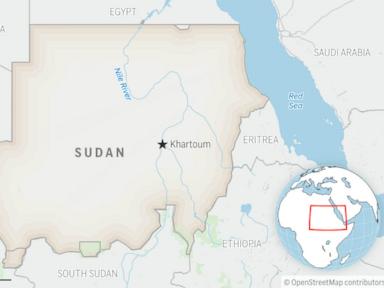
Another headline rolls across the wire. Twenty-one dead in southern Sudan. Medical groups issue solemn warnings. International desks rush to publish the exact same recycled narrative about ancient tribal blood feuds, spontaneous flare-ups, and the tragic inevitability of pastoralist violence.
The lazy consensus treats these casualties as a localized weather pattern. A natural disaster of ethnicity and geography. A tragic, cyclical flare-up in a chronically broken periphery.
That framing is convenient for every desk editor in London and Washington. It requires zero analytical heavy lifting. It reduces complex structural machinery down to a primitive clash of spears and cattle.
It is also entirely, dangerously wrong.
Strip away the humanitarian grief—which is real, catastrophic, and completely obscured by sloppy reporting—and you find an engineered distribution system of scarcity. These are not spontaneous eruptions of ancient hatreds. They are friction points within a much larger administrative and economic squeeze. When you choke off supply lines, commodify local security, and leave regional peripheries to self-finance their own survival through resource extraction, violence ceases to be an anomaly. It becomes the primary operating system.
I have spent years watching regional analysts miss the forest for the tactical brushfires. They catalog the body counts while ignoring the balance sheets. They treat administrative failure as a cultural feature.
Stop asking who pulled the trigger in these border zones. Start asking who benefits from the permanent instability that keeps the entire southern corridor too fractured to organize an effective economic pushback.
The Misdiagnosis of Modern Peripheral Conflict
The standard media playbook relies on a tired lexicon. We hear about ethnic rivalries, traditional land disputes, and the absence of central authority.
These terms function as intellectual painkillers. They soothe the audience with the comforting thought that these regions are simply trapped in time, waiting for modern enlightenment to catch up.
Let us look at the actual mechanics. Modern regional friction in places like southern Sudan does not spring from a vacuum of governance; it thrives on a very specific type of governance.
When central states or splintered authorities weaponize administrative neglect, local communities are forced into zero-sum competition over water holes, grazing corridors, and trading routes. Every policy choice made in distant capitals—from currency devaluation to the privatization of security permits—directly alters the cost-benefit analysis of local militias.
If you want to understand why twenty-one people died, look at the supply chains of small arms, the collapse of local veterinary and agricultural subsidies, and the deliberate fragmentation of traditional mediation structures by external actors who profit from perpetual arbitration.
The Economics of Permanent Instability
Mainstream reporting loves to frame these crises as chaotic. Chaos makes for dramatic television packages and tidy editorial columns.
Reality is much colder. This violence follows predictable economic logics.
Resource Monetization under Duress
When formal markets dry up due to macroeconomic shocks, violence becomes an alternative venture capital market. Controlling a well, a toll road, or a cattle path yields immediate liquidity.
The Outsourcing of Security
Local defense groups do not materialize from thin air. They are capitalized. When state actors withdraw or prove predatory, protection rackets step in to fill the vacuum. These groups require ongoing friction to justify their existence and revenue collection.
The Aid Industry Feedback Loop
Humanitarian interventions, while vital for immediate triage, frequently distort local economies. They create localized micro-economies centered around relief logistics, inadvertently shifting incentives away from permanent political settlements.
None of this appears in the standard wire service dispatch about a tragic clash leaving twenty-one dead. The wire service wants you to feel sad and move on. The reality demands that you look at the incentives driving the slaughter.
Dismantling the Humanitarian Reductionism
There is a profound moral hazard in how these conflicts are covered. By reducing political and economic violence to ancient ethnic inevitabilities, the international community absolves itself of complicity.
It tells a neat lie: They have always fought each other, and they always will.
This perspective ignores the structural interventions of the last three decades. It ignores how structural adjustment programs, poorly managed border delineations, and the international trade in light weapons systematically dismantled traditional coping mechanisms.
When you strip away customary land tenure systems through top-down legislative decrees, you create overlapping property claims. When two groups hold legally or traditionally valid claims to the same dwindling pastureland, engineered by bureaucratic incompetence or malice, a clash is not a cultural failure. It is a mathematical certainty.
The Uncomfortable Truth About Solutions
If the diagnosis is wrong, the prescription will inevitably fail.
For decades, international actors have thrown billions of dollars at peacebuilding workshops, capacity-building seminars, and temporary ceasefires that treat the symptoms while ignoring the structural disease. These efforts fail because they assume the parties involved want the same thing the diplomats want: stability and equitable growth.
Imagine a scenario where local commanders and regional fixers suddenly lost their economic incentives for instability. The conflict would evaporate within a quarter.
Until policy circles stop treating these regions as anthropological exhibits and start treating them as rational economic actors responding to brutal structural constraints, the body counts will continue to climb.
Stop mourning the symptom. Attack the architecture of scarcity.


