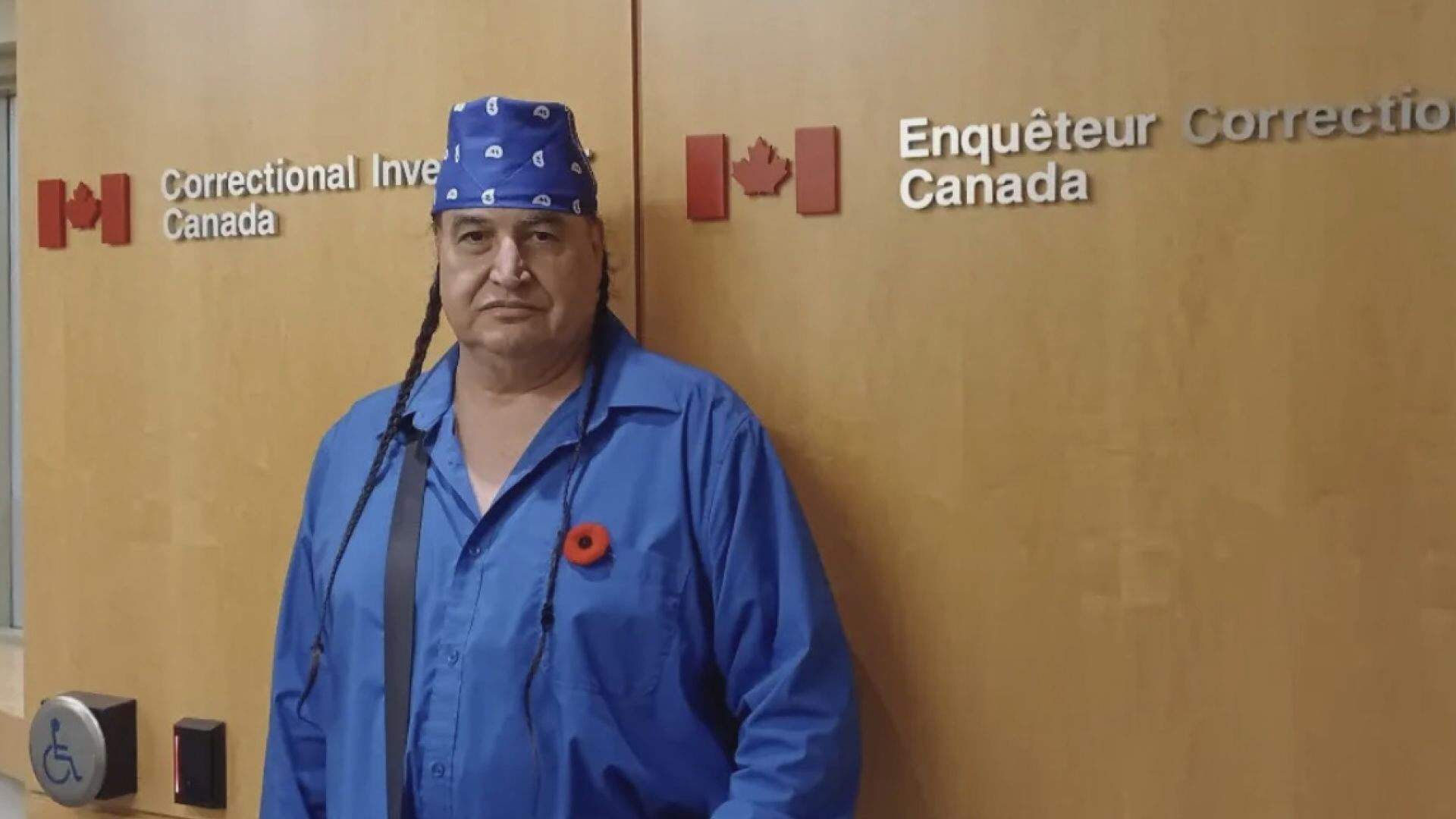
Everyone loves rehabilitation until a killer sits next to them in Constitutional Law.
The outrage machine went into overdrive the moment news broke that a convicted murderer—specifically, an individual serving a life sentence on day parole who had been attending McGill University’s prestigious Faculty of Law—was taken back into custody. Legacy media outlets immediately framed the story around the most visceral, click-inducing angle possible. A murderer. On a college campus. Studying the very statutes he violently shattered.
The lazy consensus is predictable. Pundits shriek about public safety. Comment sections fill up with moral outrage about the sanctity of elite institutions. Critics treat the mere presence of an ex-offender in an academic setting as a catastrophic failure of the parole board and an insult to victims' families.
They are asking the wrong question entirely.
The public is fixated on whether a convicted felon deserves a seat at an elite university. That is a moral vanity metric. The real question—the one that exposes the rot at the core of our legal and correctional philosophies—is why we build billion-dollar rehabilitation bureaucracies while actively sabotaging the exact mechanisms proven to stop people from reoffending.
When a parolee violates conditions and gets hauled back into custody, the mob cheers as if their outrage has been validated. They point at the handcuffs and yell, "See? We told you they couldn't change." That reaction is intellectually bankrupt. A revocation of day parole is not proof that higher education for inmates is a failure; it is proof that the system's monitoring mechanisms actually functioned when a boundary was crossed.
The Illusion of the "Clean Slate"
I have spent years watching legal hiring committees, bar associations, and university admissions boards tie themselves into knots over criminal records. The hypocrisy is staggering. These are the exact same institutions that host annual symposiums on restorative justice, systemic bias, and prison reform. Yet the second a real-world test case walks through the front door, the theoretical empathy evaporates.
Let’s define the mechanics clearly, because mainstream reporting muddies the water for dramatic effect.
In the Canadian correctional system—which governs the McGill case—a life sentence for second-degree murder carries a mandatory minimum period of parole ineligibility, typically between 10 and 25 years. Once an offender reaches eligibility, the Parole Board of Canada does not simply hand out bus tickets and wish them luck. Release happens in rigid, heavily surveilled stages.
Day parole is not freedom. It is a tightly controlled transition phase where the offender must return to a correctional facility or a community-based residential facility—a halfway house—every single night. Every movement, class schedule, and association is subject to strict conditions. If a parole officer suspects a breach of those conditions, or perceives an elevated risk to the community, the parolee’s release is suspended immediately. No new crime needs to be committed for a return to custody.
When the media blasts a headline about a "convicted murderer back in custody," the average reader assumes a rampage occurred in the campus library. In reality, a suspension can be triggered by missing a curfew, associating with an unauthorized person, or failing to disclose a change in personal circumstances. Treating a parole suspension as equivalent to a new violent offense is dishonest journalism designed to manufacture panic.
Why Elite Institutions Are Terrified of Their Own Rhetoric
Law schools sell a specific mythos. They claim to train the guardians of the rule of law—people who understand nuance, due process, and the capacity for human redemption under statutory frameworks.
Yet when McGill admitted a student with a murder conviction, the backlash targeted the university’s admissions standards as if academic merit and criminal history cannot coexist.
Here is the uncomfortable truth: elite institutions love the idea of formerly incarcerated scholars, provided those scholars remain safely abstract or restricted to sociology panels. When one actually passes the rigorous admissions criteria, survives the LSAT or equivalent holistic review, and starts dissecting torts and contracts alongside the children of corporate partners, the institutional immune system rejects the host.
Look at the standard arguments thrown around whenever an offender enters higher education:
- "It takes a spot away from a deserving student." Admissions are not a zero-sum charity drive. If an applicant meets the academic threshold and clears the institutional risk assessment, they earned the seat. Suggesting otherwise implies that universities should act as secondary sentencing courts, handing out permanent civil death sentences long after the state has determined an individual is eligible for gradual reintegration.
- "It compromises campus safety." Statistically, this argument collapses under scrutiny. Decades of criminological research—most notably the landmark meta-analyses funded by the RAND Corporation—consistently demonstrate that correctional education is one of the single most effective tools for reducing recidivism. Inmates who participate in post-secondary education programs are significantly less likely to return to prison than those who do not. If you actually care about public safety, you should be demanding that universities open their doors wider, not lock them shut.
- "They can never become a lawyer anyway, so why bother?" This confuses academic education with professional licensure. A Juris Doctor or Bachelor of Civil Law is an academic degree, not a license to practice. Every provincial law society and state bar association maintains a strict "good character" requirement. Passing law school is step one; surviving a brutal, invasive character and fitness investigation years later is step two.
Dismantling the "Good Character" Trap
Let’s talk about the Good Character Requirement, because this is where the legal profession’s cognitive dissonance reaches peak absurdity.
Every bar association in North America mandates that applicants demonstrate "good moral character" before being admitted to practice. On paper, it sounds noble. Who wants a fraudster or a violent predator handling client trust accounts?
In practice, the good character standard is an opaque, subjective gatekeeping tool with zero predictive validity. Legal scholars like Deborah Rhode spent decades documenting how character and fitness committees routinely obsess over past transgressions—often penalizing applicants for financial distress, mental health histories, or old criminal records—while remaining utterly blind to the personality traits that actually drive white-collar legal malpractice.
The law societies themselves admit that rehabilitation is possible. In Ontario, the Law Society Tribunal has explicitly ruled that past serious misconduct, including violent crimes, is not an automatic, permanent bar to admission. Applicants must prove, through clear and convincing evidence over a sustained period, that they have fundamentally changed.
Think about the catch-22 we have engineered:
- We tell prisoners that if they serve their time, show remorse, and educate themselves, society will allow them to reintegrate.
- When they actually pursue high-level education to build a legitimate, non-criminal career, we publicly shame the university for letting them in.
- If they manage to graduate, we subject them to a licensing gauntlet designed to weaponize their worst day against them forever.
- When the crushing weight of stigma, surveillance, and exclusion causes them to stumble—or when a parole officer pulls the plug at the first sign of friction—we declare the entire concept of rehabilitation a naive fantasy.
We are rigging the game so the house always wins, then acting shocked when the player goes broke.
What People Get Wrong About Parole Revocation
If you look at the public reaction to the McGill story, you see a fundamental misunderstanding of how risk management works in corrections.
People view parole as a binary switch: you are either locked in a concrete box, or you are completely free. Because they view it as binary, any return to custody looks like a catastrophic failure of the initial decision to grant parole.
Risk management is not binary; it is dynamic.
Imagine a scenario where a correctional board has to manage two thousand high-risk offenders who will, by law, eventually reach their statutory release dates or parole eligibility windows. The board has two choices. Choice A: Keep every single one of them locked in maximum-security cells until the exact second their warrant expires, then dump them onto the street with fifty dollars and zero supervision. Choice B: Release them gradually under strict conditions, monitor their behavior in real-world environments like workplaces and universities, and yank them back into custody the moment their behavior deviates from the baseline.
Choice A feels emotionally satisfying to angry taxpayers. It is also a guaranteed recipe for violent reoffending. When you release an institutionalized person cold turkey without a transition period, you maximize the odds that they will commit a new crime against an innocent citizen.
Choice B—the exact mechanism that put the McGill student on day parole and subsequently pulled him back into custody—is the only rational way to protect the public. The suspension of parole is not a bug in the system. It is the safety valve. It means the parole officer was paying attention, identified a breach or an escalating risk factor before a new victim was created, and executed a containment protocol.
The Hard Truth Nobody Wants to Admit
Taking a contrarian stance here requires acknowledging the ugly downsides. Pretending that integrating violent offenders into elite academic spaces is effortless or risk-free would be just as dishonest as the tabloid fear-mongering.
There are real, undeniable costs to this approach.
First, the psychological toll on victims' families is permanent. No criminological study on recidivism rates will ever comfort a mother whose child was murdered when she sees the killer’s name associated with an esteemed university. To her, higher education looks like a reward—a prestigious credential handed to someone who stole every future milestone from her family. Pretending that victim trauma doesn't matter makes advocates of prison reform look callous and detached from reality.
Second, institutional liability and campus friction are real. Universities are not correctional facilities. Professors are not trained parole officers, and nineteen-year-old undergrads did not sign up to be part of an offender’s reintegration experiment. When a parolee fails to disclose critical information—or violates trust within an academic community—it validates the worst fears of faculty and students who were asked to extend grace in the first place.
Third, some offenders manipulate the system. High-functioning individuals, particularly those with narcissistic or antisocial traits, know how to weaponize the language of redemption. They know exactly what parole boards and admissions officers want to hear. They use academic prestige as a shield to deflect scrutiny and project an image of total transformation while still engaging in deceptive behavior behind closed doors.
Ignoring these realities destroys credibility. You cannot build a sustainable criminal justice policy on naive optimism.
Stop Confusing Punishment With Prevention
If we want a legal system that actually works, we have to separate our desire for vengeance from our strategy for public safety.
Right now, we mash them together into an incoherent mess. We demand that prisons "correct" behavior, yet we starve correctional education programs of funding. We preach about second chances, yet we treat an offender's enrollment in a top-tier law program as a scandal. We demand accountability, yet we mock the very parole supervision mechanisms that catch rule violations before they turn into new crimes.
If you believe that a conviction for murder should forfeit a person's right to ever walk on a university campus, hold a professional degree, or participate in civic life again, then be honest about it. Advocate for life without parole for every homicide. Abolish day parole. Shut down prison education initiatives. Own the brutality of permanent exile.
What you cannot do is claim to support a justice system built on rehabilitation and proportional punishment while throwing a tantrum every time a prisoner actually attempts to climb out of the pit.
The student at McGill is back behind bars because the supervision net held. The tragedy isn't that a law school gave a felon a chance to read the law—it’s that we are still too cowardly to decide whether we want ex-convicts to become productive citizens or permanent monsters.