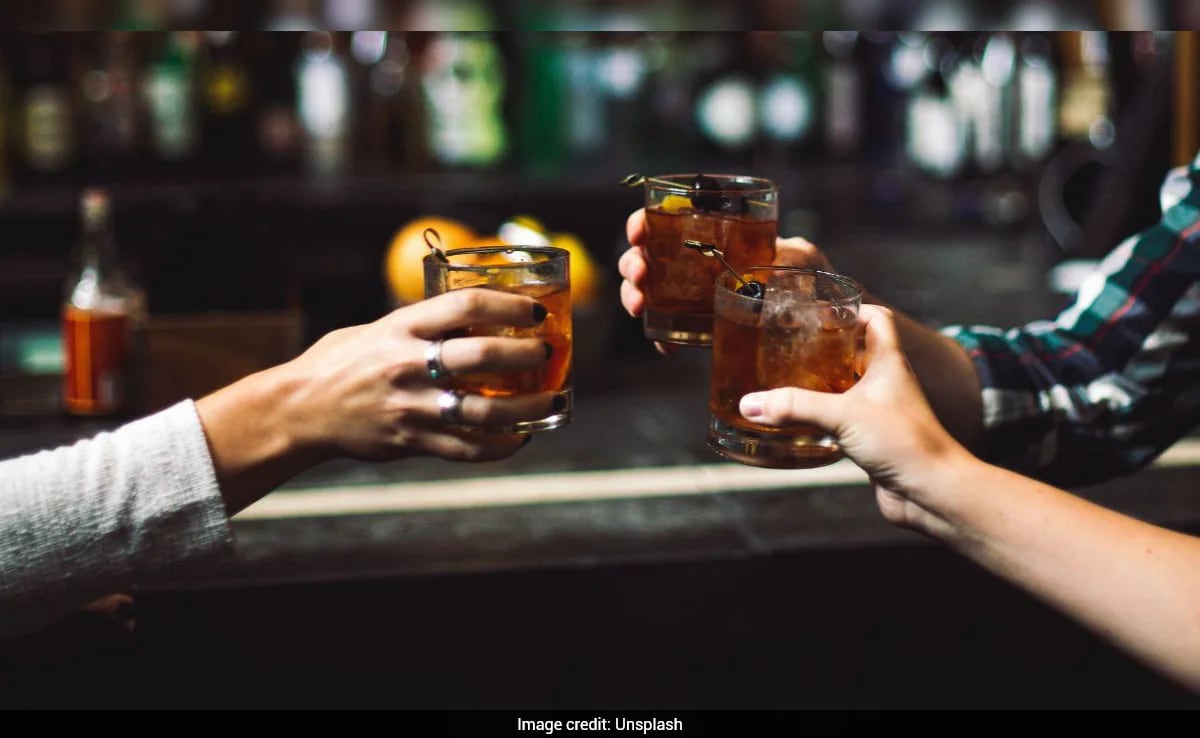
The condensation on a Singha bottle feels the same whether you are in a high-end rooftop lounge in Bangkok or a plastic-chaired dive in Pattaya. It is cold. It is honest. It represents the start of the night, that electric moment when the humidity of Southeast Asia meets the first sip of a holiday. For a 22-year-old British traveler and his girlfriend, that cold glass was supposed to be the prologue to a memory. Instead, it became the centerpiece of a tragedy.
Thailand has a way of blurring the edges of caution. You arrive in a whirlwind of Tuk-Tuks, incense, and the intoxicating scent of pad krapow sizzling on street corners. The "Land of Smiles" earns its moniker through a relentless, sun-drenched hospitality that makes you feel invincible. When you are young and the pound stretches further than it ever did in London, the world feels like it belongs to you. You trust the bartender. You trust the stranger who offers a toast. You trust the night.
But the night in certain pockets of Thailand has a different chemistry.
the anatomy of a shadow
The reports from the Chonburi province were clinical, as police reports always are. They spoke of a young man found unresponsive in a hotel room, his partner clinging to life in a nearby hospital bed. The phrase "suspected drink spiking" was tossed around with the casual frequency of a weather report. To the authorities, it was a statistic. To the families back in the UK, it was a tectonic shift that leveled their world.
Spiking is not a robbery of money. It is a robbery of agency.
Consider the mechanics of the act. In a crowded, strobe-lit bar where the bass vibrates in your marrow, a tiny pill or a clear liquid is introduced to a drink. It takes three seconds. Usually, the substance is a sedative—something like Rohypnol, GHB, or even high-strength antihistamines and local anesthetics. These aren't just "sleepy" drugs. In the heat of the tropics, mixed with alcohol and perhaps the dehydration of a long day in the sun, they become a chemical weapon.
The body reacts with terrifying speed. The first sign isn't unconsciousness; it’s a sudden, inexplicable fog. Your legs feel like they are moving through waist-high water. The person you were talking to five minutes ago now looks like a silhouette. For this British couple, the transition from a celebratory night out to a fight for survival happened behind closed doors, away from the neon glare of the strip.
the economics of the "knockout"
Why does this happen? The narrative often blames "random' violence, but the reality is more calculated. It is a predatory business model. In tourist hubs like Pattaya or Phuket, a small segment of the criminal underworld views travelers not as guests, but as ATMs with heartbeats.
They call them "knockout drops."
The goal is rarely death. Death brings the "tourist police." Death brings international headlines and forensic teams that disrupt the flow of cash. The goal is usually much more cynical: a quiet theft. They want your watch, your iPhone, and the PIN to your banking app. They want you to wake up twelve hours later with a headache and a hollowed-out bank account, unsure if you were drugged or if you simply "had one too many."
But chemistry is an imprecise science. When a predator drops a sedative into a drink, they aren't calculating the victim's body mass index or checking for underlying heart conditions. They aren't wondering if the person just took an ibuprofen for a headache or if they have a low tolerance for GABA-inhibitors.
The margin between "unconscious" and "respiratory failure" is razor-thin. For the young man in this case, the night crossed that line. He didn't wake up. He became a cautionary tale etched into the digital pages of a news cycle, while his girlfriend woke up to a reality where her partner was gone and her own body felt like a crime scene.
the myth of the "wild" traveler
There is a persistent, ugly habit of victim-blaming in these stories. We see the headlines and think, Well, what were they doing out that late? Why weren't they more careful? This perspective is a shield we use to convince ourselves it couldn't happen to us. We imagine the victims were being reckless, stumbling into "bad" areas or engaging with "shady" characters. But the sophistication of these crimes has evolved. Spiking occurs in reputable bars. It occurs in beachfront resorts. It occurs when a friendly local or a fellow "backpacker" offers to buy a round to celebrate a shared sunset.
The danger isn't just in the drink; it’s in the social contract we assume exists everywhere. We assume that if we are kind, we will be met with kindness. We assume that the person smiling at us in a bar sees us as a human being.
The reality of travel in the 2020s is that the "Experience" has been commodified. We are so focused on capturing the perfect aesthetic—the neon lights, the buckets of Thai whiskey, the "Full Moon" energy—that we forget to look at the shadows those lights cast. The invisible stakes are our very lives.
the silent recovery
While the news focuses on the tragedy of the deceased, there is a lingering, quiet horror for the survivor. Being hospitalised after a suspected spiking is a trauma that transcends the physical. The cocktail of drugs used in these attacks often causes retrograde amnesia. You don't just lose your health; you lose your story.
You wake up in a sterile Thai hospital ward, the smell of antiseptic clashing with the humid air drifting through the vents. You remember the first drink. You remember the laughter. And then... nothing. Just a black hole where the most important moments of your life should be. You are told your partner is dead, and you cannot even provide the "how" or the "who."
This is the psychological weight that the survivor now carries. The guilt of surviving, paired with the terrifying blank space of the attack, creates a unique kind of grief.
how to walk through the fire
We cannot stop traveling. To retreat into a shell of fear is to let the predators win. But we have to change the way we interact with the "exotic."
Safety in these environments isn't about being paranoid; it's about being tactical. It’s about the "thumb rule"—never leaving a glass uncovered. It’s about the "buddy system" where "never leaving your wingman" isn't a joke, but a survival mandate. It’s about recognizing that a drink isn't just a drink; it's a delivery system.
If you feel suddenly, disproportionately drunk—if the room begins to tilt after only two beers—that is not the heat. That is not the "stronger" local liquor. That is a biological emergency.
In those moments, you have a window of perhaps ten minutes. You don't "sleep it off." You don't go back to the hotel alone. You find the most official-looking person in the room—a manager, a security guard, or even a group of older tourists—and you tell them clearly: "I have been drugged. Do not let me leave with anyone."
the empty chair at the table
The British couple came to Thailand for a dream. They came for the turquoise waters of the Gulf, the white sands of Koh Lan, and the feeling of being young and free in a world that finally seemed open again.
Now, there is an empty chair at a dinner table in a quiet English town. There is a suitcase being packed by grieving parents, filled with clothes that still smell like the sea and the laundry detergent of a hotel they never should have had to visit.
The sun will continue to rise over Pattaya. The bars will continue to play the same pop hits, and the ice will continue to clink in thousands of glasses tonight. Most people will be fine. Most will go home with nothing but a hangover and a sunburn.
But for those who don't, the tragedy isn't just the loss of life. It’s the betrayal of the journey itself. We travel to find ourselves, to expand our horizons, and to see the beauty in the world. When that beauty is used as a lure for a chemical trap, something fundamental breaks in our collective spirit.
The neon lights of Walking Street are beautiful from a distance. They flicker in shades of cobalt, magenta, and electric green, reflecting off the damp pavement. They promise a world without consequences. But as you walk toward them, remember the coldness of the condensation on the glass. Remember that the most dangerous thing in the room isn't the stranger in the corner—it's the silence of the person who just reached for your drink while you weren't looking.
The night is long, and the sea is deep, and some ghosts never leave the shore.