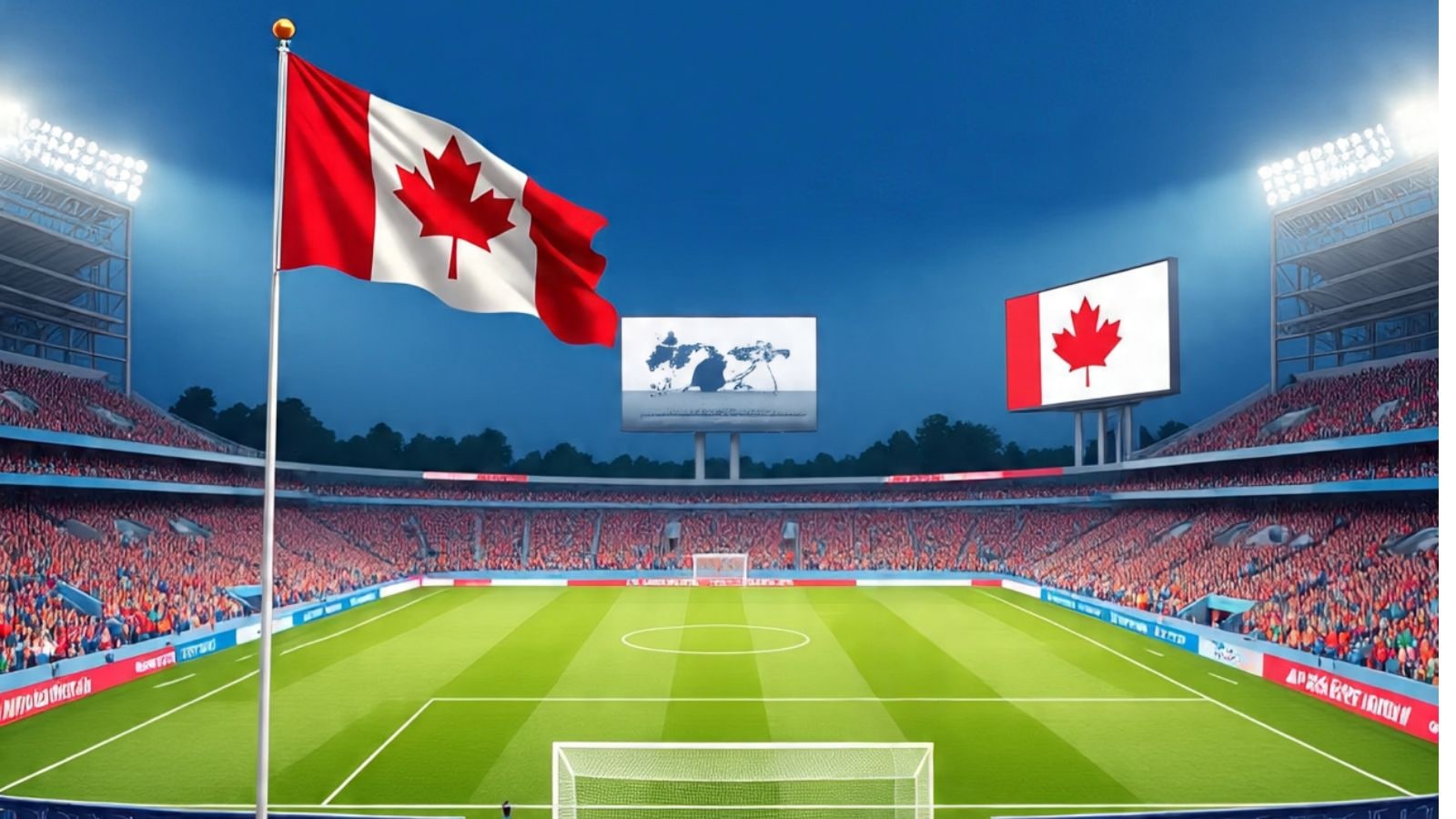
A young man named Elias sits in a cramped internet cafe in Buenos Aires, his eyes reflecting the blue light of a screen that holds his entire summer in the balance. He has the tickets. He has the jersey. He even has the scrappy, misplaced confidence that Argentina will lift the trophy on North American soil. But between Elias and the roar of the crowd at BC Place in Vancouver stands a digital gatekeeper: the Canadian immigration portal.
This is the invisible side of the FIFA World Cup 2026. While the world discusses pitch dimensions and striker rotations, a parallel tournament is already being played by millions of fans, media professionals, and support staff. It is a high-stakes game of documentation.
Canada is not merely a host; it is a fortress with specific keys. To enter, you must understand that the "rules of the game" have shifted. The simplicity of a paper passport is a relic of the past. Today, your entry depends on a series of binary choices made months before the first whistle blows.
The Digital Handshake
The first hurdle is deceptive. It is called the Electronic Travel Authorization, or eTA. For travelers from visa-exempt countries—think the United Kingdom, France, or Australia—it feels like a formality. It costs seven dollars. It takes minutes.
But for someone like Elias, or a freelance photographer from Lagos, the path is steeper. Most of the world requires a Temporary Resident Visa (TRV). This isn't just a sticker in a passport. It is a comprehensive narrative of your life that you must present to a government official who will never meet you.
If you are planning to attend, you are not just a "fan." In the eyes of the law, you are a visitor whose intent must be proven. The Canadian government looks for ties to your home country. They want to see that the gravity of your life—your job, your family, your mortgage—is stronger than the allure of overstaying your welcome after the final goal is scored.
The Professional Burden
Consider the "fixers." These are the men and women who carry the heavy glass of television cameras or the specialized medical kits for national teams. For them, the stakes are professional. A missed visa isn't just a missed vacation; it is a broken contract.
The Canadian government has acknowledged the scale of 2026 by creating specific pathways for those "essential to the event." If you are a member of the media or part of a team’s delegation, you aren't just filing a standard tourist application. There are dedicated codes and prioritized processing streams designed to ensure that the people who make the World Cup happen actually show up.
Yet, the burden of proof remains. A journalist must provide accreditation from FIFA. A physiotherapist must be linked to a recognized sporting body. The system is designed to be a sieve, catching the fraudulent and letting the legitimate through, but sieves can be stubborn. They can clog.
The Logistics of the Journey
Imagine the geography. The 2026 World Cup is a behemoth sprawled across three nations. A fan might see a match in Mexico City on Tuesday and expect to be in Toronto by Thursday. This creates a unique legal friction.
Crossing the border between the U.S. and Canada is not the casual stroll it once was. Each entry is a fresh negotiation. If you are a citizen of a country that requires a visa for both nations, you must manage two distinct bureaucratic timelines. You cannot assume that because the Americans let you in, the Canadians will follow suit. They won't. They operate on their own clock, with their own set of anxieties.
The process usually follows this rhythm:
- The Preparation: Gathering six months of bank statements, employment letters, and the digital copy of your FIFA ticket.
- The Application: Navigating the IRCC (Immigration, Refugees and Citizenship Canada) portal. It is a test of patience.
- The Biometrics: For many, this is the physical reality of the digital process. You must travel to a Visa Application Centre (VAC) to give your fingerprints and have your photo taken.
- The Wait: This is the silent period. It can last weeks or months.
The Cost of the Margin
There is a psychological weight to this. We often talk about sports as a universal language, a bridge between cultures. But the bridge has a toll booth.
For a family in Casablanca saving for years to see Morocco play in Montreal, the visa fee and the biometric fee are not just line items in a budget. They are the cost of a dream. If the visa is denied, there is no refund for the tears or the lost airfare.
The Canadian government insists that the 2026 World Cup will be the most inclusive ever. To back this up, they have ramped up staffing at consulates and streamlined the digital interface. They are trying to turn a wall into a window. But the window only opens for those who follow the instructions to the letter.
Precision is the only currency that matters here. A single typo on a passport number or a blurred scan of a birth certificate can trigger a "Request for Information" that adds thirty days to the clock. In the countdown to a World Cup, thirty days is an eternity.
The Arrival
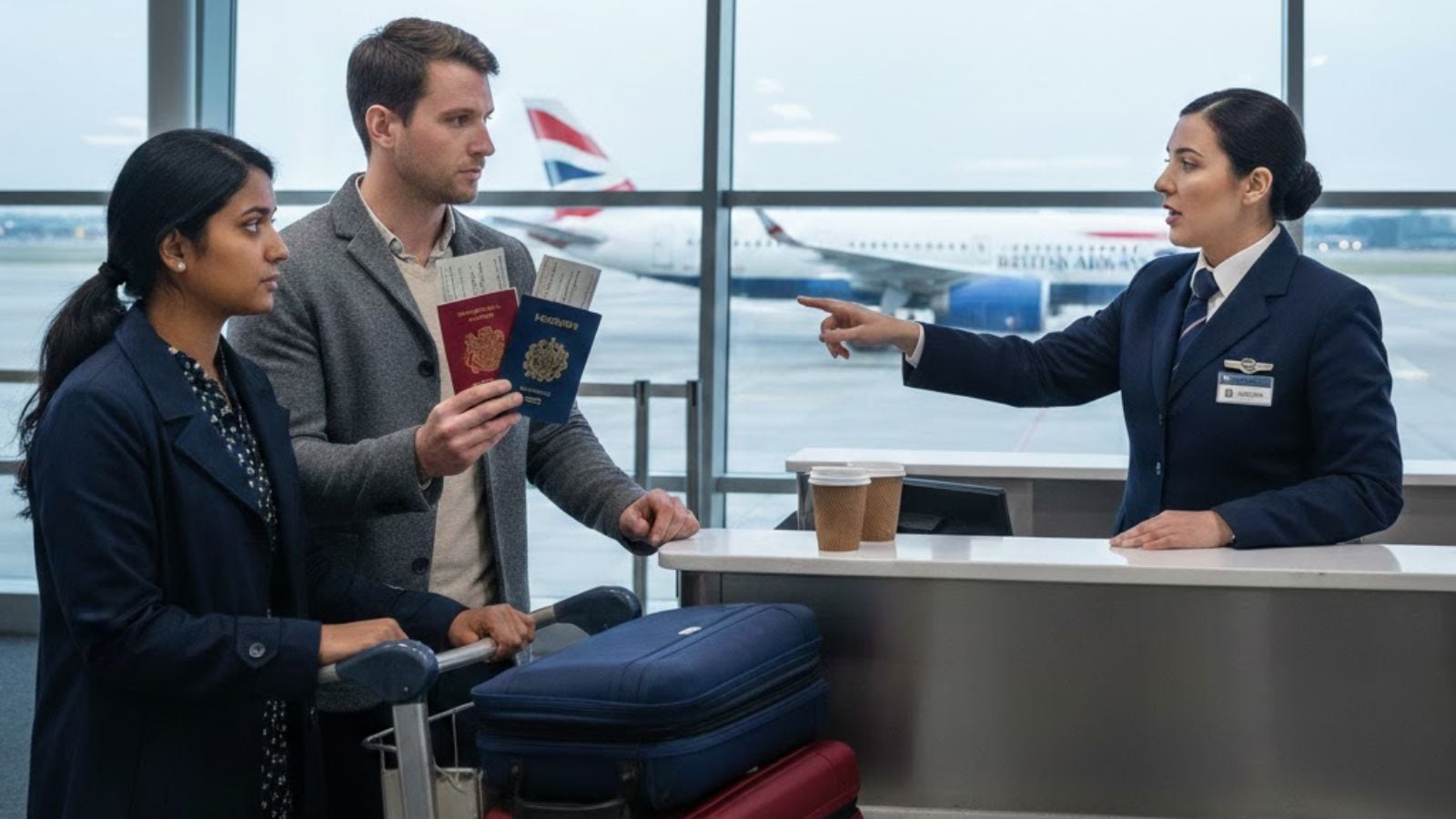
When the plane finally touches down at Pearson International or Vancouver International, the digital journey ends and the human one begins. You stand in front of a Border Services Officer. This is the final referee.
They will ask: Why are you here? Where are you staying? When are you leaving?
They aren't looking for a deep analysis of a 4-4-2 formation. They are looking for the truth. They want to see the confirmation of your eTA or the glint of the visa foil in your passport. They want to see that you have planned your exit as carefully as your entrance.
The stadium lights are bright, but they don't reach the quiet corners of the arrival hall where the real outcomes are decided. For the fan who did the paperwork, who respected the process, and who anticipated the hurdles, the reward is the first breath of Canadian air and the distant, rhythmic thumping of a drum from a crowd of thousands.
Elias eventually closes his laptop in Buenos Aires. His documents are uploaded. His fingerprints are recorded. Now, he waits for an email that will determine if he is a spectator or just a ghost in the machine. He isn't just waiting for a game; he is waiting for permission to belong to the world for a month.
The 2026 World Cup isn't won on the grass. It is won in the quiet, diligent moments of preparation that happen in bedrooms and offices across the globe, long before the lights go up.
Would you like me to help you draft a checklist for the specific documents required for a Canadian TRV based on your home country?