Silence.
That is the first thing you notice when a border crossing dies, right after the sharp, metallic crack of an AK-47 echoes across the scrubland and sends a thousand people running for the dirt. Meanwhile, you can explore related developments here: Pourquoi la jeunesse et les travailleurs italiens descendent dans la rue sous haute surveillance policière.
Picture a driver—let’s call him Abdi, a composite of the hundreds of men who run the relentless asphalt artery between Addis Ababa and the port of Mombasa. In this hypothetical but painfully familiar afternoon at Moyale, the town split down its dusty spine by the border between Ethiopia and Kenya, Abdi isn't thinking about geopolitics. He isn't thinking about regional security frameworks or bilateral trade agreements. He is staring at the temperature gauge on his dashboard, listening to the low, rhythmic thrum of a refrigerated diesel engine that is burning through its final gallons of fuel while twelve tons of fresh avocados and cut flowers slowly begin to cook in the East African sun.
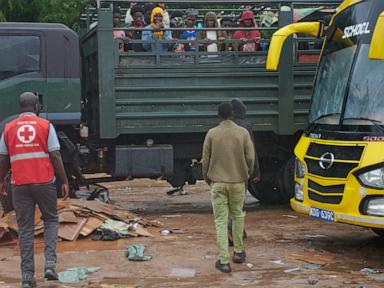
Just four hundred yards away, across a dry riverbed that serves as an arbitrary scar between two nations, mothers are hoisting toddlers onto their hips and sprinting past shuttered corrugated-iron storefronts. Sporadic gunfire has erupted again on the Ethiopian side of the border. Nobody knows for certain who fired the first shot—whether it was a flare-up of local ethnic friction, a clash between federal forces and regional militias, or the sudden, violent punctuation mark to a dispute that had been simmering in the heat for months. To understand the complete picture, check out the recent report by The New York Times.
To the people running toward the Kenyan side of Moyale, the politics do not matter. Survival is a sprint across red dust.
To the men sitting in the cabs of idling eighteen-wheelers stretching back for miles along the highway, survival is a slow-motion financial execution.
The Anatomy of a Chokepoint
When standard news reports cover a border skirmish in the Horn of Africa, they tend to treat it like a weather event. Sporadic gunfire sends Ethiopians fleeing into Kenya as trucks remain stuck at border. Twelve words. Cold, clinical, and completely detached from the visceral reality of what happens when you sever the jugular vein of East African commerce.
To understand why a few dozen rounds of ammunition in a remote frontier town can send shockwaves all the way to supermarket shelves in Europe and dinner tables in Nairobi, you have to understand the geography of desperation.
The Moyale crossing is not just a gate in a fence. It is the primary overland bridge connecting landlocked Ethiopia—a nation of over 120 million people—to Kenya’s massive Lamu Port-South Sudan-Ethiopia-Transport (LAPSSET) corridor and the coastal hub of Mombasa. Think of this highway not as a road, but as a pressurized arterial pipe. Every day, under normal conditions, millions of dollars in livestock, coffee, pulses, textiles, construction materials, and manufactured goods pulse through this narrow bottleneck.
When gunfire breaks out, someone slams a steel valve shut on that pipe. The pressure doesn't just vanish; it backs up, violently, until things begin to burst.
I have stood at East African border posts when the gates drop, and the sensation is uniquely suffocating. There is a specific kind of dread that settles over a stranded convoy. The air thickens with the smell of hot rubber, unwashed bodies, diesel exhaust, and the sweet, sickening tang of rotting produce. You watch grown men—seasoned logistics operators who have navigated washed-out bridges, bandit territories, and corrupt customs checkpoints—pace beside their tires like caged animals, checking phones that suddenly have no signal or battery, calculating the exact hour their livelihood evaporates.
The Human Ledger of a Closed Gate
Let’s look at the two distinct tragedies unfolding simultaneously on either side of that invisible line in Moyale, because treating them as separate stories misses the entire point.
First, there are the fleeing families. When shots ring out in the Ethiopian half of Moyale—administratively part of the Oromia and Somali regions, a historic crossroads where pastoralist communities have grazed cattle for centuries without caring about lines drawn by colonial cartographers—the instinct is immediate flight into Kenya. Why? Because the border, despite its militarization, remains porous to human desperation. Families grab mattresses, jerrycans of water, and whatever cash is tucked beneath floorboards, crossing into Kenyan Moyale where relatives, mosques, churches, and makeshift local shelters absorb the sudden human tide.
These are not abstract "displaced persons." They are shopkeepers whose life savings are locked behind padlocked steel doors just a stone's throw away, praying looters don't strip their shelves before the shooting stops. They are children whose schoolbooks are lying open on desks in classrooms that suddenly double as firing positions. Every time sporadic gunfire forces this exodus, it deepens a generational trauma. Trust between neighbors fractures. The local economy, which relies on thousands of daily micro-transactions between Ethiopians and Kenyans buying milk, sugar, airtime, and khat across the boundary, flatlines instantly.
Now, shift your gaze half a mile down the tarmac to the stranded trucks.
A commercial truck sitting idle at a closed border is a financial vampire. Most of these vehicles are owned by small-to-medium transport operators who took out high-interest loans to buy the rigs, or independent drivers paid per completed trip. When the border seals:
- Perishables die first. Ethiopia is one of the world's premier exporters of fresh cut roses and high-value horticulture, alongside agricultural staples. A cold-chain truck has a finite window. Once fuel runs low or the ambient heat overwhelms the cooling unit, an entire cargo worth tens of thousands of dollars turns into compost. The exporter loses the shipment; the buyer cancels the contract; the insurer invokes a "civil unrest" exclusion clause and refuses to pay a dime.
- Demurrage penalties bleed the rest. Shipping containers are rented on strict clocks. Every day a container sits immobilized on the back of a flatbed in Moyale instead of returning to the port in Mombasa, the shipping line levies punishing daily fines. Within two weeks, the fines can exceed the value of the freight itself.
- Drivers become targets. Stranded drivers are sitting ducks. Carrying cash for road expenses, fuel, and bribes, isolated in areas where law enforcement is suddenly preoccupied with armed clashes, they face extortion, theft, and acute shortages of clean water and food.
Consider what happens next: the driver abandons the rig to save his own life, or stays and risks catching a stray bullet while guarding someone else's cargo. Either way, the supply chain snaps.
Why the Violence Keeps Returning
It is tempting to look at a flare-up in Moyale and throw your hands up in confusion. Why here? Why now? The truth is that border towns in the Horn of Africa are pressure cookers by design, and acknowledging the complexity of why they explode is essential if we want to stop treating these crises like random acts of nature.
Honestly, even veteran analysts who have spent decades mapping the Horn of Africa struggle to untangle every thread when shooting starts in Moyale. The town sits at the volatile intersection of multiple fault lines. On the Ethiopian side, deep-seated administrative disputes over land, regional boundaries, and political representation between neighboring ethnic groups have repeatedly spilled into armed confrontation. Add to that the lingering instability from broader internal conflicts in Ethiopia, the proliferation of small arms across porous frontiers, and the sheer economic desperation driven by consecutive years of devastating drought across the Borana and northern Kenyan rangelands.
When water holes dry up and cattle die, young men with no prospects and easy access to rifles become combustible material. Any spark—a disputed tax collection, a rumor of a raid, a heavy-handed security sweep—can ignite the brush.
And because Moyale is a twin town, violence never stays neatly on one side of the street. Gunfire on the Ethiopian side immediately triggers heightened security alerts on the Kenyan side. Kenyan police and military units lock down crossing points to prevent armed militants from blending into the civilian refugees. From a national security standpoint, Nairobi has little choice; Kenya has spent years fighting insurgent spillovers along its northern and eastern borders and cannot afford an unmonitored influx of weapons.
Yet that very security response—the slamming of the iron gates—becomes the economic noose that strangles both communities.
The Invisible Ripple Effect
You might be reading this thousands of miles away, wondering how a stalled convoy in the arid scrub of northern Kenya touches your life. It is an entirely fair question. On a map, Moyale looks like the edge of the earth.
In reality, it is a critical node in a globalized nervous system.
When the Addis Ababa–Mombasa corridor stalls, the shockwaves travel outward in concentric circles:
- Immediate Local Inflation: Within forty-eight hours of a border closure, the price of basic food staples in northern Kenya and southern Ethiopia spikes. Grains, cooking oil, and fuel—which move across that border in an intricate dance of formal trade and informal barter—suddenly vanish from market stalls. Families already living on the razor's edge of food insecurity are pushed directly into hunger.
- Regional Supply Chain Paralysis: Manufacturers in Nairobi waiting on Ethiopian raw materials—leather, textiles, agricultural inputs—are forced to halt production lines. Meanwhile, construction projects and factories in Ethiopia waiting on machinery, spare parts, and chemicals arriving through Kenyan ports grind to a halt.
- Global Market Distortion: East Africa is a powerhouse for coffee, tea, floriculture, and specialty crops. When overland routes are severed by gunfire, exporters scramble to shift cargo to air freight—an option so prohibitively expensive that it wipes out profit margins entirely and drives up wholesale prices for roasters, florists, and distributors from London to Dubai.
Think of a modern supply chain like a finely tuned mechanical watch. You don't need to smash the whole timepiece with a hammer to ruin it. You just need to drop a single grain of sand into the escapement wheel. Moyale is that wheel, and every burst of gunfire is a fistful of grit thrown straight into the gears.
Beyond the Band-Aid of Ceasefires
Every time this happens, the script plays out with exhausting predictability.
The shooting flares. Civilians flee into Kenya. Trucks back up for kilometers. Local elders and regional governors hold emergency peace meetings under acacia trees or in guarded hotel conference rooms. Security forces deploy reinforcements. Eventually, after three days, or a week, or two weeks, the gunfire subsides. The gates creak open. The surviving trucks limp forward, their drivers exhausted, their cargo partially ruined. Everybody breathes a sigh of relief, and the world stops paying attention until the next time the bullets fly.
That cycle is broken, and pretending otherwise is an insult to the people living through it.
Breaking the chokepoint requires more than temporary troop deployments or reactive peace summits after the blood has already dried. It demands structural insulation between political friction and economic survival.
First, East African trade corridors need digital, pre-cleared transit protocols that minimize the physical bottleneck at the border line itself. Right now, trucks stack up at Moyale largely because archaic, paper-heavy customs inspections force hundreds of vehicles to sit idle in a tiny, vulnerable geographic zone for days even during peacetime. When gunfire erupts, those trucks are trapped in the blast radius. If cargo is cleared electronically at inland dry ports hundreds of miles away—using GPS e-seals and integrated regional customs platforms—trucks spend minutes at the border rather than days, drastically reducing the exposure of drivers and goods to sudden flare-ups.
Second, governments in both Addis Ababa and Nairobi must treat cross-border community stabilization as hard infrastructure, not soft charity. Building a billion-dollar highway through the desert is pointless if the communities living beside the asphalt have no stake in keeping it open. That means joint water-management projects for pastoralists, formalizing and protecting the small-scale cross-border trade that women in Moyale rely on to feed their kids, and establishing permanent, joint civilian-military early-warning centers where local elders can defuse disputes before someone reaches for a rifle.
Finally, regional trade blocs like the East African Community and IGAD need binding humanitarian and commercial corridor treaties—mechanisms that guarantee designated safe-passage windows for perishable goods and civilian evacuations even when security operations are underway.
Night falls fast near the equator. There is no lingering twilight; the sun drops behind the escarpment like a stone, and the desert heat bleeds out into the dark.
Back on that highway outside Moyale, the hypothetical driver, Abdi, finally shuts off his engine. There is no point burning the last three liters of diesel just to cool cargo that is already lost. Through the open window of his cab, the night air carries the faint murmur of voices from the Kenyan side of town—families huddled around small cooking fires in borrowed courtyards, waiting for dawn to tell them whether they have a home to go back to.
Abdi rests his forehead against the steering wheel, staring down at the dark ribbon of asphalt stretching toward a closed steel gate, listening to the silence and wondering which sound will break it first: the rumble of a diesel engine starting up again, or the crack of another rifle in the dark.