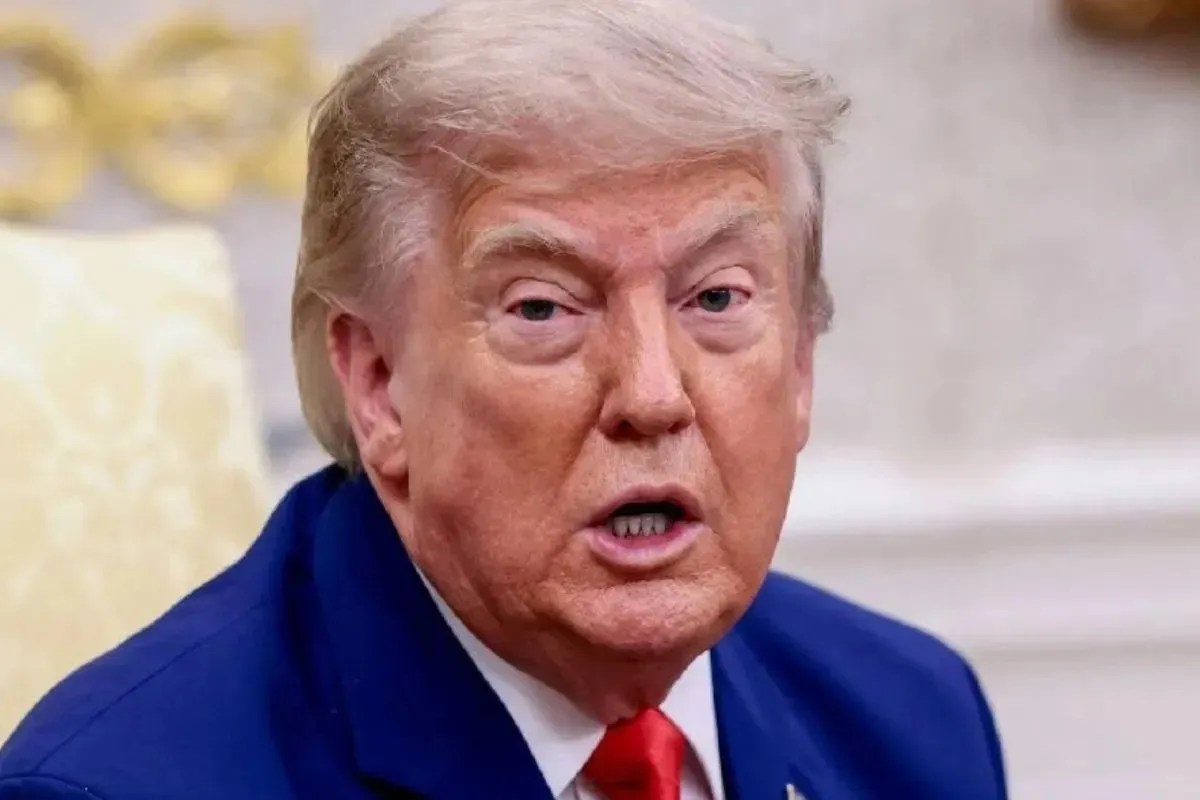
The recent three-day reprieve on the fifty percent tariffs Donald Trump threatened against Canadian imports represents a fragile ceasefire in a much deeper structural conflict. While headlines suggest a sudden thaw linked to Iranian geopolitical posturing, the reality of this trade standoff remains rooted in a long-standing grievance over industrial policy and market access that predates recent international friction.
The administration’s decision to pause the levies—initially set to hit twenty billion dollars worth of Canadian goods—comes after intense back-channel negotiations between the White House and the office of Canadian Prime Minister Mark Carney. This delay provides breathing room for both economies, yet it does not resolve the foundational tension created by the invocation of Section 338 of the Tariff Act of 1930. Unlike more common trade enforcement mechanisms, this archaic provision requires no formal investigation, granting the executive branch near-total autonomy to penalize nations for perceived discriminatory practices against American commerce.
To understand why this is happening now, one must look past the immediate geopolitical theater. Trump’s team has long identified specific Canadian sectors—notably dairy, alcoholic beverages, and motor vehicles—as targets for aggressive realignment. The administration argues these industries operate under protectionist frameworks that disadvantage American exporters. By leveraging the threat of massive duties, the White House is essentially forcing Ottawa into a binary choice: dismantle decades-old domestic support structures or face a severe economic contraction at the border.
The complexity of this dynamic is compounded by the integrated nature of the North American supply chain. Seventy percent of Canada’s exports flow south. When Washington threatens a fifty percent tax on everything from construction materials to precision manufacturing parts, the ripple effects hit American consumers just as hard as they hit Canadian producers. Domestic manufacturers in the United States rely heavily on these inputs. Inflating the cost of these materials by half effectively acts as a domestic tax hike, raising the floor on inflation at a moment when the voting public is already acutely sensitive to cost-of-living metrics.
This is where the political stakes become visible. The administration’s move is timed with a surgical precision that borders on high-risk gambling ahead of the midterm elections. While the populist appeal of fighting for "fair" trade is potent, the actual imposition of such taxes would likely trigger retaliatory measures from Ottawa, potentially deepening the dispute and creating chaotic pricing environments for American companies. The current "deal" in progress is a temporary fix, an off-ramp built from paper, designed to prevent a full-blown economic collision while negotiators attempt to finalize technical documents that were clearly not ready by the deadline.
What is overlooked in the focus on international conflict is the shift in how the United States now approaches its closest trading partners. The era of assuming frictionless trade based on long-standing alliances has effectively ended. The current administration has signaled that access to the American market is now contingent upon continuous, sector-specific concessions that align with U.S. domestic manufacturing goals. The fact that the threat is currently paused does not mean it is gone; it merely means the administrative machinery is waiting for the next signal to restart.
For Canadian leadership, the dilemma is existential. Yielding too quickly risks domestic political ruin, branding the current administration as a weak partner unable to defend national interests against aggressive pressure. Holding firm, however, risks an economic decoupling that could leave Canada isolated in an increasingly protectionist global climate. The result is a high-wire act where every phone call between Washington and Ottawa is stripped of its usual diplomatic niceties, replaced by the blunt language of quotas, duties, and reciprocal market access.
The economic reality is that these trade disputes operate on a different timeline than political cycles. Businesses on both sides of the border are now forced to factor in massive uncertainty as a line item in their annual planning. When the rules of the game can be altered by a social media post or an invocation of a century-old law, investment slows, projects stall, and capital flows toward safer, more predictable jurisdictions.
The immediate next phase hinges on the documents being finalized behind closed doors. Should the talks collapse once the three-day pause expires, the administration will face a choice: follow through on the threat and accept the domestic inflationary fallout, or find another procedural maneuver to keep the pressure on without triggering the full effect of the tariffs. Either way, the era of stable, predictable trade between the two nations has been replaced by a state of permanent negotiation, where the threat of economic rupture is the primary tool of diplomacy.
This is not a temporary squabble over trade imbalances. It is a fundamental rewriting of the North American economic contract, driven by an administration that believes the only way to ensure national strength is to force its allies to restructure their own domestic economies to match American interests. Whether this strategy will yield the promised prosperity for the average American worker remains the central, unproven variable. The only certainty is that the quiet, open border trade model that defined the last fifty years is officially a relic of history.
Trump pauses 50% Canada tariffs after last-minute US-Canada trade deal
This report provides the most recent developments on the trade pause between the U.S. and Canada, detailing the negotiation status and the specific mechanism, Section 338, being utilized to manage these economic pressures.