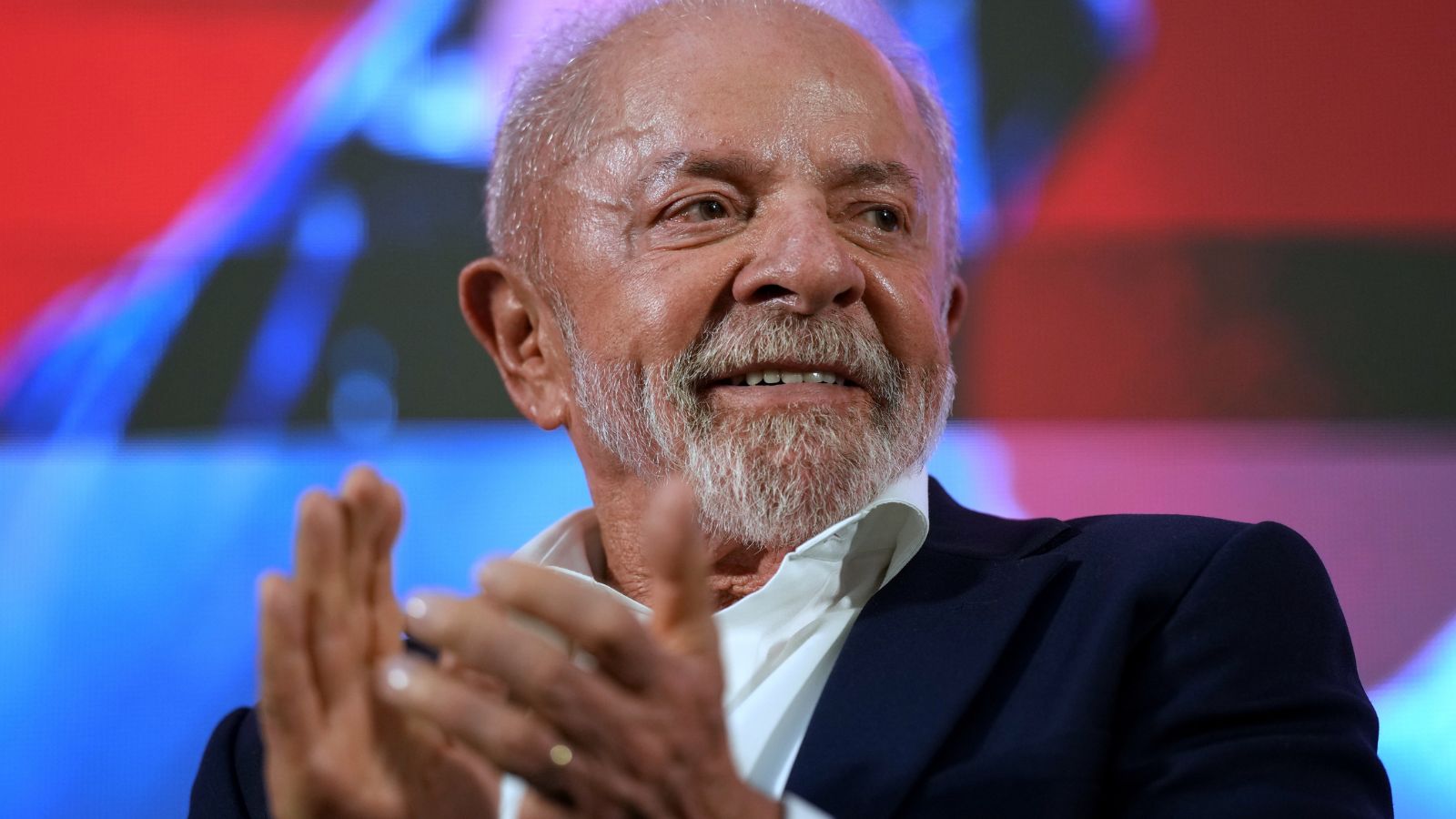
The rhetorical friction between Brazilian President Luiz Inácio Lula da Silva and the Trump administration is not a product of personality clashes but a structural conflict between two competing models of global governance: Westphalian bilateralism and Institutional Multilateralism. When Lula asserts that "no one owns the world," he is defining a strategic boundary intended to protect Brazilian sovereignty and its aspirations as a leader of the "Global South." This friction serves as a leading indicator of how middle-grade powers will navigate the re-emergence of "America First" protectionism.
To analyze the trajectory of Brazil-U.S. relations, we must move beyond political theater and examine the underlying mechanics of Brazil’s "Active and Assertive" foreign policy. This framework relies on three distinct pillars of engagement that Lula uses to counterbalance U.S. hegemony.
The Tripartite Architecture of Brazilian Autonomy
Brazil’s strategy is designed to minimize dependency on any single superpower. This is achieved through a calculated diversification of political and economic capital across three domains.
1. The BRICS+ Expansion as a Hedging Mechanism
The expansion of the BRICS bloc (adding Iran, Egypt, Ethiopia, and the UAE) represents a shift from a symbolic investment club to a geopolitical hedge. For Brazil, the BRICS+ framework provides an alternative financial infrastructure, specifically through the New Development Bank (NDB). By advocating for trade in local currencies, Lula seeks to reduce the "dollar trap"—the vulnerability of the Brazilian Real to U.S. Federal Reserve interest rate hikes. This is a defensive economic maneuver disguised as anti-imperialist rhetoric.
2. Regional Integration and the Mercosur Bottleneck
Brazil views South America as its primary sphere of influence. However, the effectiveness of this pillar is currently throttled by the stalled Mercosur-EU trade agreement. Lula’s rhetoric against "world ownership" is often a pre-emptive strike against perceived Western paternalism in environmental and labor standards. By positioning Brazil as the leader of a unified South American front, he increases his bargaining power in bilateral negotiations with Washington.
3. The Climate-Sovereignty Trade-off
Brazil holds unique leverage through the Amazon rainforest. Under Lula, environmental policy has been transformed into a diplomatic commodity. By framing the Amazon as a global asset that requires global investment—while maintaining strict Brazilian territorial sovereignty—Lula forces the U.S. and Europe into a "pay-to-play" model of environmental diplomacy.
The Cost Function of Divergent Trade Philosophies
The tension between Lula’s "Universalism" and Trump’s "Transactionalist" approach creates a specific set of economic risks and opportunities. The primary friction point is the shift from rules-based trade to power-based trade.
The Impact of Reciprocal Tariffs
A second Trump term carries the high probability of a baseline global tariff. For Brazil, an export-oriented economy heavily dependent on iron ore, soybeans, and crude oil, a U.S. protectionist shift forces a binary choice:
- Pivot to China: Increasing reliance on Chinese demand for commodities, which risks turning Brazil into a "de-industrialized" extraction economy.
- Internal Market Scaling: Attempting to stimulate domestic consumption to offset export losses, a move that historically triggers inflationary pressure in the Brazilian economy.
Capital Flight and Interest Rate Parity
The "Lula vs. Trump" narrative creates volatility in the Carry Trade. When the Brazilian President critiques U.S. dominance, risk-averse institutional investors often exit Brazilian equities (B3) in favor of the perceived safety of U.S. Treasuries. This creates a feedback loop: rhetorical sparring weakens the Real, which forces the Brazilian Central Bank (BCB) to maintain high Selic rates to combat imported inflation, which in turn stifles domestic industrial growth.
The Mechanism of "Active Non-Alignment"
Lula’s strategy is frequently mischaracterized as being "pro-China" or "anti-American." In reality, it is a sophisticated application of Active Non-Alignment (ANA). This doctrine posits that in a fragmented world, middle powers should not choose sides but should instead maximize their "options value" by maintaining functional relationships with all poles of power.
The logic of ANA operates as follows:
- Issue-Based Alliances: Brazil aligns with the U.S. on democratic values and certain labor rights, but aligns with China on infrastructure financing and Russia on fertilizer security.
- Institutional Multilateralism: Brazil utilizes the G20 (which it recently chaired) and the UN to push for Security Council reform. This is not just about prestige; it is about rewriting the rules of the global game to favor non-nuclear, resource-rich nations.
The bottleneck in this strategy is the "Credibility Gap." To successfully play both sides, Brazil must remain an indispensable partner to both. If the U.S. perceives Brazil’s BRICS involvement as an active security threat (e.g., through technology sharing with China or military cooperation with sanctioned states), the "America First" response will likely be a removal of trade preferences, such as those under the Generalized System of Preferences (GSP).
Structural Incompatibilities in Energy Policy
A significant but often overlooked driver of this diplomatic friction is the competition in the global energy market. Both the U.S. and Brazil are massive oil producers. While the U.S. has reached record production levels, Brazil’s Pre-Salt fields represent some of the most significant deep-water reserves in the world.
The conflict emerges in the Transition Economics:
- The U.S. (under a Republican administration) focuses on maximizing fossil fuel extraction and deregulation.
- Brazil attempts a dual-track approach: maximizing Petrobras revenues while positioning itself as a "Green Energy Superpower" through ethanol, green hydrogen, and wind.
When Lula critiques the "ownership of the world," he is specifically targeting the U.S. influence over global energy prices and the financial mechanisms that fund the green transition. He is signaling that Brazil will not accept a "Green Iron Curtain" where developed nations dictate the carbon-intensity of products from developing nations through mechanisms like the Carbon Border Adjustment Mechanism (CBAM).
The Strategic Play for Institutional Investors and Analysts
To navigate the volatility of the Brazil-U.S. corridor, stakeholders must monitor the Sovereignty vs. Solvency ratio. Brazil’s ability to talk tough is limited by its fiscal framework. If the Lula administration’s social spending outpaces revenue growth, the resulting fiscal deficit will weaken the very sovereignty he champions.
The tactical move for market participants is to decouple political rhetoric from legislative action. While Lula’s public statements will likely remain provocative to satisfy his domestic base and Global South allies, the Brazilian Ministry of Finance and the Ministry of Foreign Affairs (Itamaraty) are historically pragmatic. They understand that a complete break with U.S. capital markets is a mathematical impossibility for the Brazilian banking sector.
Watch the US-Brazil CEO Forum and the Defense Cooperation Dialogue. These are the quiet gears of the relationship. If these institutional channels continue to function despite the high-level rhetorical sniping, the "ownership" comment should be viewed as a branding exercise rather than a policy shift.
The primary risk factor is the "Sanctions Crossfire." As the U.S. intensifies its technological and trade war with China, Brazil’s attempt to remain neutral will face diminishing returns. The "Strategic Play" for the Brazilian executive branch will be to identify "Non-Sensitive" sectors—such as agriculture and basic materials—where they can maintain high trade volumes with China without triggering U.S. national security interventions.
Brazil’s trajectory depends on its ability to turn "Active Non-Alignment" into a quantifiable economic advantage. If it fails, it risks becoming a playground for superpower proxy competition. If it succeeds, it provides a blueprint for every other middle power in the 21st century.
Would you like me to analyze the specific impact of the Mercosur-EU deal's failure on Brazil's trade leverage with the United States?