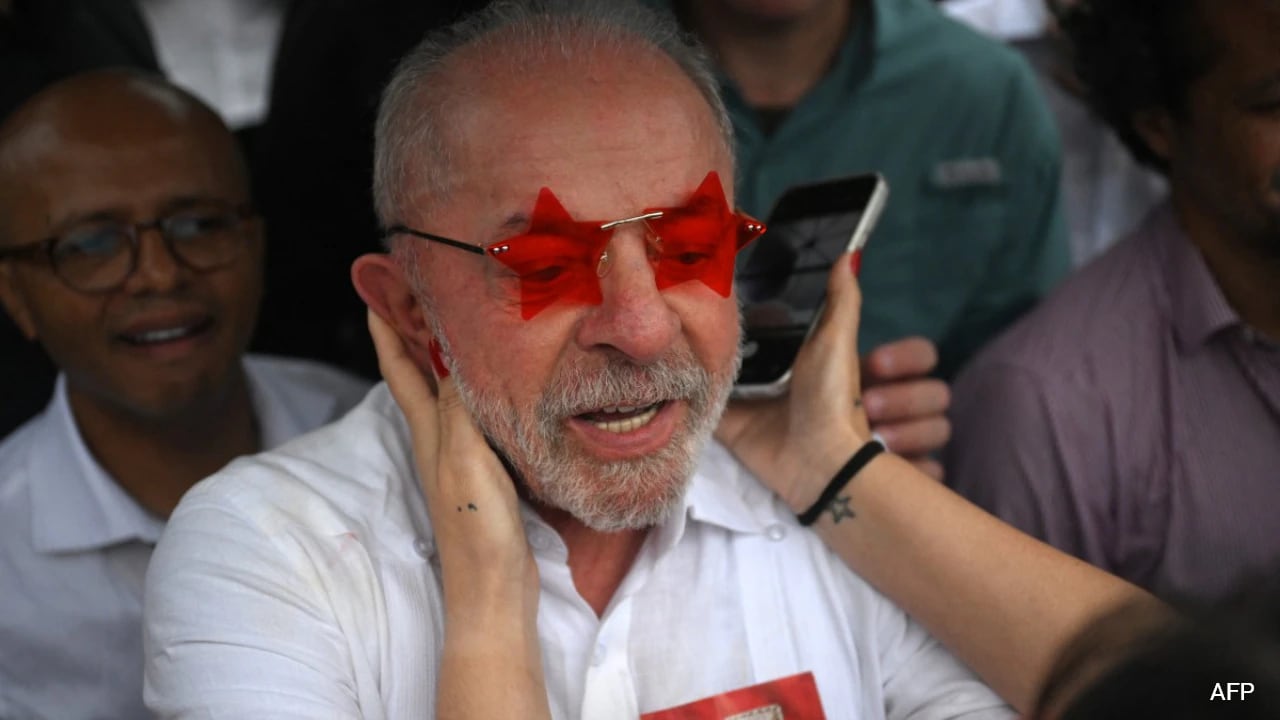
Mainstream commentary surrounding Luiz Inácio Lula da Silva's fourth term in office frequently frames the election outcome as a straightforward ideological clash between Brasília and Washington. Standard reporting relies heavily on surface-level rhetoric, characterizing the result primarily through the lens of Lula's public criticisms of Donald Trump. According to political analysts and international trade observers, reducing Brazil's 2026 electoral dynamics to a binary geopolitical rivalry misses the structural economic realities driving both nations.
When commentators treat diplomatic friction as permanent policy, they overlook how deeply integrated the Brazilian and American economies remain. In practice, foreign policy rhetoric during campaign cycles rarely dictates the daily mechanics of bilateral trade, commodity flows, or central bank coordination. Investors and corporate strategists who base capital allocation on headline-grabbing speeches often miscalculate the actual regulatory and commercial environment in South America's largest economy. For a different perspective, see: this related article.
The Illusion of Ideological Foreign Policy
Political scientists studying Latin American governance have long noted a sharp divide between domestic campaign messaging and international economic pragmatism. During his previous administrations, Lula frequently utilized assertive, multipolar rhetoric aimed at domestic constituencies and Global South partners. Simultaneously, however, Brazilian state institutions—including the Ministry of Finance and the Central Bank of Brazil—maintained orthodox macroeconomic frameworks designed to retain foreign institutional capital.
To understand Brazil's trajectory over the next four years, observers must separate political theater from institutional constraints. Brazil operates under a fragmented multiparty coalition system, commonly referred to as coalitional presidentialism (presidencialismo de coalizão). Under this framework, the executive branch cannot unilaterally overhaul trade policy or sever ties with major economic partners without negotiating with a largely conservative and centrist National Congress. Further analysis on the subject has been shared by The Guardian.
Consider the structural realities governing Brazil's international posture:
- Congressional Checks: The Brazilian Congress holds substantial budgetary and legislative authority, often dominated by the Centrão—a bloc of non-ideological, transactional parties focused on domestic fiscal allocations rather than international ideological alignment.
- Agribusiness Influence: The Parliamentary Agricultural Front (Frente Parlamentar da Agropecuária) wields immense lobbying power. Brazilian agribusiness relies heavily on predictable global trade rules, imported fertilizers, and open export markets across both North America and Asia.
- Institutional Autonomy: Since the enactment of central bank autonomy in 2021, monetary policy in Brasília operates independently of executive branch preferences, anchoring inflation expectations regardless of diplomatic tensions.
Why the "Trump vs. Lula" Framing Fails Investors
Media coverage centered on personal friction between leaders creates a distorted risk assessment for businesses operating in the Western Hemisphere. Trade economists point out that the United States and Brazil share complementary economic profiles that insulate bilateral commerce from political swings.
While China remains Brazil's largest overall trading partner—primarily driven by massive purchases of soybeans, iron ore, and crude oil—the United States occupies an irreplaceable position in Brazil's trade matrix. According to trade data compiled by Brazilian and U.S. commerce agencies, the U.S. is the primary destination for Brazilian manufactured and semi-manufactured goods, including aircraft, steel products, machinery, and refined petroleum derivatives.
| Trade Dimension | China-Brazil Relationship | U.S.-Brazil Relationship |
|---|---|---|
| Primary Brazilian Exports | Raw commodities (soybeans, iron ore, crude oil) | Value-added goods (aerospace, machinery, steel, coffee) |
| Investment Profile | Infrastructure, energy grids, extractive sectors | Manufacturing, technology, financial services, retail |
| Trade Balance Dynamic | Large Brazilian trade surplus | Consistent U.S. trade surplus with Brazil |
| Geopolitical Sensitivity | High alignment on multilateral forums (BRICS) | High institutional ties despite rhetorical friction |
Furthermore, the United States consistently runs a trade surplus with Brazil. In the context of U.S. trade policy—which historically scrutinizes bilateral deficits—Brazil's status as a net importer of American goods and services provides a significant buffer against broad punitive tariffs. Trade negotiators in both Washington and Brasília recognize that escalating commercial hostilities would directly harm U.S. exporters of aircraft parts, refined fuels, pharmaceuticals, and high-tech equipment.
Misconceptions About BRICS and De-Dollarization
A common narrative in financial commentary suggests that a fourth Lula administration will accelerate efforts to dismantle the U.S. dollar's dominance through the expanded BRICS bloc. While Lula has publicly advocated for settling bilateral trade in local currencies to reduce transaction costs and exchange-rate vulnerability, central bankers and monetary economists emphasize the practical limits of these proposals.
The mechanics of global currency markets present steep barriers to replacing the dollar in cross-border settlements:
- Liquidity and Convertibility: The Brazilian real and the currencies of several BRICS partners face capital controls, high volatility, or limited offshore liquidity compared to the U.S. dollar.
- Trade Asymmetries: When two nations have a heavily imbalanced trade relationship, settling in local currencies leaves the surplus country holding vast reserves of a partner's currency that cannot be easily deployed elsewhere.
- Private Sector Preference: Commercial banks, multinational corporations, and commodity traders overwhelmingly prefer dollar-denominated contracts due to deep hedging markets and established legal frameworks.
Economists at institutions such as the Peterson Institute for International Economics have consistently noted that discussions surrounding a common BRICS currency remain largely aspirational rather than operational. In reality, local-currency settlement mechanisms function primarily as niche liquidity facilities for specific bilateral transactions rather than a systemic threat to the dollar-based financial architecture.
Domestic Fiscal Reality Over Geopolitical Ambition
The defining constraint on Lula's fourth term is not foreign policy, nor is it ideological friction with Washington. It is Brazil's domestic fiscal arithmetic.
According to fiscal analyses from independent budget watchdogs and financial institutions, Brazil faces rigid mandatory spending requirements—including pension obligations, constitutionally mandated health and education floors, and social transfer programs—that consume the vast majority of federal revenue. Simultaneously, high real interest rates increase the cost of servicing public debt, leaving minimal discretionary room for grand geopolitical initiatives or state-led industrial subsidies.
When the executive branch attempts to expand public expenditure beyond market expectations, the reaction is immediate: the Brazilian real depreciates, long-term yield curves steepen, and inflation expectations rise. Because inflation directly erodes the purchasing power of lower-income voters—Lula's core electoral base—the administration faces relentless domestic pressure to maintain fiscal credibility.
This dynamic forces the government into a continuous balancing act:
- Revenue Generation: Rather than sweeping ideological nationalizations, the Ministry of Finance has focused heavily on tax reform, closing corporate loopholes, and broadening the tax base to meet primary budget targets.
- Privatization and Concessions: Despite historical skepticism toward privatization within the Workers' Party (Partido dos Trabalhadores), pragmatism has prevailed in infrastructure development, with the federal government relying extensively on public-private partnerships and concessions for highways, ports, and sanitation.
- Environmental Diplomacy: Amazon conservation and the energy transition serve as critical diplomatic bridges. Even when political rhetoric between Brasília and Washington cools, climate finance, green hydrogen development, and critical mineral supply chains create overlapping strategic interests for both administrations.
Navigating Nearshoring and Supply Chain Shifts
Another overlooked factor is how global supply chain restructuring positions Brazil—and Latin America more broadly—relative to North America. As U.S. policymakers seek to reduce reliance on Asian manufacturing hubs, supply chain diversification has become a bipartisan priority in Washington.
While Mexico captures the bulk of immediate nearshoring manufacturing investment due to the USMCA trade agreement and geographic proximity, Brazil holds immense reserves of critical minerals required for global electrification and defense technologies, including niobium, lithium, rare earth elements, and nickel.
American and European firms seeking to secure non-Chinese sources of critical minerals cannot afford to sideline Brazil. Conversely, Brasília seeks foreign capital and technical expertise to process these minerals domestically rather than merely exporting raw ore. This mutual dependence ensures that commercial diplomacy continues quietly beneath the surface of public political disagreements.
Evaluating Political Risk Without the Noise
For analysts, business leaders, and observers tracking South America's political trajectory, relying on surface-level ideological narratives leads to flawed conclusions. A nuanced assessment requires looking past campaign soundbites and examining institutional mechanics.
- Monitor the Finance Ministry and Central Bank: Policy direction in Brazil is dictated far more by fiscal targets, tax legislation, and Selic interest rate decisions than by presidential speeches at international summits.
- Track Congressional Coalitions: The composition and leadership of the Chamber of Deputies and the Federal Senate determine which economic reforms advance and which stall.
- Distinguish Bilateral Trade from Multilateral Rhetoric: Brazil's tradition of non-alignment—engaging simultaneously with the United States, China, the European Union, and Global South nations—has been a consistent pillar of the Ministry of Foreign Affairs (Itamaraty) for decades, spanning administrations across the political spectrum.
The Reality of Pragmatic Coexistence
Framing Lula's fourth term as an inevitable collision course with the United States mistakes political theater for statecraft. Brazil's democratic institutions, fiscal constraints, and deep commercial ties with North America impose strict boundaries on how far any administration can deviate from economic pragmatism.
Both Brasília and Washington operate within realities defined by trade interdependence, domestic economic pressures, and strategic resource needs. Recognizing that institutional mechanics outweigh rhetorical friction provides a far clearer lens for understanding where Brazil is actually headed.