Most people think Olympic breaking peaked—and died—in Paris two years ago. They couldn't be more wrong.
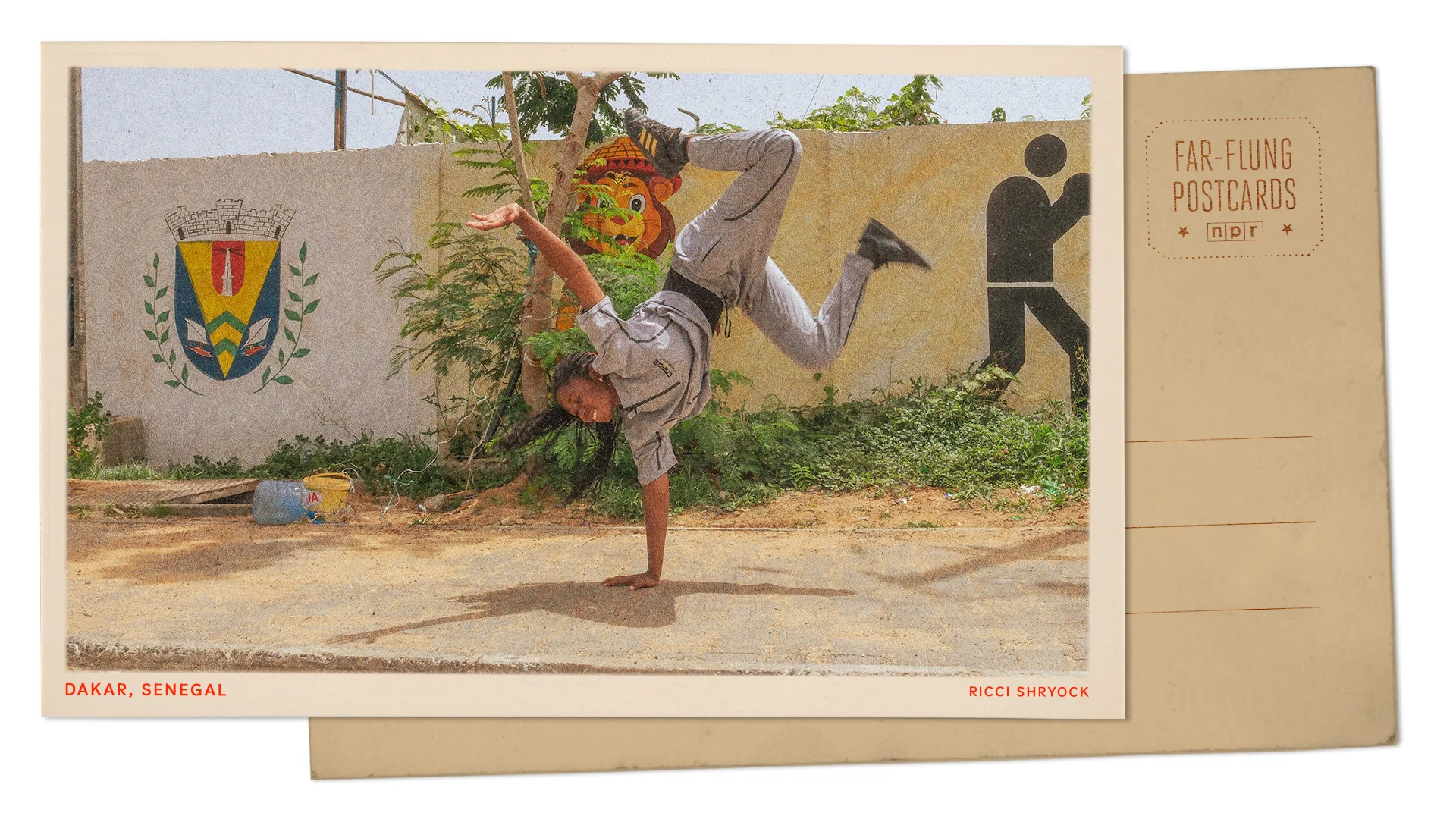
While mainstream sports media spent 2024 obsessing over viral memes and debating whether dance belongs on the Olympic stage, the real future of competitive breaking was quietly taking shape in West Africa. Dakar, Senegal, hosting the Youth Olympic Games, isn't just another stop on the International Olympic Committee's calendar. It's the first Olympic event ever held on African soil, and breaking sits right at the center of its cultural identity.
If you only watched breaking during the Paris Summer Games, you saw a heavily polished, tightly regulated television product. What's happening with the Youth Olympics in Dakar flips that script entirely.
The Youth Olympics Actually Invented Olympic Breaking
Here's a fact casual sports fans miss all the time. Paris 2024 wasn't breaking's Olympic debut.
That happened back in October 2018 at the Summer Youth Olympic Games in Buenos Aires, Argentina. Long before the World DanceSport Federation (WDSF) started organizing high-stakes adult qualifiers, teenagers were throwing down on concrete-style stages in front of packed South American crowds. It was raw. It was chaotic. And it worked so well that the IOC fast-tracked the sport onto the senior Olympic program just six years later.
I've followed competitive hip-hop and breaking circuits for over a decade, and the difference between junior battles and senior pro events is night and day. Older b-boys and b-girls often play the points system safely, conserving energy across multiple rounds to avoid making mistakes in front of judges. Teenagers competing at the Youth Olympic level don't calculate like that. They go for broke on every single throwdown because they haven't learned to fear losing yet.
In Buenos Aires, Russian b-boy Bumblebee (Sergei Chernyshev) and Japanese b-girl Ram (Ramu Kawai) walked away with the first-ever Olympic breaking gold medals. Their battles proved that a judging system built around musicality, originality, execution, technique, and performativity—the Trivium value system created by pioneers like Storm and Niels Robitzky—could translate street culture into an Olympic format without stripping away its soul.
Why Senegal Is the Ultimate Stage for Street Dance
Choosing Dakar as the host city for the Youth Olympics wasn't just a geopolitical milestone for the IOC. For breaking, it's a homecoming of sorts.
West Africa is the rhythmic DNA bank of global street dance. You can't trace the roots of hip-hop, locking, popping, or breaking without landing squarely in the musical traditions of Senegal, Mali, and the surrounding region. Sabar drumming, polyrhythmic footwork, and call-and-response circle dynamics—what breakers call the cypher—have existed in Senegalese street culture for centuries.
Think about what that does to the competitive environment.
When athletes compete in sterile European arenas, the crowd often sits quietly until someone lands a dramatic headspin or an airflare. They clap politely, almost like they're watching figure skating or gymnastics. In Dakar, the audience understands rhythm on a cellular level. If a b-girl hits a subtle freeze right on an off-beat snare drum, the crowd erupts. That energy forces competitors to ditch memorized, robotic routines and actually dance to the DJ's breaks.
Senegal also brings a massive, homegrown urban arts movement to the table. Dakar's hip-hop scene dates back to the late 1980s, spearheaded by pioneers like Positive Black Soul and Daara J. Breaking isn't an imported novelty there; local crews have been practicing on cardboard mats and tiled courtyards in neighborhoods like Pikine and Guédiawaye for decades.
How the Dakar Format Fixes What Went Wrong in Paris
Let's be honest about the 2024 Paris Olympics. While the battles at Place de la Concorde drew huge television ratings, the selection process left a sour taste in the mouths of purists.
Strict national quotas meant that several top-ranked breakers from powerhouse nations like Japan, the United States, and France were left sitting at home, while less experienced competitors from underrepresented continents filled out the 16-athlete brackets. When you put an amateur up against a three-time Red Bull BC One champion, the blowout doesn't help the sport grow. It just creates internet fodder.
The Youth Olympic model in Dakar avoids that trap through a completely different competitive structure.
Smaller Brackets, Higher Intensity
Instead of trying to force universal adult representation into a tiny bracket, Youth Olympic breaking focuses on genuine developmental parity. Athletes aged 15 to 18 come through regional continental qualifiers—the African Youth Games, European Youth Olympic Festival, and Pan American Junior events—where the talent gap between competitors is much narrower. Nobody is getting blown out by a 35-year-old veteran with twenty years of international touring experience.
Mixed-Gender Team Battles
This is honestly the best format in competitive dance, and the senior Olympics completely ignored it. At the Youth Olympics, individual b-boys and b-girls don't just battle solo; they get paired up—often across different nationalities—for mixed-gender two-on-two team battles.
Imagine a teenage b-boy from Senegal teaming up with a b-girl from South Korea, communicating entirely through body language and musical cues because they don't speak the same language. That's where breaking shines. Solo battles test athleticism and stamina, sure. Team battles test chemistry, spontaneity, and routine improvisation on the fly.
The DJ Is the Real Referee
In Dakar, competitors don't get to pick their own music. Never have, never will. A live DJ spins classic funk, soul, electro, and West African breaks on the spot. If a breaker spends six months rehearsing a specific power-move combo to a 115-BPM track, and the DJ suddenly drops a fast, syncopated 130-BPM Afrobeat rhythm, that athlete has to adapt instantly or look completely lost.
What Judges Actually Look For When Teenagers Battle
If you watch Youth Olympic breaking without knowing how the scoring works, the results can seem totally arbitrary. One kid does five consecutive windmills and loses to someone who barely left the floor. Why?
The WDSF judging panel uses a digital slider system based on five specific criteria, split across physical, artistic, and interpretive categories. Understanding these five pillars changes how you watch every round.
- Technique: This isn't just about doing hard tricks. Judges look at posture, body control, clean transitions between top-rock (standing dance) and footwork (floor dance), and how safely an athlete enters and exits freezes. Sloppy landings cost massive points.
- Variety: Repeating the same signature move in three straight rounds is a death sentence at this level. Breakers have to show depth across power moves, intricate thread-work, floor transitions, and dynamic freezes.
- Performativity: Confidence, stage presence, and how well the dancer commands the space. If you look terrified or stare at the floor while setting up a trick, you lose the mental battle before you even spin.
- Musicality: Arguably the hardest thing for young athletes to master. Does the dancer hit the accents in the music? Do they slow down when the beat drops out, or are they just rushing through a pre-planned gymnastics routine regardless of what's playing?
- Originality: Bite someone else's signature move, and the judges will crucify you. In breaking culture, stealing ("biting") is the ultimate sin. Youth competitors earn huge scores by inventing weird, personal transitions that nobody on the panel has ever seen before.
You can spot the difference between a gymnast trying to break and a real b-boy within ten seconds. The gymnast looks at the floor to spot their hands. The b-boy looks straight at their opponent, talking trash with their eyebrows while spinning on one elbow.
The Real Stakes Behind Los Angeles 2028 Snubbing Breaking
You can't talk about Dakar without addressing the elephant in the room. Breaking was famously dropped from the official sports program for the 2028 Summer Olympics in Los Angeles, replaced by sports like flag football, squash, and lacrosse.
Many casual observers assumed that meant Olympic breaking was dead and buried.
That's a total misunderstanding of how the IOC operates. Olympic program inclusion runs on four-year cycles driven heavily by host-city preferences, and LA28 organizers prioritized traditional American team sports and broadcast-friendly formats. Meanwhile, the IOC kept breaking squarely inside the Youth Olympic Games ecosystem in Senegal because youth engagement is the single biggest metric Olympic broadcasters care about.
Television audiences for traditional Olympic sports are aging rapidly. Gymnastics, track and field, and swimming still pull massive numbers, sure, but getting viewers under 25 to tune into linear broadcasts is getting harder every year. Breaking—alongside skateboarding, sport climbing, and 3x3 basketball—is the IOC's primary bridge to Gen Z and Gen Alpha audiences.
By anchoring breaking in Dakar, the Olympic movement gets two huge wins at once. First, it builds genuine grassroots infrastructure across Africa, giving young dancers in nations like Senegal, Nigeria, South Africa, and Morocco access to government sports funding, physiotherapy, and international travel visas they would never receive as independent street artists. Second, it keeps the competitive pipeline alive for a potential return at the 2032 Summer Olympics in Brisbane, Australia—a country with a surprisingly deep breaking scene of its own.
What Young Breakers Need to Know Right Now
If you're a young dancer, a coach, or a parent trying to figure out how the competitive breaking path actually works today, forget everything you saw in viral social media clips. The athletes making it onto Youth Olympic rosters aren't bedroom tricksters filming 15-second TikTok loops.
They train like hybrid decathletes.
A standard competition day involves surviving preliminary cypher rounds, knockout top-16 battles, quarterfinals, semifinals, and finals. By the time a b-girl reaches the gold medal match, she has performed anywhere from 15 to 20 high-intensity 45-second rounds in a single afternoon. Your lungs burn. Your wrists ache. Your shoulders feel like concrete.
Here's what actually separates the kids who qualify for international Youth Olympic stages from the ones who flame out in local prelims:
- Cardio conditioning under oxygen debt: Practicing power moves in isolation doesn't prepare you for round three of a tie-breaker battle. Top youth athletes run interval sprints—30 seconds all-out, 30 seconds rest—to simulate the exact heart-rate spikes of a live cypher.
- Deep musical literacy: You can't fake musicality. Serious competitors spend hours every week listening to classic 1970s breakbeats (James Brown, Incredible Bongo Band, Babe Ruth) alongside modern electronic and Afro-fusion tracks so they can predict where a song's drum break is going before it happens.
- Foundation over flash: Every single Youth Olympic medalist has bulletproof top-rock and six-step footwork. When your arms give out in the final round of the day, clean foundation keeps your score high while flashy tricksters crash onto the floor.
- Registration with national dance federations: You can't just show up to a Youth Olympic qualifier and sign your name on a clipboard. Athletes have to register through their country's official WDSF-affiliated national body, track regional ranking points, and pass standard anti-doping education modules well before qualification windows open.
Watch the battles coming out of Dakar closely. You won't see sanitized corporate choreography or nervous athletes playing it safe for television cameras. You'll see teenagers from five continents trading blows in the birthplace of rhythm, proving that breaking doesn't need the Summer Olympics to stay alive—the Olympics need breaking to stay relevant.