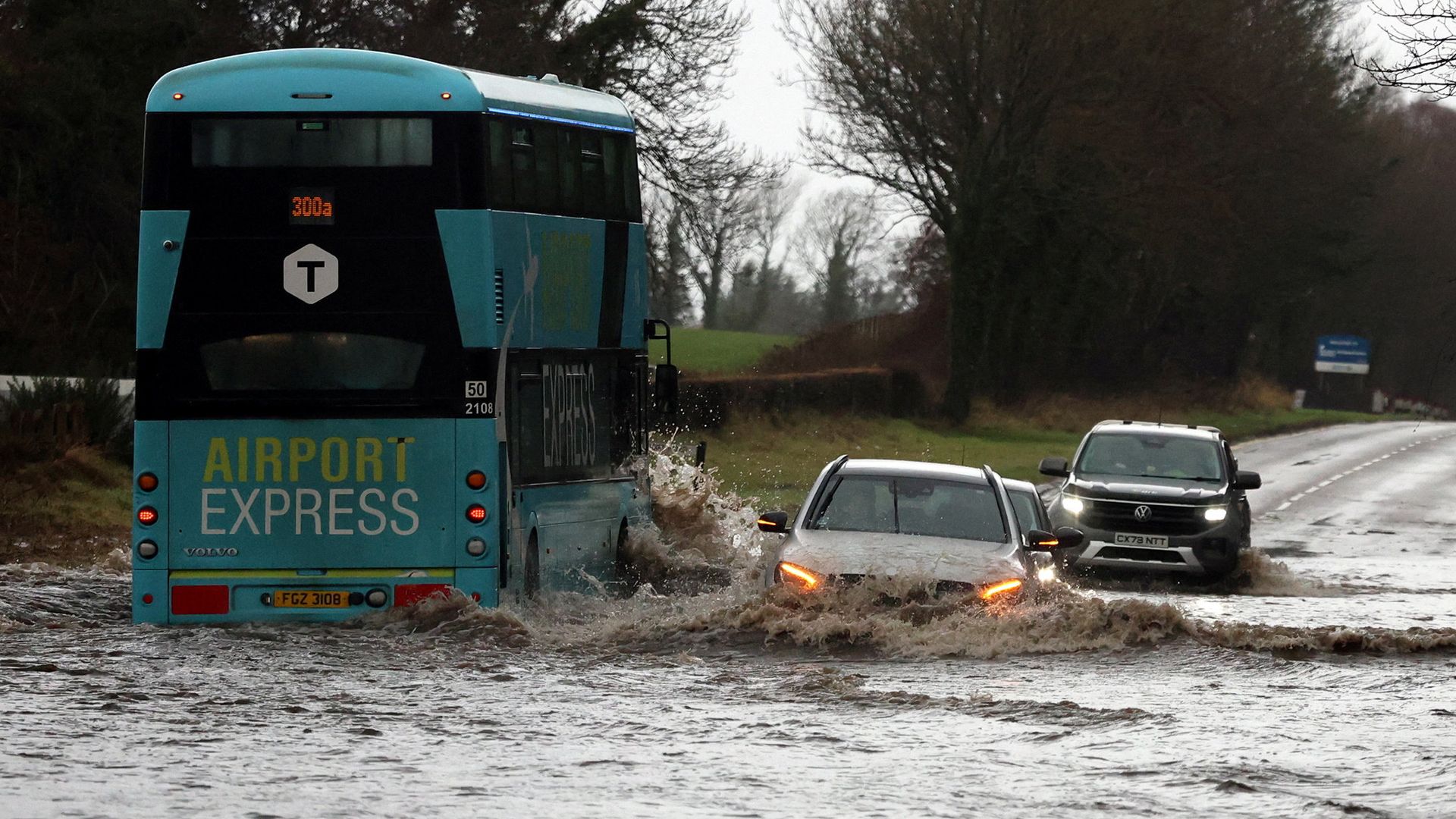
Britain has spent decades treating water management like a schizophrenic project. One month, emergency services are handing out sandbags to residents whose living rooms are underwater; the next, water companies are imposing hosepipe bans because reservoirs are cracking open in the sun. It is a completely broken way to run national infrastructure, and the government's decision to finally merge these twin threats under an expanded Flood and Drought Resilience Taskforce is long overdue.
When officials officially instructed the repurposed taskforce to start looking at drought alongside winter flooding, it marked an admission of what environmental scientists have screamed about for years: you cannot solve one without fixing the other. The ground does not care about administrative silos. When prolonged dry spells bake our soil solid, it loses its ability to absorb moisture. The moment a heavy autumn downpour hits that concrete-hard earth, the water has nowhere to go. It flash-floods streets, overwhelms antiquated Victorian sewers, and inundates homes, all while failing to replenish the deep groundwater tables we desperately need when summer rolls around again. You might also find this related coverage interesting: The Breath Before The Word.
The Reality of Water Whiplash
If you live in parts of southern and eastern England, you already know this whiplash firsthand. Take a look at the data from recent years. Britain experienced one of its wettest winters on record, only to pivot rapidly into severe dry spells and multiple heatwaves that forced large swaths of the country into official drought status.
The old playbook relied on treating these events as anomalies. That approach is completely dead. Climate shifts mean we are getting our annual rainfall delivered in shorter, more violent bursts, punctuated by scorching stretches that sap moisture straight out of the landscape. As reported in recent articles by TIME, the effects are widespread.
When the taskforce brings together more than fifty organizations—spanning the Met Office, the Environment Agency, local councils, farming unions, and water companies—the main challenge isn't a lack of brainpower. It is overcoming decades of institutional inertia. For generations, flood engineers built channels to rush rainwater out to sea as fast as humanly possible. Meanwhile, agricultural planners and water resource managers tried desperately to hoard every drop inland. Those two objectives fought each other on every river catchment in the country.
Why Fixing the Infrastructure Requires Rethinking the Ground
You cannot talk about resilience without looking at how property developers and local authorities handle surface water. Sustainable Drainage Systems, commonly known as SuDS, used to be treated as an optional checkbox on a planning application. Today, they are a frontline defense.
Forward-thinking projects are finally shifting toward holding water right where it falls. Instead of piping runoff straight into overwhelmed municipal drainage networks, modern site designs use permeable paving, retention basins, and rainwater harvesting to slow the flow. This keeps moisture in the local ecosystem, easing pressure on river networks during storms while maintaining soil moisture levels when dry weather returns.
Farmers are facing the sharpest end of this crisis. When abstraction licenses get restricted during dry summers, crop irrigation becomes a logistical nightmare. Recent government moves to streamline planning permissions for on-site agricultural reservoirs and provide dedicated resilience funding are steps in the right direction. Storing winter flood runoff in private agricultural reservoirs means farmers stop draining stressed rivers during a drought. It's a pragmatic loop that solves two problems with a single basin.
What Needs to Happen on the Ground Now
We need to stop waiting for central government committees to issue magic bullet strategies and look at practical, localized changes.
If you own property, manage commercial assets, or advise on local development, you need to audit your drainage assumptions immediately. Do not rely solely on historical flood maps compiled twenty years ago. Localized surface water flooding now hits areas that have never sat near a designated flood zone because baked urban and suburban soils cannot cope with sudden cloudbursts.
Property-level resilience has to become standard practice during any major renovation. Fitting non-return valves, raising electrical sockets above potential water lines, and installing smart water-storage systems shouldn't be reserved for houses that have already flooded. Insurance frameworks like Flood Back Better schemes are beginning to reward this kind of proactive hardening, but uptake needs to accelerate.
The newly expanded taskforce has plenty of meetings ahead of it, but policy papers won't stop the next flash flood or fill an empty reservoir. Real security comes from treating every drop of rain as a resource to be managed locally, stored intelligently, and respected before the next weather extreme hits.