The British press is currently patting Keir Starmer on the back for "restraint." They call it strategic patience. They call it resisting the "wider war." They are wrong. What we are witnessing isn't a masterclass in diplomacy; it is the managed decline of British maritime relevance disguised as high-minded caution.
The consensus is that by offering "help" in the Strait of Hormuz and the Red Sea without committing to a full-scale kinetic response against Iranian proxies, the UK is preventing an escalatory spiral. This is a fundamental misunderstanding of how power functions in a choked waterway. In the world of global shipping, there is no such thing as "partial security." You either control the lanes, or you are at the mercy of those who disrupt them.
By refusing to lead a decisive response, Starmer isn't avoiding a war. He is subsidizing one.
The Myth of the Neutral Strait
The current narrative suggests that the UK can "offer help" to secure trade while staying out of the messy business of regional conflict. This is a fantasy. I have spent years watching policy desks try to decouple trade security from geopolitical dominance. It never works.
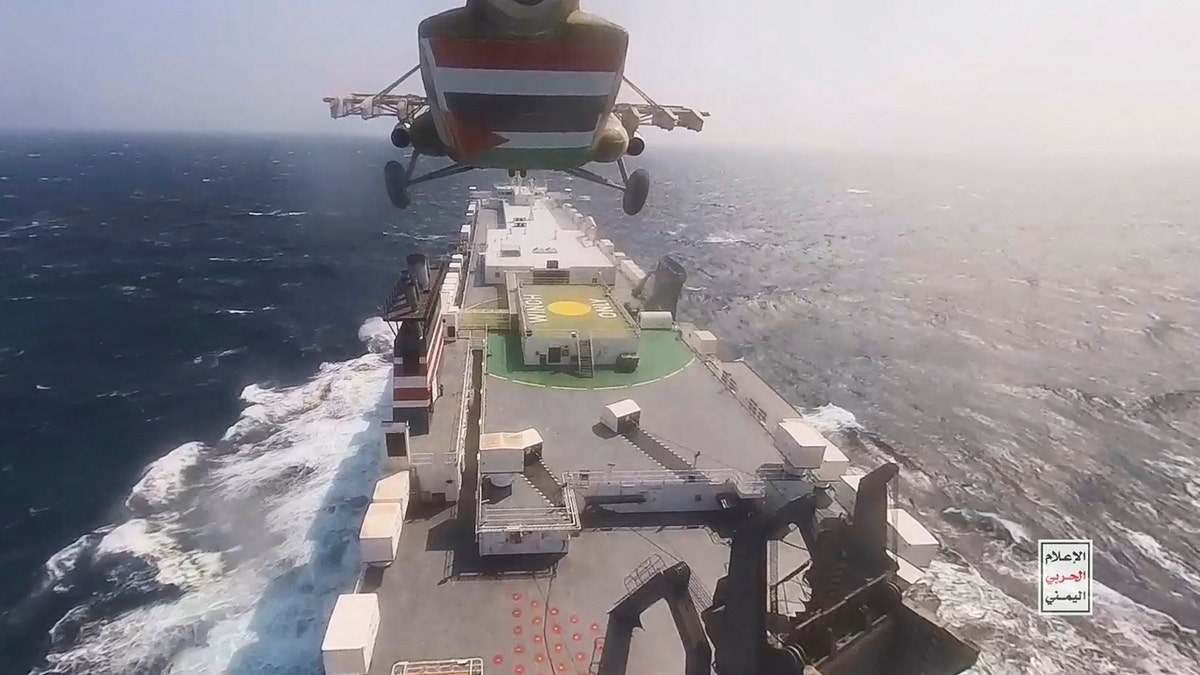
When a Houthis missile—supplied, tracked, and green-lit by Tehran—strikes a commercial vessel, the "escalation" has already happened. Remaining "drawn out" of the conflict is a euphemism for being paralyzed.
The Strait of Hormuz and the Bab el-Mandeb are not just lines on a map; they are the jugular veins of the UK economy. Approximately 12% of global trade passes through the Red Sea. When the UK oscillates on its military commitment, insurance premiums for shipping don't just "increase." They move into a territory of unviability.
Stop Asking if We Can Afford to Intervene
The "People Also Ask" section of the internet is currently obsessed with: "Can the UK afford another Middle Eastern war?"
This is the wrong question. The real question is: "Can the UK afford to lose its status as a guarantor of freedom of navigation?"
If the Royal Navy cannot protect British-linked hulls in the Red Sea, the UK ceases to be a global power and becomes a mid-sized island with a legacy fleet. For every day we "resist being drawn in," we send a signal to every regional actor that the cost of disruption is zero.
Insurance companies are the real barometers of this failure. Lloyd’s of London doesn't care about Starmer’s rhetoric. They care about the probability of a hull being breached by a drone that costs $20,000 to make but requires a $2 million Sea Viper missile to intercept.
The Attrition Trap
We are currently fighting a war of bad math.
- The Attacker: Uses cheap, mass-produced suicide drones and unguided rockets.
- The Defender: Uses high-end, limited-inventory interceptors.
By "offering help" instead of eliminating the source of the threat, we are consenting to a war of attrition we are guaranteed to lose. You don't win a fight by being a better punching bag. You win by breaking the arm of the person swinging.
The "De-escalation" Delusion
The competitor's piece suggests Starmer is focused on "de-escalation." Let’s dismantle that. In the Middle East, "de-escalation" is often interpreted by adversaries as "permission."
Iran is not looking for a way out of the tension; they are looking for the boundaries of Western endurance. Every time a UK official speaks about "avoiding wider conflict," the boundary moves ten miles closer to our shores.
I’ve seen this play out in boardrooms and backchannels for decades. If you show a competitor that you are terrified of a price war, they will cut prices until you go bankrupt. If you show a proxy state that you are terrified of a "wider war," they will keep the "narrow war" simmering until your economy bleeds out from energy price spikes.
The Economic Cost of Cowardice
The "lazy consensus" argues that military intervention is an unnecessary expense during a domestic budget crisis. This ignores the fact that a closed Red Sea is the single biggest driver of inflationary pressure outside of domestic policy.
- Fuel Costs: Diversion around the Cape of Good Hope adds 10-14 days to a journey. That isn't just a delay; it's a massive burn of bunker fuel.
- Inventory Decay: "Just-in-time" manufacturing dies when the "time" variable becomes a "maybe."
- Port Congestion: When ships arrive in clusters rather than a steady stream, UK ports seize up.
Starmer’s "restraint" is essentially a tax on every British consumer. You are paying for his "diplomacy" every time you fill up your car or buy goods that were supposed to arrive three weeks ago.
The Strategy of the Void
The UK is currently operating in a strategic void. We are too large to be ignored and too hesitant to be respected.
We talk about the "International Rules-Based Order" as if it’s a magical spell. It’s not. It is a set of rules enforced by the credible threat of violence. If you remove the threat, the rules are just suggestions.
The counter-intuitive truth? The fastest way to end the threat to the Strait is to make the cost of interference unbearable for the perpetrator. Not for the proxies—for the patrons.
The Reality of Naval Power
Let’s talk about the Royal Navy’s capability, because the "restraint" narrative often hides a darker truth: maybe we’re not resisting a war, maybe we’re just afraid we can’t win it.
We have two carriers, but we struggle to find the escorts to protect them and the sailors to man them. This lack of "mass" is what actually dictates our foreign policy. Starmer isn't being a statesman; he’s being a realist about a hollowed-out military. But admitting that would be political suicide, so we call it "strategic caution."
If we want to actually "help" on the Strait, we need more than a single Type 45 destroyer playing whack-a-mole with drones. We need a permanent, aggressive presence that doesn't just "escort" but "hunts."
The Pivot No One Admits
The UK is currently trying to pivot to the Indo-Pacific while its front door—the Mediterranean-Suez-Red Sea corridor—is being kicked in. You cannot project power in the South China Sea if you cannot guarantee safe passage through the Gulf of Aden.
The "Global Britain" project is failing not because of Brexit, but because of a lack of nerve. We are pretending that we can be a "force for good" through communiqués and aid packages. In the maritime domain, the only "force for good" is a ship that makes the enemy think twice before pushing the launch button.
The Actionable Alternative
If Starmer wanted to actually solve this, the playbook is simple but brutal:
- End the "Proxy" Distinction: Treat attacks by proxies as direct attacks by the sovereign state supplying them.
- Re-establish the Perimeter: Declare a zero-tolerance maritime exclusion zone. Anything that launches a projectile is neutralized at the point of origin, not the point of impact.
- Internalize the Cost: Stop using $2 million missiles to hit $20,000 drones. Use directed energy weapons and electronic warfare, and if you don't have them ready, buy them yesterday.
The Final Reckoning
The status quo is a slow-motion disaster. We are watching the sunset of British maritime influence because our leaders are more afraid of a headline about "escalation" than they are of the total erosion of our strategic standing.
"Restraint" in the face of piracy is just another word for surrender.
Stop listening to the pundits who say we are "avoiding a trap." The trap is already shut. We are in it. And every day we spend "offering help" instead of taking command, the walls get a little bit tighter.
Either we clear the lanes, or we get used to being a coastal nation that used to matter. There is no middle ground.