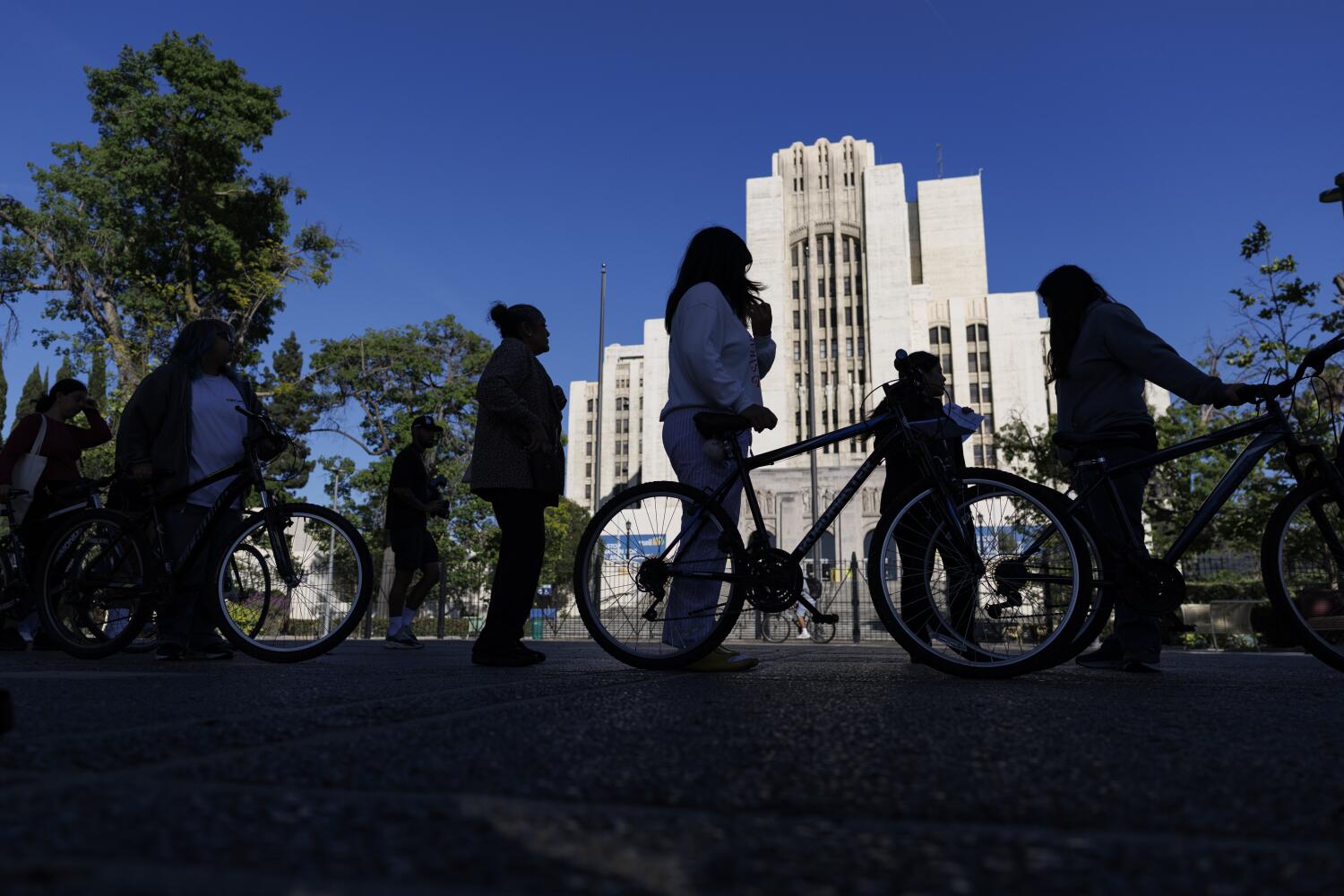
When a patient arrives at the Los Angeles General Medical Center in the back of an ambulance, the priority is survival. But for a specific subset of the city’s population, the trauma of the injury is immediately followed by a secondary, quieter loss. Their primary mode of transportation—the bicycle—is often left leaning against a curb or locked to a fading pole at the scene of an accident. If that bike actually makes it to the hospital grounds, it often enters a bureaucratic limbo where the wheels of recovery grind to a halt.
For the unhoused and the working poor of Boyle Heights and the surrounding neighborhoods, a bicycle is not a piece of exercise equipment. It is a lifeline. It is the difference between keeping a job and being fired for chronic lateness. It is the only way to reach a grocery store that sells something other than processed snacks. When these machines are abandoned during a medical crisis, the hospital becomes an accidental warehouse for the city’s most essential transit tools.
The current system for handling these "left behinds" is a mixture of improvised charity and rigid municipal code. While staff members occasionally try to reunite owners with their property, the sheer volume of trauma cases and the transience of the patient population mean that hundreds of bikes face the same fate: they are tagged, stored, and eventually slated for disposal.
The Mechanics of Loss
The pipeline from the street to the hospital storage room is rarely intentional. It begins with a 911 call. Paramedics are tasked with saving lives, not securing property. If a patient is conscious, they might beg a bystander to watch their bike. More often, the bike is tossed into the ambulance or picked up by a police cruiser and dropped at the hospital entrance.
Once on hospital property, the clock starts ticking. L.A. General operates under immense pressure. It is one of the busiest public hospitals in the country. The security teams who manage the grounds are not curators. They are enforcers of safety. When a bike sits for more than forty-eight hours without an owner checking out of the ER to claim it, it becomes a liability.
It is a problem of space and liability. Public facilities cannot simply hold onto thousands of dollars worth of mechanical property indefinitely. They lack the square footage and the tracking systems to match a frame number with a patient record, especially when many patients are admitted as "John Doe" or lack a permanent address for follow-up.
Why Retrieval Fails
Most patients who lose their bikes are dealing with catastrophic health events. Recovery takes weeks, not days. By the time a patient is ambulatory enough to ask about their property, the bike has often been moved to a central holding area or stripped by opportunistic thieves who know that hospital racks are prime targets.
- Identification Gaps: Most low-end bikes used for commuting lack registered serial numbers.
- Communication Breakdown: Medical staff focus on charts, not the contents of the security lock-up.
- The Mobility Trap: A patient discharged with a leg cast or a neurological deficit cannot physically ride their bike home, yet they have no way to transport it.
Salvage as a Social Service
The intervention usually comes from the basement or the back docks. Mechanics and volunteers have stepped into the vacuum left by policy. They see the rusted steel and bent rims not as junk, but as a path back to stability for someone who has just lost their health.
This isn't about shiny carbon fiber. The bikes being salvaged at L.A. General are the workhorses of the city—mountain bikes with slick tires, heavy steel frames from the nineties, and DIY motorized conversions. Repairing these machines is a gritty, utilitarian process. It involves cannibalizing parts from three broken units to make one functional vehicle that can withstand the potholes of Mission Road.
The Cost of a Clean Sweep
Periodically, the facility must purge its racks to maintain fire codes and walkway accessibility. In a standard municipal setting, this results in a trip to the scrap yard. The metal is melted down, and the utility is erased. For a patient who just spent ten days in a ward, walking out to an empty rack is a crushing blow to their independence. It forces them back onto a bus system that may not reach their workplace or keeps them tethered to a small radius around a shelter.
The "salvage" operation is an attempt to break this cycle. By refurbishing the bikes and holding them for a longer grace period—or donating them back to discharged patients who have lost everything—the hospital staff are practicing a form of "transit medicine."
The Policy Void
There is no formal California mandate that requires public hospitals to act as long-term bailees for personal transportation. This creates a patchwork of responses. At some private clinics, an abandoned bike is clipped and binned within twenty-four hours. At L.A. General, the scale of the need has forced a more empathetic, albeit unofficial, approach.
Critics argue that hospitals shouldn't be in the bike repair business. They point to the "scope creep" of social services, where medical facilities are increasingly burdened with fixing homelessness, food insecurity, and now, mechanical failure. However, the data suggests that social determinants of health are inseparable from medical outcomes. A patient who cannot get to their follow-up appointments because their bike was scrapped is a patient who will end up back in the ER within a month.
The Economic Reality of a $50 Bike:
- Replacement Cost: Two weeks of food for a family on SNAP.
- Work Impact: Loss of 10-15 hours of productivity due to increased commute time.
- Medical Impact: 40% higher likelihood of missing physical therapy sessions.
Rebuilding the Chain
A superior model would involve a formal partnership between the Department of Health Services and local transit non-profits. Instead of security guards wielding bolt cutters, the process should involve a digital "valet" system for any patient arriving with a vehicle.
Tagging a bike with a patient’s medical record number at the moment of intake would solve 90% of the identification issues. This isn't a high-tech solution; it requires a plastic zip-tie and a Sharpie. Yet, in the chaos of a Level 1 trauma center, these simple steps are often skipped.
The real work happens in the shadows of the hospital’s loading bays. There, the "bike doctors" work on their lunch breaks to true wheels and grease chains. They are fighting against a tide of urban indifference. Every bike they save represents a person who can still get to work, still visit their family, and still move through a city that is increasingly hostile to those without a car.
The struggle to keep these bikes in the hands of their owners is a microcosm of the larger fight for dignity in public healthcare. It is an admission that a person is more than their diagnosis, and their ability to move through the world is a vital sign that no monitor can track.
If the hospital can fix the body, it has a moral obligation not to destroy the means by which that body stays active and employed. The piles of discarded frames in the corner of a parking garage are not just trash; they are the ghosts of a thousand interrupted journeys.
Stop looking at the hospital as a destination and start seeing it as a junction. When the administration treats a bicycle with the same respect as a patient’s wallet or jewelry, the path to true recovery begins.
Establish a mandatory 30-day hold for all transport-related property and integrate property recovery into the discharge planning process.