The wind off the Yellow Sea carries a sharp, metallic bite in late autumn. It sweeps across the barbed wire of the demilitarized zone, rattling the concrete pillars that split a peninsula in two, and whispers through the dry stalks of abandoned rice paddies.
Min-jun knows that wind. He has felt it for thirty years.
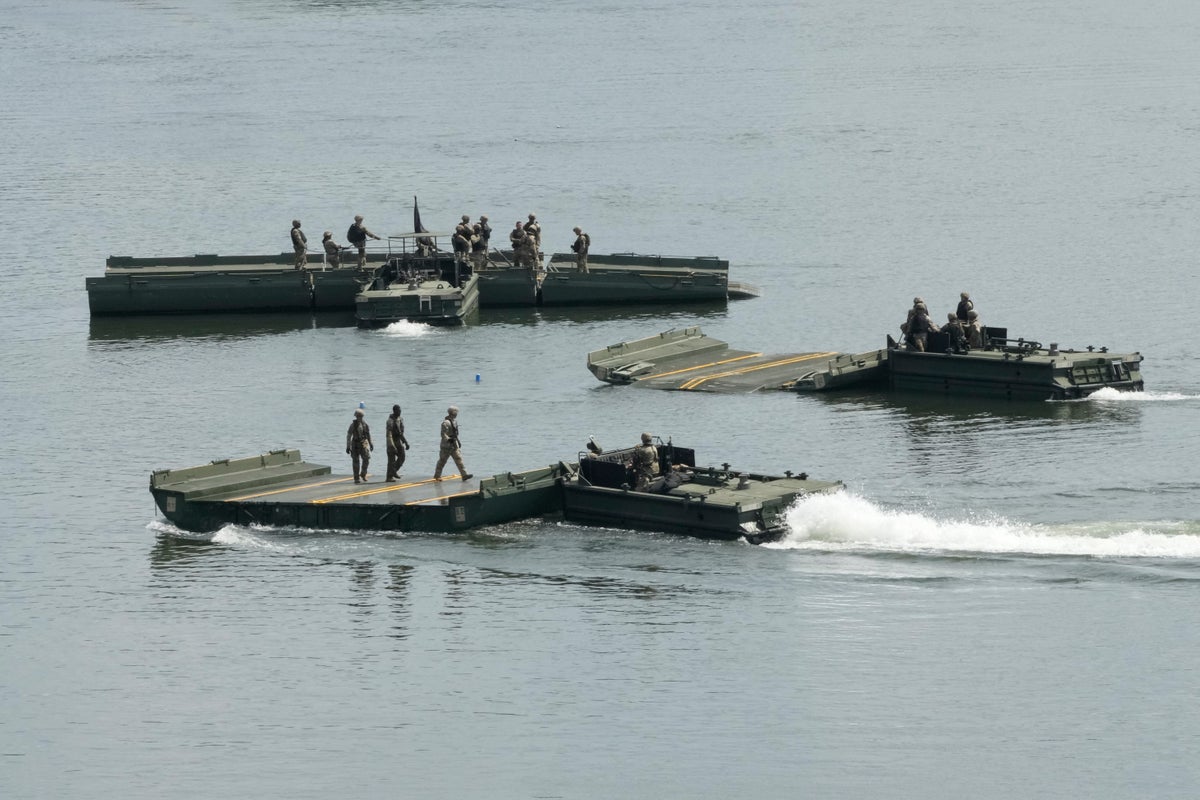
A retired master sergeant in the South Korean army, Min-jun spent his youth watching the horizon through heavy binoculars, waiting for an invasion that never came, praying it never would. He remembers the thunder of joint military exercises with the United States—the ground trembling beneath his boots, the roar of F-16s tearing open the sky, the sheer, crushing weight of steel and alliance. Those drills were supposed to be a shield. They were meant to send a message across the border, echoing off the granite peaks of North Korea: We are ready.
Today, that message is changing.
Washington and Seoul face a quiet, desperate calculus. For decades, the default response to Pyongyang’s nuclear ambitions has been escalation. More troops. Bigger exercises. Louder warnings. Yet, beneath the diplomatic surface, a new theory is taking root among strategists who look at maps the way doctors look at metastasizing tissue. The idea is simple, fragile, and deeply contentious: scale back the joint drills. Soften the footprint. Offer a concession to Pyongyang in the hope of prying Kim Jong Un’s fingers away from Beijing’s suffocating embrace.
It is a gamble. And it is almost certainly doomed.
To understand why, you have to abandon the sterile conference rooms of Washington think tanks and walk the streets of Dandong, right across the river from North Korea, where the neon signs of Chinese commerce bleed into the dark waters of the Yalu.
Here is what the strategists in suits often miss.
Kim Jong Un does not view the United States through the lens of a transactional trade deal. He does not wake up, look at a calendar of scaled-back military exercises, and think, Ah, the Americans have paused their amphibious landing practice; I think I will now sever ties with Beijing.
Geopolitics is not a neighborhood poker game where you fold a hand to make your opponent like you. It is gravity.
China is North Korea’s oxygen. Without Beijing’s oil, food, and illicit financial lifelines, the regime in Pyongyang would collapse under the weight of its own paranoia within a single fiscal quarter. Trade between the two neighbors accounts for the vast majority of North Korea’s external economy. Beijing provides the diplomatic umbrella that shields the Kim dynasty from the full wrath of United Nations Security Council resolutions.
To expect a reduction in allied military drills to break that bond is like asking a man to drop his only parachute because the wind outside has died down to a gentle breeze.
Consider what happens next when you offer a concession without a structural shift in power.
In Seoul, citizens watch the headlines with a weariness born of generational tension. They remember the summits of 2018—the handshakes, the smiles, the suspension of various military exercises meant to grease the wheels of denuclearization. What came of it? More tunnels. More missile tests. More miniaturized warheads designed to slip past regional defense shields.
When you scale back defensive readiness to appease an autocrat, you do not alter his strategic calculus. You merely validate his coercion. Pyongyang’s state media does not tell its citizens that the allies are showing goodwill. It broadcasts that the imperialists are buckling under the righteous might of the Juche ideology. Every pause is interpreted as retreat. Every olive branch is weaponized as proof of fear.
Min-jun sits in a small tea shop in Seoul now, watching a flat-screen television broadcast footage of a joint defense briefing. His hands, worn and calloused from decades of handling heavy ordnance, wrap around a ceramic cup of barley tea.
"They think peace is something you can buy off the shelf," he says softly, his eyes fixed on the moving ticker at the bottom of the screen. "You don't buy peace by hiding your weapons. You buy it by knowing how to use them so well that nobody dares test you."
He isn't speaking from political theory. He is speaking from the raw, lived reality of standing on the front line of an unresolved war.
The strategic trap is multifaceted. By trying to pull North Korea westward—or rather, away from China's orbit—Washington risks alienating its most critical democratic anchor in East Asia: Seoul and Tokyo. When the United States signals that it might unilaterally alter the tempo of defensive exercises to pursue a diplomatic mirage, alarm bells ring in allied capitals. If the shield becomes negotiable before the threat is dismantled, the entire architecture of regional deterrence begins to fracture.
South Korea needs reassurance, not experiments. Japan needs stability, not diplomatic theater.
Yet, the temptation persists. In foreign policy circles, there is an eternal, romantic urge to believe that every adversary is just a misunderstanding away from becoming a partner. We want to find the right key to unlock the iron door. We want to believe that a gesture of restraint will be met with a gesture of reform.
History laughs at that hope.
Look at the Yalu River again. Look at the freight trains rumbling across the bridge under the cover of night, loaded with coal and consumer goods, bypassing the international embargoes with impunity. Beijing knows the geopolitical value of its buffer state. A unified, democratic Korea allied with the United States on China’s northeastern border is Beijing’s ultimate nightmare. China will subsidize the Kim regime’s survival into the next century before it allows that to happen.
No amount of scaled-back tank maneuvers in Gyeonggi Province will change Beijing’s geographic imperatives. No cancellation of a computer-simulated command post exercise will convince Pyongyang to trade its nuclear deterrent—the ultimate insurance policy of the Kim family—for a vague promise of economic integration.
The danger of the scaling-back strategy is not just that it will fail to woo Kim away from China. The danger is that it leaves the allies half-prepared for a reality that has grown more lethal, not less.
While diplomats debate the psychological impact of reduced drills, North Korea’s laboratories are humming. Solid-fuel intercontinental ballistic missiles are rolling off assembly lines. Tactical nuclear units are being deployed near the border. Cyber syndicates are siphoning billions in cryptocurrency to fund the very programs designed to hold Seoul hostage.
The clock is not ticking in our favor.
As the sun dips below the jagged silhouette of the mountains surrounding Seoul, the neon lights of the city flicker to life, casting a vibrant, restless glow over millions of lives rushing through the evening commute. They laugh in restaurants. They crowd the subways. They live under the quiet, heavy shadow of history, trusting that the machinery of deterrence is still working, still watching, still holding the line.
The wind from the sea picks up again, rattling the glass of the tea shop window.
Min-jun pays his bill, pulls his woolen coat tight against the cold, and steps out into the night. He looks north, toward the dark hills where the wires hum and the soldiers wait. He knows, with the absolute certainty of a man who has spent a lifetime measuring the distance between illusion and survival, that peace is never found by lowering your guard.
It is kept only by those who have the courage to face the dark, eyes wide open, standing firm when the wind blows hardest.