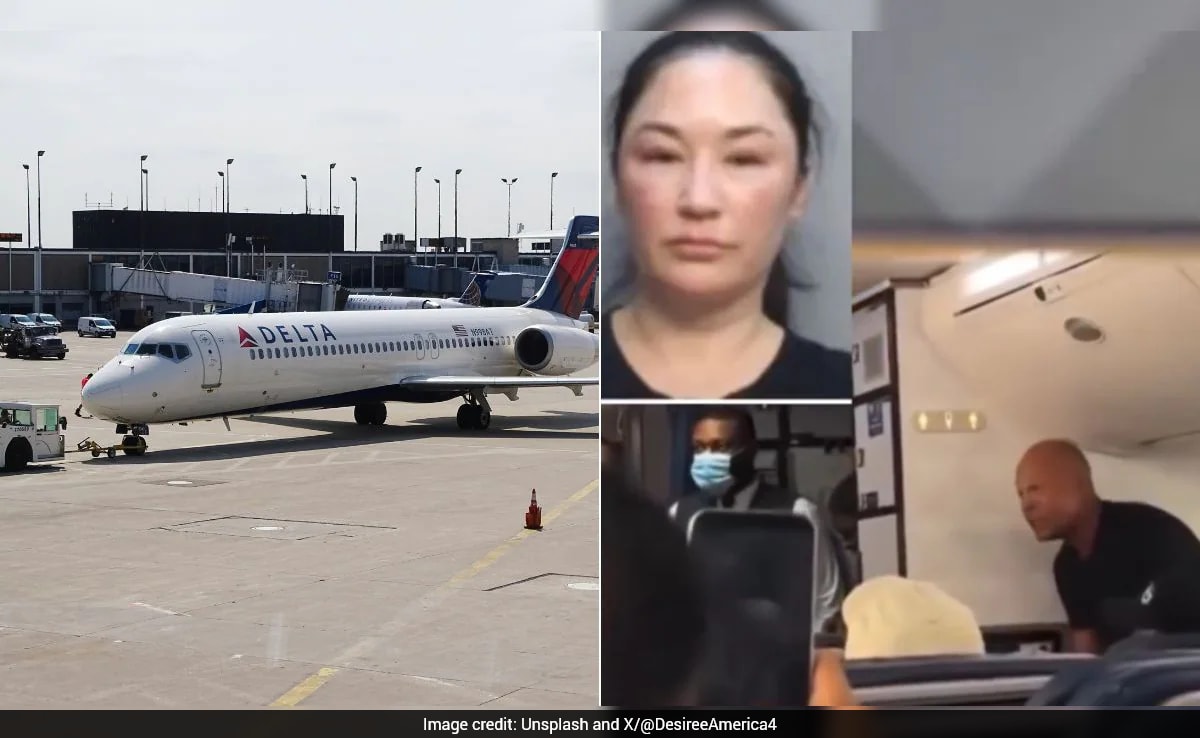
The viral footage follows a predictable, exhausting script. A passenger on a Delta Air Lines flight refuses to end a phone call as the aircraft prepares for departure. Flight attendants intervene, the situation escalates, and eventually, law enforcement marches onto the plane to remove the individual while fellow travelers cheer or film the meltdown on their own devices. While the internet treats these clips as cheap entertainment, the recent surge in "belligerent" passenger removals points to a systemic collapse in the unspoken agreement between carriers and the public.
This isn't just about a woman refusing to hang up her phone. It is about the friction between rigid post-9/11 federal safety mandates and a modern consumer base that views connectivity as a fundamental right rather than a privilege. When a passenger is arrested for failing to comply with crew instructions, the legal mechanism is clear-cut under 49 U.S.C. § 46504, which criminalizes interference with flight crew members. However, the industry is ignoring the underlying pressure cooker of the modern cabin environment that turns a simple request into a criminal referral.
The Myth of the Dangerous Signal
For decades, the Federal Communications Commission (FCC) and the Federal Aviation Administration (FAA) have maintained strict rules against cellular use during flight. The official reasoning often cites potential interference with ground networks and aircraft navigation systems.
The technical reality is far more nuanced. Modern avionics are heavily shielded. In Europe and other jurisdictions, the use of 5G and picocells on aircraft is becoming a standardized reality. The "interference" argument has largely shifted from a hardware concern to a human behavior concern. The FAA keeps these rules in place not because the plane will fall out of the sky, but because a cabin full of people shouting into their devices creates a chaotic environment that hinders a crew’s ability to maintain order during an emergency.
When a passenger refuses to hang up, they aren't just defying a technician; they are challenging the absolute authority of the Captain. In the eyes of the law, the moment the cabin door closes, the aircraft becomes a unique legal jurisdiction where "non-compliance" is a fast track to a federal record.
Why De-escalation is Failing
Airlines have invested millions in de-escalation training since the high-profile scandals of the late 2010s. Yet, we see more arrests, not fewer. The issue lies in the thin staffing levels and the "turn-and-burn" scheduling of modern domestic flights.
Flight attendants are tasked with being safety officers, janitors, and customer service reps simultaneously. When a passenger becomes confrontational over a phone call, the crew is trained to follow a specific "Internal Threat Level" protocol.
- Level 1: Disruptive behavior (suspicious or threatening).
- Level 2: Physically abusive behavior.
- Level 3: Life-threatening behavior.
- Level 4: Attempted or actual breach of the flight deck.
A phone call starts as a minor grievance, but the moment a passenger refuses a direct order, it is logged as a Level 1 threat. Once that box is checked, the crew’s primary objective shifts from "customer satisfaction" to "threat mitigation." There is very little room for nuance in a pre-takeoff checklist where every minute of delay costs the airline thousands of dollars in fuel and gate fees.
The Economic Cost of the Viral Meltdown
Every time a plane returns to the gate for an arrest, the financial ripples are massive. We are talking about:
- Fuel Burn: Airplanes are fueled based on weight and planned route. Taxis back to the gate and idling on the tarmac waste thousands of pounds of Jet A-1.
- Crew Timing: Federal law mandates strict rest periods. A one-hour delay caused by a belligerent passenger can "time out" a crew, forcing the airline to cancel the flight entirely if a backup crew isn't available.
- Downstream Delays: That aircraft is scheduled for four more flights that day. One arrest in Atlanta can cause a cancellation in Seattle six hours later.
Passengers who record these incidents often hope for a "payday" or viral fame, but they are witnessing a massive logistical failure. The airline industry’s reliance on law enforcement to solve customer service disputes is a sign that the current model of packing 180 people into a pressurized tube is reaching a breaking point.
The Legal Trap of the Cabin Door
Most travelers do not realize that their constitutional rights change the moment they step onto an aircraft. The "Contract of Carriage"—that massive document you check a box for when buying a ticket—grants the airline nearly total discretion to remove you for any behavior they deem "inimical to safety."
If a flight attendant tells you to put your phone away, and you refuse, you have technically interfered with their duties. It does not matter if the request seems arbitrary. It does not matter if you are on a "very important" business call. The legal precedent is lopsided in favor of the carrier. Judges rarely side with the passenger in these cases because the "safety of the flight" is a blanket defense that covers almost any crew action.
The Rise of the No-Fly List
While the government maintains a Terrorist Watchlist, major carriers like Delta, United, and American have started sharing their internal "banned" lists more aggressively. An arrest for a phone-related dispute doesn't just mean a night in jail; it can mean a lifetime ban from the world's largest airlines. There is no formal appeals process for a private company’s "No-Fly" list. Once you are flagged as a high-risk passenger, your ability to travel for work or family becomes a permanent logistical nightmare.
The Selective Outrage of the Flying Public
There is a dark irony in the way these videos are consumed. The public watches the "belligerent woman" with a mix of disgust and fascination, yet the same public complains about the erosion of legroom, the cost of Wi-Fi, and the general hostility of air travel.
The passenger who refuses to hang up is often the flashpoint for a larger, unaddressed frustration. We have commoditized air travel to the point where it is no longer a service, but a high-stress endurance test. When you strip away the dignity of the process, you shouldn't be surprised when passengers stop behaving with dignity.
This isn't an excuse for the behavior. It is an explanation of the climate. The "belligerent" passenger is a symptom of an industry that has prioritized "load factors" over human factors. As long as airlines continue to squeeze more bodies into smaller spaces while enforcing rigid, often outdated rules, the frequency of these viral arrests will only increase.
Rethinking the Pre-Flight Protocol
The current system relies on a "command and control" structure that dates back to the era of glamorized flight. It doesn't work in an age where every passenger is carrying a high-powered computer and a camera.
If airlines want to reduce these incidents, they need to address the "connectivity anxiety" that drives them. Some international carriers have solved this by offering gate-to-gate Wi-Fi that is active the moment you sit down. By providing a technical solution to the need for communication, they remove the friction point entirely. Delta and others are moving toward free Wi-Fi, but the transition is slow and the rules remain patchwork.
Until the FAA and airlines align their safety messaging with modern technical realities, we are stuck in a loop. The flight attendant will give an order. The passenger, emboldened by a sense of digital entitlement, will ignore it. The police will be called.
The next time you see a video of a passenger being led off a plane in handcuffs for a phone call, stop looking at the person and start looking at the system. We are participating in a multi-billion dollar game of chicken where the stakes are federal charges and the prize is getting to your destination on time.
Stop thinking of the cabin as a living room. It is a highly regulated, high-risk industrial environment where "customer is king" died twenty years ago. If you can't accept that the person in the polyester vest has the power to ruin your life over a 30-second phone call, you shouldn't be buying a ticket.