The air inside the boardroom always smells the same. Stale coffee, expensive wool, and the quiet, suffocating certainty of men who believe they own the world.
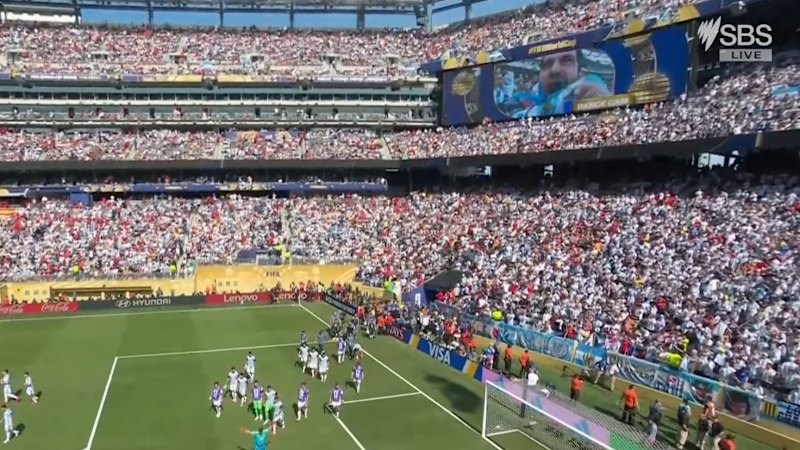
Outside, thousands of fans are singing. They are wet, cold, and entirely devoted to a sport that was never really about boardrooms. They have saved for months to travel across continents, sleeping in train stations and pouring their hearts into ninety minutes of frantic hope. Inside, the people running the show are checking their watches. They are calculating television rights, scheduling expanded tournaments that stretch players past the point of exhaustion, and plotting the next great financial harvest.
Then, a fracture appears.
Whispers turn into open threats. Rumours of a boycott ripple through European capitals. Associations that hold the beating heart of world football begin to ask a dangerous question. What happens if we simply walk away?
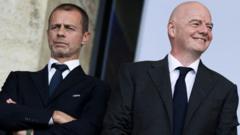
Gianni Infantino sits at the center of this gathering storm, smiling for the cameras while the ground shifts beneath his feet.
To understand how global football reached this precipice, we have to look past the official press releases. We have to look at the tension between the grassroots soul of the sport and the corporate machine that feeds on it. For decades, FIFA operated as a sprawling, bloated bureaucracy. It was a kingdom unto itself, largely insulated from the messy realities of the fans who filled the stadiums. When Infantino took the helm, the promise was modernization. More transparency. More inclusivity. More football for everyone.
Instead, what followed was an relentless expansion.
Consider the sheer scale of the new tournament formats. The expanded Club World Cup. The ballooned World Cup brackets featuring forty-eight teams. On paper, it sounds democratic. More nations get a seat at the major table. More children in emerging footballing regions get to watch their heroes on the global stage. But physics does not care about marketing metrics. Human bodies have limits. Players are already collapsing under the weight of fifty, sixty, even seventy matches a year.
Imagine a professional athlete standing in the tunnel before a match, legs heavy with lactic acid, mind foggy from lack of sleep. They are not thinking about the global reach of the brand. They are wondering if their hamstring will hold for another ninety minutes.
This is where the corporate ambition of FIFA collides violently with the physical reality of the sport. And it is where UEFA steps into the frame.
UEFA represents the historic powerhouse of European club and international football. It commands the television markets, the legendary stadiums, and the vast majority of the world's elite talent. When the governing body of European football starts murmuring about a boycott, the earth moves. It is not merely a political disagreement over tournament scheduling; it is a battle for absolute supremacy over the global calendar.
Power hates a vacuum. And when one institution stretches its reach too far, rival centers of gravity pull back with terrifying force.
The conflict exposes a deeper vulnerability. Is Infantino finished? That is the headline everyone wants to scream from the rooftops. But the reality is far more complex than a simple political defenestration. Leaders of massive global organizations rarely fall overnight. They are protected by alliances, complex voting blocs, and the inertia of institutional bureaucracy. Yet, authority erodes from the inside out long before anyone announces a resignation.
When major federations begin to leak their discontent to the press, the writing is on the wall. Trust is the only currency that truly matters at this level. Once it evaporates, every vote becomes a negotiation, and every public appearance feels like a campaign stop in hostile territory.
Let us step back and look at the historical pattern. Whenever sports governance becomes too detached from its cultural roots, a violent correction follows. We saw it with the failed European Super League breakaway—an arrogant attempt by elite clubs to carve out their own insulated empire, which collapsed within forty-eight hours under the fierce wrath of public outcry. Fans made it abundantly clear: the game belongs to the people who live and breathe it, not the accountants who ledger its balance sheets.
The current friction between FIFA and UEFA carries a similar DNA, though the battle lines are drawn between different factions of the elite. On one side, a global expansionist vision that chases new markets and untapped revenue streams. On the other, a traditional stronghold defending its calendar, its player welfare, and its historical dominance.
Meanwhile, the fan sits in the middle, bewildered and exhausted.
We watch matches not because we care about executive compensation packages, but because of the magic of an unexpected goal in the ninety-fourth minute. We watch for the underdog story, the collective gasp of a stadium, the tears of joy on a child's face. When the administrators turn the sport into an endless, grinding content machine, that magic begins to dilute. You cannot mass-produce passion. Eventually, the consumer chokes on the volume.
What happens now?
The chess pieces are moving in the dark. Backroom meetings in Zurich and Nyon. Legal teams reviewing statutes. Broadcasters biting their nails over multi-billion-dollar contracts that suddenly look vulnerable. If a boycott actually materializes—even in part—it would shatter the modern footballing landscape beyond recognition. It would force a fundamental reckoning about who holds the ultimate authority over the world's most popular game.
Will Infantino survive? Probably, for a time. Bureaucrats are remarkably resilient creatures, cocooned in layers of procedure and political maneuvering. But survival is not the same as victory.
A crown can remain on a king's head even as the kingdom burns around him. And as the distant roar of the stadium fades into the cold night air, the people watching from the outside are left wondering if there will be anything left worth fighting for by the time the dust finally settles.