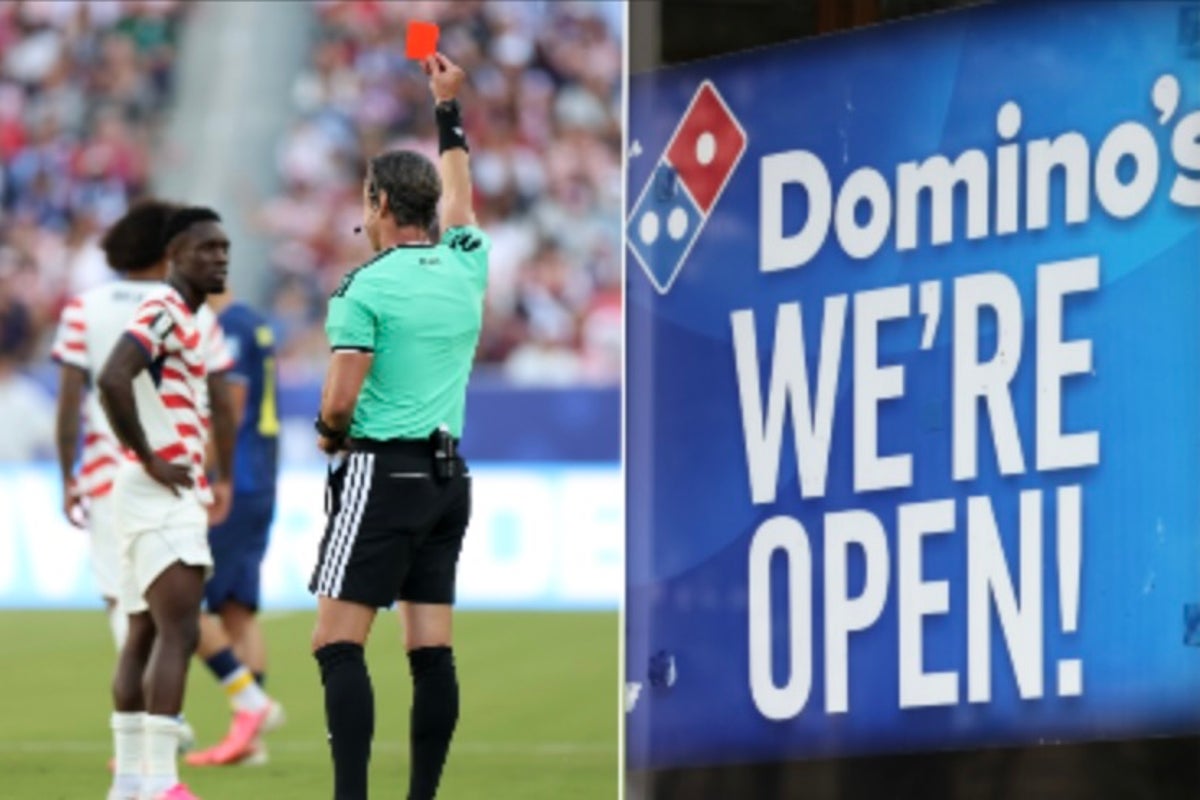
When a referee flashes a red card against the US Men’s National Team during a high-stakes World Cup match, the immediate reaction in millions of American living rooms is a mix of fury and despair. Within minutes, Domino’s Pizza attempts to hijack that exact emotional valley by dropping promotional discounts and "coping" comfort food campaigns directly into your social feeds. This is not accidental comfort; it is cold, calculated situational marketing designed to exploit real-time consumer distress for a spike in digital order volume. Corporate fast-food giants no longer wait for scheduled commercial slots. They actively track live athletic failures, ready to weaponize your disappointment before the whistle blows.
The strategy relies on a psychological vulnerability known as compensatory consumption. When a fan's team loses, or suffers a devastating penalty, their self-esteem takes a temporary hit. They seek immediate gratification to offset the negative emotion. Fast-food brands understand this impulse perfectly. By positioning a hot pizza as a coping mechanism for a red card, a brand transforms a national sports tragedy into a highly profitable sales driver.
The Anatomy of Real-Time Grief Hijacking
Modern fast-food marketing departments operate like war rooms during major sporting events. They do not look at the game as entertainment. They view it as a series of data points and emotional pivots.
A red card is a goldmine. It creates an instant, collective conversation on platforms like X, Instagram, and TikTok. Millions of users check their phones to vent, complain, or check the replay. This sudden surge in screen time is the precise moment a brand needs to strike. By injecting a pre-packaged corporate empathy campaign into the feed—offering a cheap pizza to "heal the pain"—the brand achieves a level of organic visibility that a traditional television ad could never buy.
The operational side of this execution is brutal. Teams of social media managers, legal clearance experts, and graphic designers sit with pre-approved templates. If a player gets sent off, the campaign goes live in under ninety seconds.
The Cost of Digital Attention
Buying a standard thirty-second advertisement during a World Cup broadcast costs millions of dollars. Conversely, running a real-time reactive social campaign costs next to nothing in overhead. The return on investment is massive.
- Organic Reach: Social algorithms favor rapid engagement. A timely joke or promotional offer about a controversial referee decision gains thousands of retweets and shares instantly.
- App Downloads: To claim a "red card discount," consumers almost always have to download the brand's proprietary mobile app. This hands the company permanent access to the user's location data and push notifications.
- First-Party Data: The primary goal of modern fast-food marketing is not selling a single pizza today; it is capturing your data to sell you a thousand pizzas over the next decade.
Why Fast Food Solves the Fan Crisis
Alcohol and high-calorie food are the historical default settings for sports-induced misery. Fast-food corporations have spent the last decade shifting their infrastructure to capitalize on the exact moment you decide to give up on your diet out of pure frustration.
The logistics must be flawless. If a consumer is upset about a soccer match, the friction between wanting a pizza and receiving that pizza must be non-existent. This is why companies like Domino's have invested billions in their digital ordering architecture, creating one-click ordering systems, GPS delivery tracking, and automated loyalty rewards.
Consider a hypothetical scenario where the US team loses a defender in the 30th minute of a crucial match. The fan recognizes the game is likely over. The emotional investment drains away, replaced by hunger and a desire for comfort. If the brand can place an ad in front of that fan within two minutes of the red card, the probability of an immediate order triples. It bypasses the rational decision-making process entirely.
The Micro-Moments of Defeat
Marketers categorize these events as micro-moments. They are intent-rich pockets of time where a consumer acts on a sudden need. In sports, these moments are intensely predictable despite the random nature of the games.
| Event Type | Consumer Emotion | Brand Action |
|---|---|---|
| Red Card / Penalty | Anger, Disbelief | Immediate discount code via push notification |
| Blowing a Late Lead | Anxiety, Exhaustion | Free delivery offers to keep fans on the couch |
| Tournament Elimination | Apathy, Sadness | Long-term loyalty point boosts for "recovery" |
The Backlash of Corporate Empathy
There is a fine line between a clever marketing pivot and naked cynicism. When corporate brands attempt to mimic human empathy, consumers occasionally push back. A tweet telling you to buy garlic knots because your favorite player just tore an ACL can easily feel opportunistic and hollow.
The risk of a public relations misfire is exceptionally high during international tournaments. National pride is on the line. Fans are highly sensitive to perceived mockery, even from brands they use regularly. If a corporate account comes across as mocking the national team's failure rather than commiserating with the fans, the campaign backfires completely, leading to boycotted apps and negative brand sentiment.
Furthermore, the reliance on discounting during high-profile events can erode a brand's pricing power over time. If consumers learn that a red card or a loss guarantees a half-price pizza, they will stop buying those pizzas at full retail value. They become trained to wait for failure.
The Future of Trauma Marketing
As artificial intelligence and predictive analytics become standard tools in corporate marketing suites, the speed of these campaigns will accelerate. We are moving toward an era where predictive algorithms will analyze game data in real time, calculating the exact probability of an event happening before it occurs on screen.
If a star player receives a yellow card early in the first half, the system will automatically prepare a specific discount tier based on the likelihood of that player receiving a second yellow later in the match. The human element of the marketing war room will be phased out completely, replaced by automated bidding systems that purchase ad space on social networks the exact millisecond a referee reaches for his back pocket.
This hyper-targeted approach turns the sports viewing experience into a psychological trap. You are no longer just a fan watching a game. You are a biological metric being monitored for the exact moment your emotional defenses drop low enough to buy a pizza.
The next time the referee pulls out a red card and derails the national team's hopes, look at your phone. Watch how quickly the notification appears. Realize that your frustration was budgeted for, designed around, and monetized months before the tournament even began. Turn off the screen and cook something at home.