The diplomatic signals emerging from Beirut suggest a desperate pivot. For the first time since the cross-border exchanges ignited in October 2023, Hezbollah officials have publicly decoupled a potential ceasefire in Lebanon from the ongoing slaughter in Gaza. This shift is not a gesture of goodwill. It is a survival mechanism triggered by a systematic dismantling of the group’s leadership and infrastructure. While the international community clings to the hope of a diplomatic off-ramp, the reality on the ground points toward a massive escalation. Israel is not looking for a return to the status quo; it is moving to permanently alter the security architecture of the Levant.
The Breakdown of the Gaza Linkage
For a year, the political logic was rigid. Naim Qassem, Hezbollah’s remaining public face, repeatedly tethered the northern front to the southern one. The mantra was simple: no peace in Galilee without a permanent end to the war in Gaza. That red line has dissolved. The change in rhetoric reflects a organization struggling to maintain internal cohesion under the weight of "targeted decapitation" strikes and the compromise of its most secure communication networks.
The "unity of arenas" strategy, once a cornerstone of the Iranian-led regional alliance, has met its limit. When the pagers and radios began exploding across Lebanon, the psychological barrier broke. Hezbollah is now fighting an existential battle for its own backyard, and the luxury of demanding terms for Hamas has vanished. This isn't a diplomatic breakthrough; it is a tactical retreat under fire.
Why Israel is Doubling Down
Jerusalem is viewing these ceasefire hints with profound skepticism. In the halls of the Kiryat military headquarters, the prevailing sentiment is that Hezbollah is merely "buying time." The Israeli Air Force has spent weeks mapping and neutralizing mid-level commanders who were supposed to lead the defense against a ground incursion. To stop now, from the Israeli perspective, would be to leave the job half-finished.
The objective has moved beyond deterrence. The Israeli government is under immense domestic pressure to return 60,000 displaced citizens to their homes in the north. A signed paper in Beirut does not achieve that. Only the physical removal of the Radwan Force—Hezbollah's elite offensive unit—from the border region will suffice. The military is currently widening its target bank to include social and financial institutions linked to the group, aiming to drain the "sea" in which the "fish" swim.
The Decapitation Strategy and the Power Vacuum
The sheer speed of the leadership purge has left the group’s political wing in a state of paralysis. When Hassan Nasrallah was killed in the heart of Dahiyeh, it wasn't just a loss of a leader; it was the destruction of the central nervous system. His presumed successors followed him into the grave shortly after. This leaves a vacuum that the Lebanese state is too weak to fill and that Iran is struggling to manage.
Tehran finds itself in a precarious position. If it pushes Hezbollah to fight to the last man, it risks losing its most valuable regional proxy and its primary insurance policy against a direct attack on its nuclear facilities. If it encourages a full surrender, its credibility as the leader of the "Resistance" evaporates. The current "hinting" at a ceasefire is likely a maneuver sanctioned by Tehran to preserve what remains of the group’s long-range missile arsenal.
The Lebanon Armed Forces Paradox
Western diplomats frequently point to the Lebanese Armed Forces (LAF) as the solution. The theory is that the LAF could move south of the Litani River, enforcing UN Resolution 1701 and ensuring no armed groups remain near the border. It sounds plausible in a briefing room in Washington or Paris. On the ground, it is a fantasy.
The LAF is underfunded, overstretched, and, most importantly, contains a demographic makeup that mirrors the country. Asking the Lebanese army to forcibly disarm Hezbollah is a recipe for a new civil war—an outcome the military leadership will avoid at all costs. Any ceasefire that relies on the LAF to police a weakened Hezbollah is built on sand. Israel knows this, which is why the current bombing campaign is targeting the very tunnels and bunkers that any future peacekeeping force would be unable or unwilling to find.
The Intelligence Gap and the Invisible War
While the kinetic strikes make the headlines, the invisible war is what truly crippled the group. The penetration of Hezbollah’s internal security was total. It wasn't just electronic; it was human. The paranoia currently ripping through the ranks is as effective as any 2,000-pound bomb. Commanders are afraid to use phones, afraid to meet in person, and afraid of their own subordinates.
This internal collapse is what necessitated the ceasefire talk. When you cannot communicate with your front-line units, you cannot coordinate a defense. Israel is exploiting this window of total confusion to push deeper into the border villages, destroying the sophisticated infrastructure built over the last eighteen years. They are quite literally digging up the hillsides to ensure that if a ceasefire does happen, there is nothing left to return to.
The Miscalculation of Attrition
There is a dangerous assumption that Hezbollah can be bombed into becoming a purely political party. This ignores the historical DNA of the movement. Hezbollah thrives on the narrative of martyrdom and resistance. While their technical capabilities are currently degraded, their ideological hold over a significant portion of the Lebanese population remains intact.
The danger for Israel is the "victory trap." By pushing too hard and causing massive civilian displacement—now totaling over a million people—they risk radicalizing a new generation and unifying a fractured Lebanese public against an external "aggressor." War is rarely a linear progression of destroyed targets. It is a chaotic feedback loop of human emotion and political necessity.
The Washington Factor
The Biden administration is racing against a ticking clock, desperate for a foreign policy win before the November elections. The American envoys are cycling through the region, trying to stitch together a deal that looks like a victory for everyone. But the leverage is lopsided. Israel feels it has a green light as long as it avoids a direct, prolonged occupation of Beirut. Hezbollah feels it has its back against the wall.
The U.S. is pushing for a "1701 Plus" agreement—an updated version of the 2006 resolution with actual enforcement mechanisms. The problem is that "enforcement" usually requires someone willing to shoot, and nobody in the international community has the stomach to put boots on the ground to fight Hezbollah.
The Ground Reality of the Border Zone
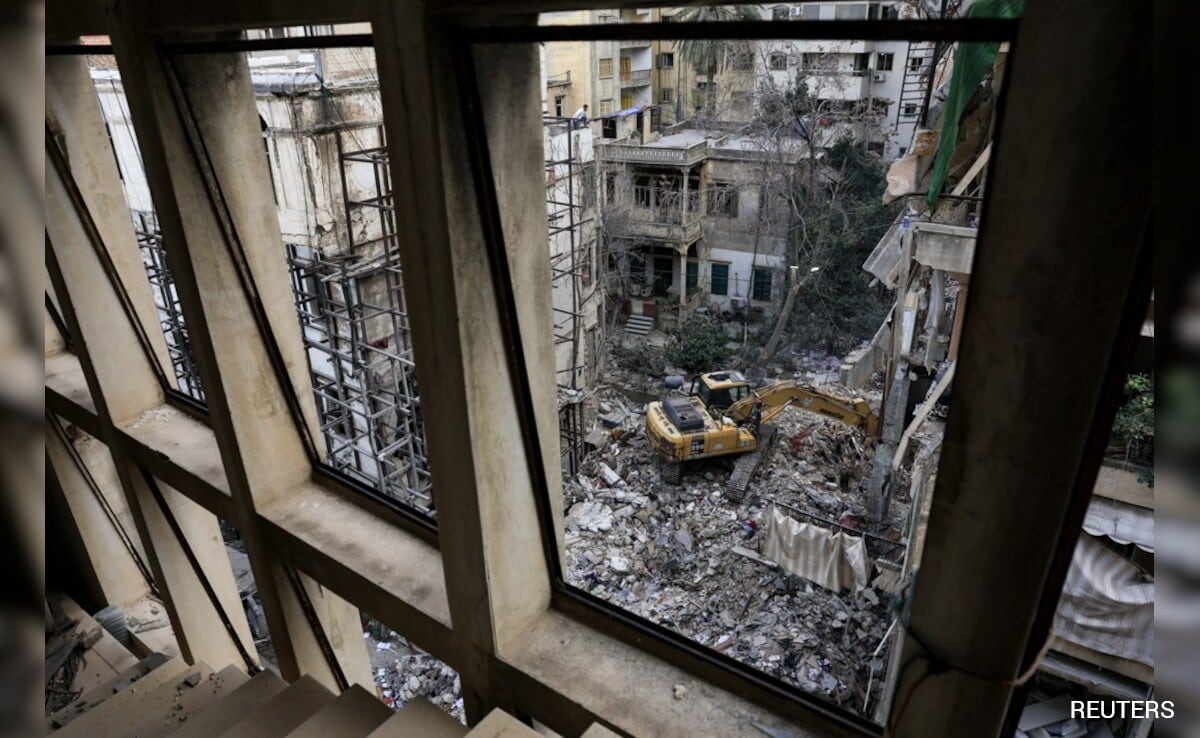
Driving through the border towns, the scale of destruction tells the real story. This isn't a skirmish; it's a fundamental reshaping of the geography. Entire neighborhoods that served as logistical hubs for the Radwan Force are being leveled. Israel is creating a "buffer zone" through fire, regardless of whether one is officially declared on a map.
This scorched-earth approach serves two purposes. First, it removes the immediate threat of a cross-border raid. Second, it sends a clear message to the Lebanese state: the cost of hosting an Iranian-backed militia is the total loss of your southern territory. It is a brutal, high-stakes gamble that assumes the group will break before the region explodes.
The Iranian Dilemma
As Israel ramps up attacks, the eyes of the world are on the skies over Iran. The missile exchange in early October signaled that the "shadow war" is over. If Israel continues to grind Hezbollah into the dust, Iran may feel compelled to intervene again to save its investment. However, the destruction of Hezbollah’s air defenses and the decimation of its leadership means that Iran’s "forward base" is currently offline.
Tehran is realizing that its primary deterrent has been neutralized. This makes the regime more dangerous, not less. When conventional proxies fail, the temptation to move toward a "breakout" capability in the nuclear realm increases. The ceasefire in Lebanon is therefore not just about the border; it’s about the entire balance of power in the Middle East.
The Missing Piece of the Puzzle
What the competitor reports often miss is the role of the Lebanese civilian opposition. For years, a quiet majority in Lebanon has resented Hezbollah for dragging the country into regional conflicts that serve Iranian interests. These voices are starting to get louder. There are calls for the Lebanese parliament to elect a president—a post that has been vacant for two years because of Hezbollah’s obstruction—and to reclaim national sovereignty.
If the diplomatic push is to have any chance, it must empower these internal actors. A ceasefire that only involves Israel and Hezbollah is a temporary truce. A ceasefire that empowers the Lebanese state to actually govern its own territory is a structural change. But that requires a level of political will and international support that has been absent for decades.
The Coming Escalation
Despite the talk of peace, the military indicators suggest the heaviest fighting is still ahead. Israel is currently moving additional divisions to the northern front. The air strikes are moving further north into the Bekaa Valley and up the coast. This is the "shape" of a full-scale offensive designed to break the back of the organization once and for all.
Hezbollah’s hints at a ceasefire are a white flag of sorts, but Israel isn't ready to stop the hunt. The logic of the battlefield has overtaken the logic of the negotiating table. In the coming days, the rhetoric of diplomacy will likely be drowned out by the sound of heavy artillery and the collapse of more bunkers. The window for a "quiet" resolution has closed. Now, it is a question of how much of Lebanon will be left when the smoke finally clears.
Stop looking at the statements from Beirut and start looking at the troop movements in the Galilee. The decision has already been made. Israel is betting that it can finish the job before the international pressure becomes unbearable. Hezbollah is betting it can survive long enough to regroup. Both sides are playing a zero-sum game where the only certainty is more fire.