Islamabad is currently executing a diplomatic maneuver that borders on the desperate. By aggressively positioning itself as a key ally to the incoming Trump administration, the Pakistani leadership is attempting to bypass traditional bureaucratic channels in Washington to secure a direct line to the Oval Office. This strategy isn’t born of ideological alignment, but of survival. With an economy on the brink of collapse and a neighborhood growing increasingly hostile, Pakistan’s elite believe that personalist diplomacy with a transactional president is their only path to avoiding total irrelevance.
The Art of the Transactional Pivot
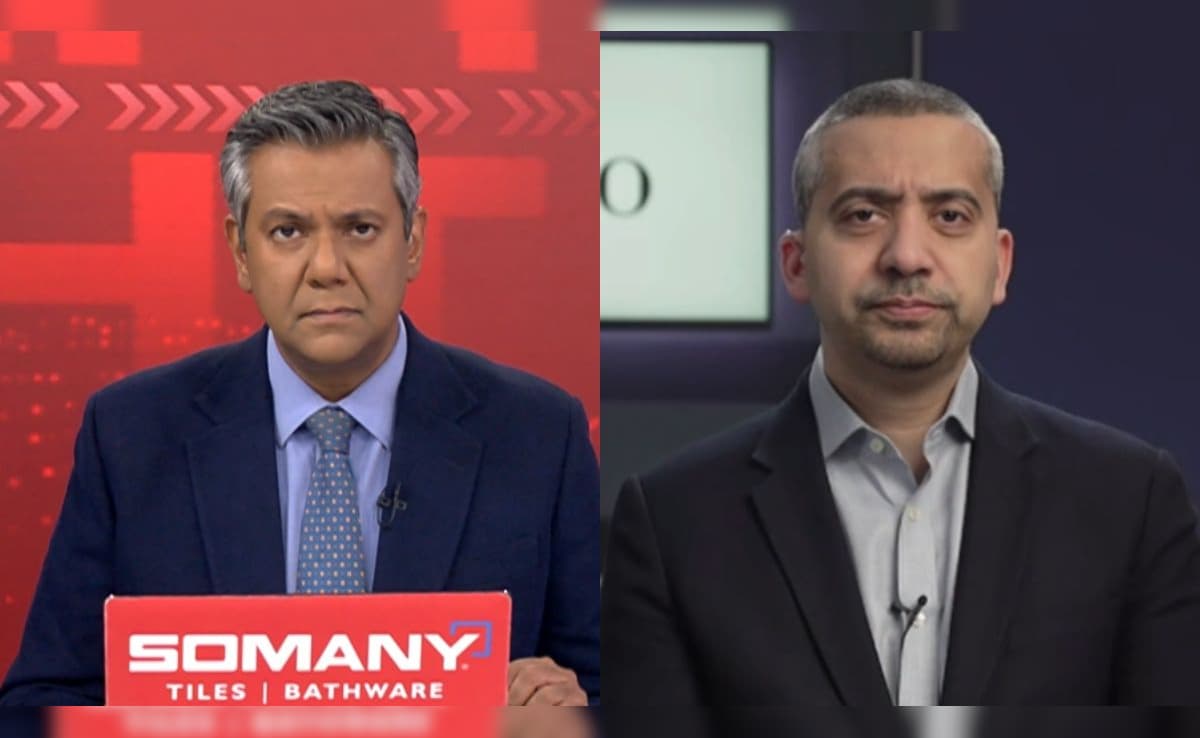
Mehdi Hasan recently pointed out a reality that many in the diplomatic corps whisper but rarely state aloud. The Pakistani government and its influential diaspora are engaging in a level of flattery and alignment with Donald Trump that would have been unthinkable a decade ago. It is a cynical, calculated play.
For years, the relationship between Washington and Islamabad was built on the shaky foundations of the "War on Terror." That era is dead. Today, Pakistan finds itself squeezed between an assertive India, a volatile Taliban-led Afghanistan, and a deepening dependence on Chinese capital. In this environment, the traditional "slow-walk" of State Department diplomacy offers nothing but more conditions and less cash. Trump, however, represents a different door.
The Pakistani strategy hinges on the belief that Trump views foreign policy as a series of bilateral trades rather than a commitment to long-term regional stability. If they can offer him a "win"—perhaps as a mediator with certain Middle Eastern factions or as a counterweight to Iranian influence—they expect a reprieve from IMF pressure and a blind eye toward internal political crackdowns. It is a high-stakes bet on a single man’s temperament.
Dismantling the Old Guard Diplomacy
The Foreign Office in Islamabad has historically relied on a network of career diplomats who speak the language of "strategic depth" and "regional parity." That language is now obsolete. The new guard is looking at the Mar-a-Lago circuit. They are targeting the people who have the President's ear, realizing that a single tweet from Trump carries more weight than a thousand-page briefing from a desk officer at the Pentagon.
This shift has internal consequences. By moving toward a more transactional model, Pakistan is effectively admitting that its institutional ties with the United States have withered. The military establishment, which once enjoyed a direct line to Langley and the E-Ring, now finds itself having to navigate the chaotic waters of American populist politics. This isn't just about "sucking up" to a leader; it is about the total privatization of bilateral relations.
The Diaspora as a Trojan Horse
A significant and wealthy portion of the Pakistani-American community has become the primary engine for this engagement. Unlike the traditional lobbying firms of K Street, these individuals are donors and entrepreneurs who speak Trump’s language. They frame Pakistan not as a security headache, but as a market and a potential partner in the "deals" Trump prizes most.
This creates a strange friction. While the Republican base often leans toward a "hard on terror" stance that would typically target countries like Pakistan, the personal relationships being forged at high-end fundraisers tell a different story. Money talks. It usually shouts.
Why the Gamble Might Fail
Betting everything on a transactional leader is a strategy with a massive, glaring flaw. Transactions can be cancelled at any moment.
- The India Factor: Trump has shown a clear affinity for Narendra Modi. The "Howdy Modi" energy wasn't just theater; it represented a structural alignment of economic and anti-China interests. Pakistan can try to compete for attention, but it cannot offer the market size or the geopolitical utility that New Delhi provides.
- The IMF Noose: Pakistan’s economy is currently a ward of the International Monetary Fund. While Trump might like a deal, the institutional machinery of the U.S. Treasury remains focused on fiscal discipline. Unless Pakistan can prove it is an indispensable asset to Trump's specific agenda, he is unlikely to expend political capital to bail out their central bank.
- The China Conflict: You cannot serve two masters when they are at each other's throats. Pakistan is the crown jewel of China’s Belt and Road Initiative via the CPEC project. Trump’s "America First" platform is inherently suspicious of any nation so deeply integrated with Beijing’s "debt-trap" diplomacy.
The Structural Reality of the Debt
Pakistan’s external debt exceeds $130 billion. This isn't a number you fix with a handshake and a photo op. To truly stabilize, the country needs massive structural reforms that the current elite are unwilling to implement because those reforms would strip them of their own power. Instead, they look for a "strongman" in Washington who might grant them a waiver. It is a fantasy that ignores the reality of how the American executive branch functions, even under a disruptive president.
The Imran Khan Ghost in the Room
One cannot discuss Pakistan’s relationship with Trump without mentioning the former Prime Minister, Imran Khan. During his tenure, Khan and Trump shared a certain "outsider" chemistry. Even from a prison cell, Khan remains the most popular political figure in Pakistan, and his supporters are actively lobbying the Trump circle, claiming that the current government is illegitimate.
This creates a bizarre situation where both the Pakistani government and the Pakistani opposition are competing to see who can be more "pro-Trump." They are fighting for the validation of a foreign leader to settle domestic scores. It is a humiliating spectacle for a nuclear-armed nation, yet it is the logical conclusion of a political system that has lost its internal compass.
The Security Risk of Personalist Politics
When diplomacy becomes a series of personal favors, the guardrails vanish. In the past, the U.S.-Pakistan relationship was moderated by the "Common Operating Picture" of the intelligence communities. Even when they lied to each other—which was often—there was a predictable framework.
If the relationship moves entirely to the whims of the Oval Office, the risk of a sudden, catastrophic break increases. One perceived slight or one failed promise could lead to the kind of "maximum pressure" campaign that has crippled Iran. Pakistan is not prepared for that level of isolation. Their current strategy ignores the fact that Trump is just as likely to impose harsh sanctions as he is to offer a warm embrace.
The Illusion of a Reset
The idea that the 2024 election results provide a "reset" for Islamabad is a dangerous illusion. The fundamental problems remain.
- Terrorism: Groups operating within Pakistan’s borders still threaten regional stability.
- Corruption: The leakage of foreign aid into the pockets of the elite continues unabated.
- Human Rights: The crackdown on dissent has reached levels that make even some of Pakistan’s harshest critics in D.C. uncomfortable.
A Trump administration might ignore human rights, but it will not ignore the security risks if they begin to affect American interests. Pakistan’s leaders are mistaking a change in tone for a change in gravity. Gravity always wins.
The China-U.S. Tightrope
The most overlooked factor in this entire drama is Beijing’s reaction. China has invested billions into the Port of Gwadar and the surrounding infrastructure. They do not want Pakistan getting too cozy with a Washington administration that views the CCP as its primary existential threat.
If Pakistan leans too hard into the Trump camp, they risk alienating their only reliable patron. If they don't lean hard enough, they remain a target for U.S. financial pressure. It is a narrow, crumbling ledge. The Pakistani elite are currently dancing on that ledge, hoping that the music doesn't stop before they can secure their next loan.
The Real Cost of Flattery
Flattery is cheap, but the concessions required to keep a transactional president interested are expensive. Trump will likely demand a total realignment on issues regarding Iran or a significant distancing from Chinese tech. Is Islamabad prepared to actually deliver on those demands? Probably not. They are hoping to sell the appearance of cooperation while maintaining the status quo at home. It’s a trick they’ve played on every U.S. president since Eisenhower.
The difference this time is that the world has changed. The U.S. is no longer obsessed with Central Asia. The "Great Game" has shifted to the Pacific and the semiconductor labs of Taiwan. Pakistan is fighting for a seat at a table that is being moved to a different room.
The End of the Strategic Myth
For decades, Pakistan sold itself as the "geographical bridge" between the East and the West. That myth is shattered. With the rise of the Abraham Accords and the development of the IMEC (India-Middle East-Europe Economic Corridor), the world is finding ways to bypass Pakistan entirely.
The desperate attempt to court Trump isn't a sign of diplomatic strength; it is a confession of irrelevance. They are trying to buy time, but time is the one commodity that even a billionaire president cannot grant them indefinitely. The fundamental rot in the Pakistani state cannot be masked by a warm meeting in the Rose Garden.
Pakistan must decide if it wants to be a sovereign state with a functioning economy or a client state that exists solely on the margins of the whims of whoever happens to be in power in Washington. Right now, they are choosing the latter, and the price of that choice will be paid by 240 million people who have no say in the "deals" being made over their heads.
The scramble for Trump’s favor is a symptom of a nation that has run out of ideas. It is a frantic search for a shortcut through a forest that has no exits. Instead of fixing the house, the leadership is trying to make friends with the new landlord, hoping he won't notice the foundation is crumbling. He will notice. Eventually, everyone does.
Fix the economy. Establish the rule of law. Stop looking for a savior in a red tie.


:strip_icc()/pic2513216.jpg)